
The African/LMIC Playbook for Developing Responsible and Scalable AI Solutions
Introduction
Background
While many AI innovators have an interest in the responsibility of their AI solutions, this interest is markedly less than that in the scalability of the solutions. This is natural since the primary drive to conduct innovation is success in deployability. There is also a grave lack of awareness on how to practically integrate responsibility in the AI development process.
Within the IDRC/FCDO-funded AI4D project, we have had intense experience providing mentorship to AI innovators within multisectoral hubs across the low- and middle-income countries (LMIC) and AI researchers within several public sub-Saharan African universities, on how to observe responsible AI (RAI) and gender equality disability and inclusion (GEDI) practices within the AI development process. Within the project which report can be seen here, we have observed some lethargy in the AI researchers and innovators in terms of attending mentorship sessions on time or at all. While such lethargy may be due to various unrelated reasons, our feeling has been intense that there also exists a not-so-visible belief among some researchers and innovators that responsible AI (RAI) practices exhaust valuable resources meant for scalability, and even in rare instances, that responsible practices are regulation that actually smother innovation. This is largely due to a lack of awareness of how heavily responsibility influences scalability.
We have, therefore, made efforts to develop this Scaling of Responsible AI Solutions (SRAIS) playbook to:
Demonstrate how heavily responsibility and scalability share the same practices to fortify the concept that responsibility practices promote scalability
Demonstrate to innovators and researchers how to practically integrate responsibility and scalability in the AI development process
Demonstrate how to assess existing AI for both responsibility and scalability
THE POWER OF ARTIFICIAL INTELLIGENCE (AI)
Artificial intelligence (AI) possesses immense power for socio-economic transformation, promising significant productivity gains and innovative solutions in key sectors like healthcare, agriculture, and education. The following are examples that are not just touted promises of AI but factual science based on evidence. According to World Health Organization (WHO), the world will not achieve universal health care by 2030 as the global service coverage index is projected to be 74 out of 100. These statistics indicate that a significant 26% of the world’s population will face grave health risk for a while (WHO, March 2025).
The number of people living with diabetes rose from 200 million in 1990 to 830 million in 2022. Prevalence has been rising more rapidly in low- and middle-income countries than in high-income countries. Diabetes causes blindness, kidney failure, heart attacks, stroke and lower limb amputation. In 2021, diabetes and kidney diseases due to diabetes caused over 2 million deaths. In addition, around 11% of cardiovascular deaths were caused by high blood glucose (WHO, November 2024).
Under these grim circumstances, UK’s Imperial College Healthcare NHS Trust has trialed an AI tool to help predict type 2 diabetes up to 10 years in advance, by analyzing subtle changes in ECG readings during routine heart scans. The tool is accurate around 70% of the time in contrast to human expert prediction of around 30% (NHS, November 2024). Such early detection enables pre-diabetes intervention which can reduce mortality by as much as 26% (An X et al, March 2024).
A new AI software examines the brain scans of early stroke patients to diagnose it. Imperial College London and Edinburgh University UK trained the software on a dataset of 800 brain scans of stroke patients and then trialed it on 2,000 patients. Twice more accurate than human professionals (Samantha Rey, December 2024) (Marcus, A., Mair, G., Chen, L. et al, 2024). Early intervention can reduce fatality rates from over 24% down to under 10% (Zang J, Bai Q, Xiong X, He P, Sun J, Gong X, December 2025) (Noll G, Schuh AFS, Valler L, Almeida AG, Brondani R, Martins MCO, Weiss G, Pizzol AD, Rebello LC, Nasi LA and Martins SCO, 2026).
In California’s Central Valley, IoT/AI-enabled irrigation reduced water usage by 30%, as reported by the University of California (University of California, March 2024) (Boser, A., Caylor, K., Larsen, A. et al, 2024).
A bibliometric analysis in (Mrutyunjay Padhiary, Debapam Saha, Raushan Kumar, Laxmi Narayan Sethi, Avinash Kumar, 2024) has illuminated how IoT and machine learning methods have influenced several aspects of agricultural activities, such as planting, harvesting, spraying, weeding, crop monitoring, among others. The study found many instances in which IoT and AI-based vision systems employed on all-terrain vehicles (ATV) enhanced precise and prompt decision-making in precision agriculture. By improving seeding accuracy, crop health monitoring, and pesticide application, these technologies have improved crop yield by 15-20%, reduced overall farm investment by 25-30%, and made farming more efficient by 20-25%.
A team of researchers from UCL and King’s College London has developed an AI-powered tool that can detect 64% of brain abnormalities associated with epilepsy that were missed by human radiologists from MRI tests (Ripart M, Spitzer H, Williams LZJ, et al, 2025). This neurological condition, that gravely disrupts the lives of about 50 million people globally, is typically treated with surgery. However, identifying the structural abnormalities (lesions) from an MRI is an ongoing challenge for clinicians, causing delays to diagnosis and surgery. This often implies more seizures, more visits to healthcare facilities, and more disruption to school, work, and home life. This tool, on trial, speeds up diagnosis times, gets patients the surgical treatment they need quicker, and reduces costs by up to £55,000 per patient.
An elaborate review in (Duguma, A.L., Bai, X, 2025) demonstrates various instances in which AI data analytics with Internet of Things (IoT) technologies in agriculture has revolutionized efficiency, productivity, and sustainability in farming systems, with increased crop yields of up to 20%, reduced water use of 8%, lower energy costs of 13%, lower farm machinery downtime of 50%, and lower machinery operational waste of 20%.
Although Africa has been slower in exploiting AI, there are two standout cases of impact:
JACARANDA HEALTH
In (IDRC, 2024) (The Global Health Network, 2025), Jacaranda Health is reported as “.. a Kenya-based non-profit that, that has partnered with IDRC, Canada and FCDO, UK, among many others, aims to improve quality of care and outcomes for mothers and babies in the public health system.” Jacaranda’s solutions have reached 2.8 million new and expecting mothers across 22 of Kenya’s busiest counties and are currently being tested for scale within two government-partnered pilot projects in Ghana and Eswatini.
Their digital health platform PROMPTS is powered by sophisticated machine learning models that help respond to women and triage them for pregnancy or postpartum-related risk. Their open-source large language model, UlizaLlama, trained to read and respond to information in fluent Swahili is being incorporated into PROMPTS for nuanced, accurate Swahili support and will expand over time to other Sub-Saharan African languages (e.g., Amharic, Afrikaans) and to partner implementers in finance, education, and agriculture.
Jacaranda Health reports that 88% of pregnant PROMPTS users go on to attend the 4th Ante-Natal Clinic visits unlike the typical pregnant woman; there is two times increase in mothers taking up postpartum family planning services; 89% of mothers exclusively breastfeed for the first 6 months after delivery based on the platform advisory; 87% of program nurses have displayed improved confidence and competence; there is evidence of 50% increase in neonatal resuscitation skills amongst mentees of the platform; 89% more of the essential steps performed successfully during delivery by mentored providers (Jacaranda Health, 2025).
VIAMO
3 billion people across Africa are unconnected to the internet due to inability to afford devices higher than the feature phones. Viamo uses Interactive Voice Response (IVR), by leveraging partnerships with Telcos, to enable access to LLMs (GSMA, March 2025) (GSMA, 2025). Viamo has already reached 30 million users and replicated their model in 26 countries (Vested World, 2025).
RISKS INCIDENCES
Even as we acknowledge that many instances of breach to human rights are not universally visible, the following are typical examples of risk events that have manifested in many forms and are reported in various communication channels:
In November 2023, a man was crushed to death by a robot in South Korea after it failed to differentiate him from the boxes of food it was handling (Emily Atkinson BBC News, November 2023).
In April 2024, Tesla’s autonomous vehicles experienced 13 fatal crashes (The Guardian, April 2024) while this 2025, some of their cars lost control, running red lights and driving on the wrong side of the road (The Associated Press, Oct 2025).
In 2024, McDonald’s, USA, ended their AI-based drive-thru ordering after blunders in which the system would serve differently from the order, at one time failing to stop serving two people until the Chicken McNuggets reached 260 (Tom Gerken BBC, June 2024).
In April 2024, Grok AI hallucinated and falsely accused the NBA star Klay Thompson of throwing bricks through windows of multiple houses in Sacramento, California due to NBA fans using a common basketball term of ‘throwing bricks’ after the player missed several airball shots at the rim (AIAAIC, April 2024).
In 2023, the US iTutor Group was fined $365,000 by the Equal Employment Opportunity Commission when its recruiting AI discriminated against applicants based on age. The AI rejected female applicants aged 55 and older, and male applicants ages 60 and older (U.S. Equal Employment Opportunity Commission, November 2023).
In 2023, a New York lawyer faced a court hearing of his own after his firm used a hallucinating ChatGPT for legal research during representation of a client (Kathryn Armstrong BBC News, May 2023). The client had sued an airline over an alleged personal injury and the lawyer submitted a brief that cited several previous court cases to prove, using precedent, why the case should move forward.
In 2019, it became evident that a healthcare prediction algorithm by hospitals and insurance companies throughout the US to identify patients in need of high-risk care management programs displayed less likeliness to flag Black patients. A study found that the algorithm used healthcare spending as a proxy for determining an individual’s healthcare needs (The National Center for Biotechnology Information, Oct. 2019).
Evidence shows that 40% of Afghan asylum cases had errors due to machine translation. Names, dates, and pronouns were mistranslated, leading to some denied asylum claims (Andrew Deck, April 2023).
In 2015, Google apologized after its Google Photos application tagged a black couple as gorillas (BBC, July 2015).
AFRICA
Kerissa Varma, Microsoft’s Chief Security Advisor for Africa has stated that Africa is not just a target for increased, AI-enabled cybercrime; that it’s a proving ground for the latest cyber threats, as attackers use AI to tailor phishing messages in local languages, mimic familiar figures, and weaponize everyday platforms (Microsoft, 2025). According to the World Economic Forum’s Cybercrime Impact Atlas 2025, financially driven attacks pushed the total cost of cybercrime in Africa from Sh25 billion ($192 million) to Sh63 billion ($484 million), with the number of victims rising from 35,000 to 87,000 (World Economic Forum, October 2025).
In Kenya in 2023, World Coin, a cryptocurrency and digital ID initiative in Kenya offered USD 55 for users’ immutable biometric data in iris scans and facial recognition. Initial public concerns about data security and privacy of this initiative were not being addressed. In (ODPC, 2023), the Office of the Data Protection Commissioner initiated a complaint with the government. Worldcoin left Kenya immediately. It is believed to have shifted base to another less aware African country.
Risk cases in Africa may not be apparent in their entirety since adoption of AI, although existing, may still be limited. However, the potential of risk is huge, even worse since levels of awareness, even in government, are still low, and regulatory regime is weak. By mid-2025, only 8 countries out of 55 had operational AI strategies (Selamawit Engida Abdella and Ayantola Alayande, April 2025) with countries of the Sub-Saharan Africa scoring mostly less than 10% under Rankings and Score section of the Global Index on Responsible AI (Adams, R., Adeleke, F., Florido, A., de Magalhães Santos, L. G., Grossman, N., Junck, L., & Stone, K., 2024).
PROBLEM
Despite the potential of AI for socio-economic being massive, the potential risks to safety and human rights are too great to ignore. The key is to consistently integrate risk-minimizing measures in the AI lifecycle, right from problem definition to deployment and scaling.
Most AI practitioners are trained to build systems, but far fewer are equipped to assess the societal impact of these systems or to scale them responsibly. Our experience is that AI researchers and innovators, individuals who are largely of physical sciences background, are likely to struggle more than their counterparts of social science background, to diagnose human rights breaches of AI. While many innovators display enthusiasm at integrating responsibility into the AI lifecycle, they lack skills to practically do it.
There is evidence that many AI solutions are designed, developed, deployed and scaled in breach of responsible and scaling practices. In the Gender Equality and Inclusivity (GEI) project that was funded by IDRC-Canada through the Gender Consortium, researchers at the ACTS AI Institute (ACAII) coordinated 14 professors and early career academics of AI within public universities spread across Africa, to review their past processes of developing AI models. The reviews were conducted through the lens of a Gender and Equality Toolbox developed by Women-at-the-Table, a Swiss gender NGO that was part of the Gender Consortium. The review of the 14 of their past AI development processes revealed to themselves a massive breach of ethics and scaling of AI principles. The benefit of the project was that the academics became aware of the need to establish measures essential for designing and developing responsible AI solutions.
In 2023/2024, the Global Partnership on AI (GPAI), supported by partners such as IDRC-Canada, sponsored the global GPAI-SRAIS project to mentor AI innovators on how to scale their AI solutions responsibly. ACAII, together with CEIMIA, an AI NGO based in Canada, coordinated the project’s African Track that recruited experts in the scaling of responsible AI to mentor 16 AI innovators spread across Africa. The experience of the mentors, captured aptly in this project report, indicated an awareness of responsibility of AI among innovators, but a stark unawareness about how to practically integrate scaling and responsible AI best practices in the AI design, development and scaling processes. In the current 2024-2026 AI4D-SRAIS project that is funded by IDRC-Canada and FCDO-UK, ACAII is yet again coordinating the mentoring of 6 AI innovators and 7 AI university researchers to develop and scale AI models responsibly. Additionally, ACAII is coordinating the mentoring of several AI innovators funded by FCDO-UK and GSMA (Global System for Mobile Communications Association).
There is clear evidence that most innovators and researchers are unaware of how to practically integrate principles of scaling of responsible AI in the research and development process. There are also strong indications that to most innovators, ensuring responsibility in the AI solution is not as primary as scalability of it as they may not see the close link between scalability and responsibility.
PROPOSED SOLUTION
We are convinced that our role is to: 1. Demonstrate the strong correlation between scalability and responsibility in order to convince innovators of the need to embed responsibility just as urgently as scalability; 2. Build the capacity of innovators to practically embed both responsibility and scalability in the AI development, deployment and scaling process.
This study seeks to consolidate evidence that demonstrates that responsibility of an AI solution across the development cycle promotes its performance, deployment, and scaling success. The work also builds a novel framework and tool that enables awareness and capacity strengthening of innovators and researchers to observe measures that promote both responsible and scaling of an AI. The framework goes further to illustrate how evidence for policy development can be consistently gathered by the innovators across the entire AI lifecycle.
AIM
To develop a framework and tool that illuminates the convergence of responsibility of AI and the scalability of it; and additionally strengthen the capacity of AI innovators on how to practically integrate measures that promote both responsibility and scalability of an AI solution across the AI lifecycle.
OBJECTIVES
To translate the principles of responsible AI into practical measures that guide the innovator in developing the AI solution responsibly for impact across the lifecycle.
To translate the principles of scalable AI into practical measures that guide the innovator in developing a scalable AI solution for impact across the lifecycle.
To develop a framework that illuminates the correlation between responsibility and scalability of an AI solution.
To develop a tool, based on the framework, that can be used to audit an AI solution for compliance in both responsibility and scalability.
To enhance the tool to enable collection of a body of evidence that can be used to strengthen the AI eco-system with evidence-based policy.
METHODOLOGY
Summary of Methodology
To achieve the above objectives, the methodology shall address each objective at a time in the following format:
The AI lifecycle
The principles of responsible AI
The principles of scalable AI
The tri-axial framework of responsibility and scalability across the AI lifecycle
The tri-axial tool for support in development, audit of an AI solution and Support to Evidence-based Policy Development
The tri-axial tool for developing evidence-based policy to strengthen the AI eco-system
Multi-sectoral AI4D cases
The AI Lifecycle
The AI lifecycle is made up of several development phases with each phase requiring unique practices to ensure responsibility and scalability of the AI solution. The following section describes the various lenses through which the lifecycle is viewed with some lenses preferring to see more phases than other lenses that prefer to merge some phases.
According to (Duc Bui Thanh, January 2025), there are six phases named: Problem Identification and Scope Definition; Data Collection and Preparation; AI Model Design and Selection; Model Training and Testing; Deployment and Integration; and Maintenance and Iteration. According to (Palo Alto Networks, 2025), there are eight phases named as: Problem Definition; Data Collection; Data Preparation; Model Design; Model Training; Model Evaluation; Model Deployment; Model Monitoring. According to (Madelena Y Ng, Supriya Kapur, Katherine D Blizinsky, Tina Hernandez-Boussard, 2022), there are five phases as: Data Creation; Data Acquisition; Model Development; Model Evaluation and Model Deployment. Yet according to (CoE-US General Services Administration, 2025), there are seven phases as: Understand the problem; Data gathering and exploration; Data wrangling and preparation; Modeling; Evaluation; Move to production; and Monitor model output.
Having reviewed several existing literatures, and looking at the unique context of Africa and LMIC (low and middle income countries) in terms of which phases may attract additional measures, we found the following phases to be more descriptive:
Phase 1: Problem Definition, Determination of Objectives and KPIs
In this first phase of the AI development lifecycle, the problem that the AI solution will solve is understood. The measurable objectives to solve this problem are clearly stated to determine the type of data that will be needed to model the use or business process. Since our approach addresses all types of AI use cases, be it for public good or profit-motivated, the term ‘business process’ that we shall be using consistently should not be construed to mean only profit-motivated processes, but a technical term that refers to how whatever type of work is organized. The key components of problem definition phase include;
Conducting Stakeholder Analysis: Identify and engage all relevant stakeholders, especially end-users, to understand who they are and their backgrounds. Where users or other stakeholders are too numerous, scientific sampling may be necessary to identify a smaller representative sample with whom to co-define the problem. The sample should be inclusive, accommodating a justifiable number of each of the often-excluded groups such as women, the youth, the old, persons with disability, the poor etc.
Co-comprehending Business Needs: This component involves engaging users, stakeholders or the representative sample, particularly of the anticipated users, to co-define the problem or need, clearly defining the problem's boundaries. An example problem in government may be poor understanding of what level of taxation is likely to be unmanageable to business entities. The need to understand such a level of taxation would stem from the government trying to raise as much revenue as possible without scaring away or killing businesses with over-taxation. The scope may include either all the country’s business entities or MSMEs alone, etc. In health, there could be poor early diagnosis of an impactful disease such as ovarian cancer. In agriculture, farmers of a particular location may lack a good understanding of how the various agronomical practices and environmental conditions influence yield for a particular staple crop such as maize. In manufacturing, there may exist a lack of understanding of which of the various optional suppliers of a specific raw material is consistently responsible for a certain quality of the finished product. Still in manufacturing, there may be a need for automating the training of new recruits on work ethics and safety.
Setting Objectives and KPIs: Measurable objectives set the direction to solve the problem while the key performance indicators (KPIs) act as the quantifiable metrics that progressively monitor if that direction is correct. For instance, in the agricultural problem of lack of comprehension of how the various agronomical practices and environmental conditions influence yield for the maize crop, an objective may be to develop a crop yield model that uses data to establish the relationship between various agronomical practices and climatic conditions, with the eventual crop yield. Specific agronomical practices and current climatic conditions could then be loaded onto the model, and the model would predict how the crop would respond. The importance of such a model to the farmer is in enabling them to determine the best conditions for a certain desired crop yield, to predict yield early and to tweak controllable conditions such as type and quantity of fertilizer, among others, for the best yield. The eventual KPI is likely to be the maize crop yield in kilograms per acre. However, waiting until the yield is out may not add much value as the farmer will have little opportunity to correct any agronomical error. Other earlier indicators are essential to enable prompt intervention. For instance, a minimum of 4 inches per week of height increase may be a good earlier indicator. Another may be a minimum total chlorophyll concentration of roughly 0.64 to 1.0 mg g⁻¹ on the leaves during the early vegetative stages, so that any coloration less than this would likely mean a crop responding badly to the practices being carried out. These last two indicators are resident on the crop and therefore directly indicative. But more causal indicators that are external to the crop but still predictive of crop yield are such as; seed variety, soil type, tillage method, planting date, daily precipitation levels, daily atmospheric temperature levels, daily soil temperature levels, weeding dates, fertilizer type and quantity, fungicide type and quantity, occurrence of disease, occurrence of pest, likely among others. All these indicators can constitute data variables with the output variable or label being crop yield in bags per acre.
In the government taxation case, the objective is likely to be - to develop a model that links manageability of tax to the levels of taxation. Indicators of manageability are likely; levels of tax evasion, prevalence of complaints registered by affected business entities about heavy tax, regular collapse of business entities, relocation of businesses to neighboring countries, among other factors. The data variables in this scenario are likely to be these indicators, including the level of taxation as the label.
In the case of health, the objective is likely to be – to develop an ovarian cancer early alert or predictive models. Indicators that are observable on the individual’s body system are likely to be; the scientifically established symptoms of ovarian cancer such as - bloating that is persistent and does not come and go, eating less and feeling full quickly, abdominal pain or pelvic pain/tenderness, needing to urinate more urgently or frequently, extreme or unusual tiredness, persistent pain in the lower back, constipation, diarrhea, nausea, or indigestion, unexplained weight loss or gain, abnormal virginal bleeding, including between periods or post-menopause, pain during sex, among others. If these symptoms are later-stage since they manifest on the body, earlier indicators may be causal factors such as occurrence of the disease in older family members or even evaluating the individual’s unique early-stage cell activity that is often determined using procedures such as spectroscopy. All these indicators and influencers may constitute data variables with the label or target output being occurrence of the cancer.
In manufacturing, the objective would be to develop a model that relates the various suppliers with the quality of finished product. Such a model would be premised on the understanding that each supplier delivers raw materials of different quality that influence the quality of the finished product. The model would help predict the quality of the finished product based on who the specific supplier is. The eventual KPI would be the quality of the product. The main causal variable would be the specific supplier while the subsequent indicative variables are likely to be; amount of energy used at each stage, time spent at each stage, amount of other raw materials used at each stage, level of quality of the product during any of the regular, stage-based quality assurance testing of the unfinished product, among other variables. These indicators are likely convertible to the data fields, with the final KPI being the target output variable to be predicted.
Note that at this point, technology to solve the problem is still not considered since the needs of the use or business space are still being defined. AI is, therefore, not a consideration.
Baseline values of all the indicators need to be recorded to enable success measurement and impact assessment later.
Assess Feasibility: Here, we evaluate the technical, operational, and economic feasibility of the proposed objectives and KPIs using structured frameworks. Although we are not considering a specific technology here, there is likelihood that the technology of choice may be AI. We must therefore prepare ourselves for that eventuality by being careful and systematic in feasibility assessment since global statistics indicate that about 85% of all AI initiatives may fail (Jameel Francis - Forbes Technology Council, Nov 2024). It is important to systematically carry out this assessment before embarking on a possibly costly AI development project.
A successful evaluation framework evaluates the feasibility of the AI according to the following measurable criteria:
Technical: Data quality/availability, test model accuracy, inference latency.
Operational: Automation percentage, process time reduction, error rate decrease.
Economic: Return on Investment (ROI), cost savings, revenue increase.
Here are some such frameworks: TELOS Framework (Sinta Mulyani Dwi Putri, Endang Chumaidiyah, and Iphov Kumala Sriwana, May 2025), Change Management/Stakeholder Analysis (IMD – Switzerland, February 2026), among others.
Phase 2: Data Collection
Data represents the unique signature of a business process. It comprises the various measurements of the variables of a business process. These measurements of the transactions can be used to build the cause-and-effect relationships between the various variables. The cause-and-effect relationships are the models that AI is great at building. This data is used to train a general machine learning algorithm to result in a predictive/diagnostic/generative AI model that recommends decisions about that process. Such a model will help comprehend how each variable affects the others. The data shall be used for training, validation, and testing of the model. The precision of the model depends highly on the quality and size of the data. Data collection involves the following:
Identify Data Sources: Explore and evaluate potential data sources. These could be existing datasets in internal or public databases and collected primarily for a similar or related context. They could also be freshly collected for this instance. The data should be determined by the objectives, KPIs and indicators / influencers developed in Phase 1. For instance, in the agricultural case, where a farmer, a farm input credit supplier, or a farm indemnifier is interested in predicting a farm’s crop yield, the yield which is the eventual KPI is likely to be the label or output variable in the dataset. Factors that influence this eventual KPI such as; seed variety, daily precipitation, atmospheric and soil temperature, fertilizer type and quantity, herbicide type and quantity, fungicide type and quantity, pest prevalence, disease prevalence, among others, are likely to be the input variables. Factors that provide early indication of this eventual KPI, such as chlorophyl concentration or growth rate, during certain impactful growth stages, may also be relevant input variables whose values are collected within the dataset to predict yield. The most accurate and reliable source of values for each variable is explored. Some sources may be sensors, while some may be from human observation with entry likely through a mobile application or even on a manual paper table for a later entry into a computer. Within manufacturing, a generative AI whose objective would be to provide automated training of new staff in workshop safety will require data, which is really the complete body of knowledge in workshop safety. This knowledge would be collected from existing literature of reputable workshop safety sites or workshop safety experts and used to train a large language model (LLM) to provide automated training.
Data Acquisition: As a developer, you may want to collect own data through; remote sensors or human observation. While sensor nodes are a convenient and automated way to collect data from remote and hard-to-access locations, not all data can be collected by sensors. For instance, in agriculture, type and quantity of farm input would be entered preferably on a mobile phone application or through a USSD function for basic phones by humans since sensors would struggle to measure such manual procedures. The advantage of collecting own data, although it is quite costly (can be over 50% of the entire project), often guarantees data that is perfect for your unique context. While you may prefer to exploit existing databases (secondary data) as this saves time and costs, there must be a careful evaluation that this data will suit your unique needs. Ensure that the data sources are well sampled in instances where you cannot obtain data from the universe. For instance, to develop a crop yield prediction model for a particular region with 5000 small scale maize farmers, it may be too costly to gather data from all the 5,000 farms. You can however distill a representative sample of 500 farms. Scientific sampling will help include all types of farmers in terms of: Gender; age; size of plot; type of farming methods; level of affluence; disability, among others. This is the essence of having a statistician in the team.
Data Cleaning and Transformation: This concept involves tasks that address concerns such as; missing values, outliers, duplicates, and inconsistencies. Ensure data is complete, accurate, timely, and well-labelled. It also involves tasks such as normalization, scaling, encoding, and preparing data for analysis and training. In some cases, there is an opportunity to integrate data from different sources to create a more complete dataset or even apply techniques to artificially increase the size and diversity of the training dataset when necessary. Throughout the preparation process, it is crucial to maintain data lineage and implement version control and generally develop data preparation pipelines.
Establish Data Governance: Comply with regulations like the EU general data protection regulation (GDPR) (Council of the EU, May 2026) by anonymizing sensitive data and using secure storage protocols to maintain data integrity. Implement policies for data justice and ownership, access controls, and retention. Ensure proper documentation of data lineage and versioning.
Phase 3: Model Development
This phase refers to the training of foundational machine learning algorithms using data or knowledge. The result of the training are predictive/diagnostic/generative models that are accessible to the users.
Selecting the Right Algorithms: The choice of algorithm depends on the problem type. For instance: Linear regression are suited for continuous data and outcomes; decision trees are best for classification work; while deep learning algorithms are best for the more data-intense tasks such as image recognition or natural language processing. Designing a compromise between algorithm complexity and computational performance is recommended since a very precise model that expends too much compute resources may not add much value in practical circumstances. The fields in the data are likely to advise whether supervised learning, unsupervised learning, or reinforcement learning is used.
Selecting the Right Architecture: Every algorithm has certain unique architecture features. For instance, in a neural network algorithm, there will be need to select network features such as; number of network layers, number of processing nodes, activation functions etc. These depend a lot on historical experience. You may consider exploiting pre-trained models to improve performance and reduce training time where applicable. You may also consider implementing ensemble or multiple model methods to enhance accuracy and robustness when appropriate.
Training: This refers to the process of applying data to train the selected algorithm. In this process, the algorithm captures the hidden patterns and relationships between the various variables in the data. The resulting model should make predictions or decisions based on data. The training process continues until the model achieves a satisfactory level of accuracy. For quality training, the data should be divided into three parts—training set for learning patterns, validation set for tuning hyperparameters, and testing set for evaluating generalization. During training, try to prevent overfitting which occurs when the model learns the training data too well, while underfitting happens when it fails to capture data complexity. Techniques like regularization and cross-validation mitigate these issues. Key metrics include accuracy for classification, Mean Squared Error (MSE) for regression, and F1 Score to balance precision and recall in imbalanced datasets, ensuring robust AI model testing and comprehensive performance assessment. Use visualization tools and track metrics in real-time to monitor the training progress. Regularly save model states and implement mechanisms to resume training from checkpoints. Fortunately for innovators, most of these mentioned functionalities are automatically embedded in most machine learning platforms that you may select to use.
Ensure Interpretability: Design models with interpretability in mind, incorporating attention mechanisms or explainable AI approaches.
Phase 4: Solution Deployment
Once the model has been trained and evaluated successfully, it's deployed as a solution to provide service to the user community. This often implies packaging the model with ICT interfaces that enable access to the model. Within the solution, the model begins to take in new data, make predictions, and deliver results in real-time or batch mode, depending on the application.
Integrating AI Models into Existing Systems: It is crucial that the model is accessible to users without much disruption to the natural work processes. Acceptance of new technology is easier when it respects how people like to work or live. This section ensures smooth adoption and usability by seamlessly integrating AI models into current workflows. Tools like Docker and Kubernetes enable scalable deployment. Choice between cloud deployment, on-premises installation, or edge computing, would depend on existing equipment, affordability and project requirements. Inclusivity of the often-excluded groups in terms of gender, age, PWD, the rural communities, the poor etc, is a huge consideration during deployment. Mobile applications and web platforms enable reach, however, most often-excluded populations in the LMIC are basic phone owners and may require USSD applications. Linking the solution to vernacular and voice tools would enable the monolingual and illiterate to also access the solution.
Ensure Scalability: Since the ultimate goal of an AI is scale, deploying with a scaling design is crucial.
Phase 5: Solution Scaling and Impact Evaluation
After the deployment of the AI model, monitoring ensures it continues to perform optimally over time. Using relevant metrics and feedback, the model's performance is routinely checked by comparing the actual occurrence of predicted events against their predictions. Any decline in accuracy or effectiveness signals the need to go back and review the previous phases, completing the lifecycle loop. This ongoing process is essential to enable the solution to scale successfully.
As the AI solution gains ground with users, there is often a desire to introduce it to new geographies, new groups of users, or even introduce new functionalities as users demonstrate a need for a more complete solution. Scaling practices that introduce the solution to new geographies or groups of users may involve collecting new data that is contextual to the new geographies or groups. These scaling measures, which will be addressed elaborately in the Scalability of AI section, may require going back to redefining the problem. Even new functionalities may require redefining the problem afresh. At this point, it is likely that impact is beginning to become evident and needs to be tracked, largely depending on the objectives of the project.
Each phase of the AI development lifecycle is interconnected, requiring seamless transitions and continuous feedback loops to ensure the system meets its intended purpose and adheres to the highest standards of AI security and efficiency.
(Duc Bui Thanh, January 2025) (CoE-US General Services Administration, 2025) (Palo Alto Networks, 2025) (Madelena Y Ng, Supriya Kapur, Katherine D Blizinsky, Tina Hernandez-Boussard, 2022) (IBM, 2025) (Cole Stryker, 2025) (Gartner Research, April 2024) (Inoru, December 2024) (Wisamul Haque, December 2025) (Khanfar, A. A., Kiani Mavi, R., Iranmanesh, M., & Gengatharen, D., 2025) (JD Meier, 2026).
The following Figure illustrates the AI Lifecycle:
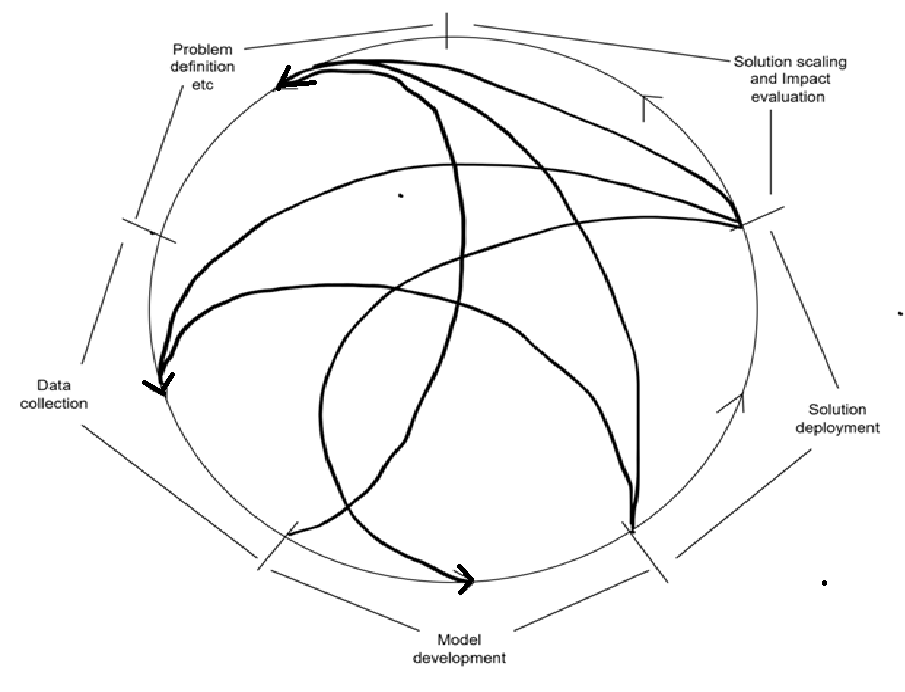
Figure 1 – The AI Lifecycle
AI development is ideally a cyclic process that should consistently evaluate the theory of change - impact, outcomes and outputs - to audit the precision of the process and final expectations. If the impact expected is not achieved, there is likely a defect in the process and one may need to go back to problem definition and through the subsequent stages. It is crucial to note that AI, as with all technologies, are social in how they interact with users. Sometimes a lack of impact may arise from how precise technology is deployed. Impact evaluation of many profit-motivated AI projects is likely to be easier since the metrics are simpler and more quantitative, some being, workflow efficiency or duration, more work output, product quality, more revenue etc. Impact for AI projects for social good are harder to measure as the social gains are more complex based on objectives that are often broad, long-term, and influenced by many factors outside the AI system itself. Along the lifecycle, the output of each stage must be tested before proceeding to the next one. If, during stage testing, a defect is detected, the developer may need to go back and relook the previous stages step-by-step to diagnose any causes of the defect.
Principles of Responsible AI (RAI)
Many ethics of AI frameworks have been conceived to intervene against the threat of the risks that come with AI. Some of the threats are severe and life-threatening, for instance, weaponized AI in military equipment, or AI in health. While there certainly are other useful frameworks, the ones elaborately described in this section are: EU AI Act; US Executive Order on AI; Asilomar AI Principles; Google AI Principles; Microsoft Responsible AI Principles; OECD AI Principles; and the UNESCO Recommendation on the Ethics of AI. The following section describes them:
EU AI Act
The EU AI Act uses a risk-based approach to regulate artificial intelligence, categorizing AI systems into four tiers based on their potential for harm. While, in this framework, most AI solutions attract no compliance obligations due to their posing minimal risk, high-risk systems face extensive compliance obligations. AI solutions posing unacceptable risk are prohibited entirely. An AI solution’s classification depends on its use case and potential impact. The category in which an AI solution falls determines what compliance obligations apply to it.
The risk categories are detailed as follows:
1. Unacceptable Risk Systems or Solutions (Prohibited)
Such AI solutions are banned because they pose definite threats to people's safety, livelihoods, and/or rights. These AI solutions offer the services on Table 1:
Table 1 – The Services of Unacceptable Risk Solutions
Source table (8 rows) Scroll horizontally to view all columns
| Service / Practice | Description |
|---|---|
| Social scoring | Public authority systems that evaluate individuals based on social behavior leading to unfavorable treatment |
| Subliminal manipulation | Techniques that deploy subliminal elements to materially distort behavior in harmful ways. Such AI algorithms would influence human behavior, emotions, or decisions beneath the threshold of conscious awareness |
| Exploitation of vulnerabilities | Systems that exploit vulnerabilities of specific groups based on age, disability, economic situation etc |
| Real-time biometric identification | Remote identification in public spaces for law enforcement (with narrow exceptions) |
| Emotion recognition | Recognition of emotions in workplaces and educational institutions (with exceptions) |
| Biometric categorization | Categorizing individuals based on biometric data to infer sensitive attributes |
| Untargeted facial scraping | Creating facial recognition databases through untargeted scraping |
| Predictive policing | Making predictions about criminal offense risk based solely on profiling |
Exceptions exist as follows:
Real-time biometric identification may be permitted for specific law enforcement purposes, for instance, missing children, imminent threats, serious crimes, but with judicial authorization.
Emotion recognition may also be permitted for medical or safety purposes.
2. High-Risk AI Systems
High-risk AI systems are permitted but are subject to extensive compliance requirements. A system is classified as high-risk if it falls into one of these two categories:
Category 1: Safety Components
These are AI systems that are:
Safety components of products covered by EU harmonization legislation (e.g., medical devices, machinery, toys) or
Products themselves that require third-party conformity assessment.
Category 2: Annex III Listed Uses
These are AI systems used in specific high-risk areas such as:
Table 2 – Areas of Annex III Listed Users
Source table (8 rows) Scroll horizontally to view all columns
| Area | Examples |
|---|---|
| Biometrics | Remote biometric identification, biometric categorization, emotion recognition |
| Critical infrastructure | Management of road traffic, water, gas, heating, electricity |
| Education | Determining access to education, evaluating learning outcomes, detecting cheating |
| Employment | CV screening, interview analysis, promotion decisions, task allocation, termination |
| Essential services | Credit scoring, life/health insurance pricing, emergency services dispatching |
| Law enforcement | Evidence reliability assessment, polygraphs, crime analytics, profiling |
| Migration and asylum | Risk assessments, document authenticity verification |
| Justice | Assisting judicial authorities in researching and interpreting facts and law |
Important exceptions exist as follows: An AI system listed in Annex III is NOT considered high-risk if it does not pose a significant risk of harm to health, safety, or fundamental rights, including by not materially influencing decision-making outcomes. This exception requires the provider to document the assessment and register it before placing the system on the market.
3. Limited Risk AI Systems
Limited risk systems have transparency obligations but fewer technical requirements than high-risk systems. They are as follows:
Table 3 – AI Systems of Limited Risk
Source table (4 rows) Scroll horizontally to view all columns
| System Type | Transparency Requirement |
|---|---|
| AI interacting with humans | Users must be informed they are interacting with an AI system |
| Emotion recognition systems | Users must be informed that such a system is in use |
| Biometric categorization | Users must be informed of the categorization |
| AI-generated content | Must be marked as artificially generated or manipulated (deep fakes) |
4. Minimal Risk AI Systems
The majority of AI solutions are in this category and face no compliance requirements or specific legal requirements under the EU AI Act. They include:
Spam filters
AI-enabled video games
Recommendation algorithms for entertainment
AI-assisted writing tools
Inventory management systems
While not legally obligated, the act still encourages providers of minimal risk systems to voluntarily adopt codes of conduct that apply high-risk requirements.
(Future of Life Institute, 2026) (European Parliament, February 2025).
With this act being legally-binding and compelling all EU residents to adhere to it, the following would be interesting observations:
How effective would a compelling and enforceable framework, rather than a campaign of education and awareness, be in mitigating the risks of AI?
How will companies that have invested millions of euros in developing prohibited AI solutions at the time when the act never existed, react and survive?
How will the EU enforce this act which obviously must be executed by the national governments that stand to lose revenue in taxation?
US Executive Order on AI
The phrase “U.S. Executive Order on AI” usually refers to two major policies, the second one being a revision of the first by a succeeding US administration. Here’s a summary of both:
US 1. 2023 Executive Order (Biden)
Executive Order (E.O.) 14110 on Safe, Secure, and Trustworthy Development and Use of Artificial Intelligence released on October 30, 2023, by the Biden Administration focuses on guiding responsible artificial intelligence (AI) development and deployment through federal agency leadership, regulation of industry, and engagement with international partners.
In summary, the order emphasizes:
Safety and security. The E.O. promotes the development and implementation of repeatable processes and mechanisms to understand and mitigate risks related to AI adoption, including with respect to biosecurity, cybersecurity, national security, and critical infrastructure.
Innovation and competition. The E.O. compels actions to attract AI talent to the United States, understand novel intellectual property (IP) questions, protect inventors and creators, and promote AI innovation, including at startups and small businesses.
Worker support. The E.O. states that AI adoption may be disruptive to the workforce and directs agencies to research and develop potential mitigations against such disruptions.
Consideration of AI bias and civil rights. The E.O. states that AI models may perpetuate biases and their implementation may lead to civil rights violations. The E.O. includes a section on equity and civil rights considerations for use of AI in the criminal justice system and the administration of federal government programs and benefits.
Consumer protection. The E.O. instructs agencies to enforce existing, technology-agnostic authorities in an effort to minimize harms to consumers, and to identify needed authorities related to AI.
Privacy. The E.O. calls for the evaluation and mitigation of privacy risks—potentially exacerbated by AI—associated with the collection, use, and retention of user data.
Federal use of AI. The E.O. requires the Office of Management and Budget (OMB) to establish an interagency council to coordinate AI use by federal agencies and develop guidance on AI governance and risk management activities for agencies. It acknowledges the ubiquity of generative AI (GenAI) tools, and directs agencies to move toward adoption with safeguards in place. The E.O. also calls for additional agency hiring and training activities to increase the AI workforce capacity across the federal government.
International leadership. The E.O. declares that the United States should be a global leader in AI development and adoption by engaging with international allies and partners, leading efforts to develop common AI regulatory and accountability principles and advancing responsible global technical standards for AI. (Harris, Laurie; Jaikaran, Chris - Library of Congress, March 2024).
US 2. 2025–2026 Executive Orders (Trump)
The Executive Order 14179 of January 23, 2025 revoked the 2023 order and replaced it with a new direction which emphasizes AI Leadership & Deregulation within a National Policy Framework for Artificial Intelligence. The specific purpose of the new direction was to update existing Federal regulatory frameworks to remove barriers to and encourage adoption of AI applications across sectors and promote United States national and economic security and dominance across many domains.
The order posits that to win, United States AI companies must be free to innovate without cumbersome regulation since excessive State regulation thwarts this imperative. The order also emphasized a national AI standard that forbids State laws that conflict with the policy set forth in this order. (Executive Office of the President, December 2025).
These orders are legislative and must be observed. Considering that the revised act causes a reduction in the regulation of AI and places a comparatively heavier emphasis on global AI leadership (or AI domination?), how effective will mitigation of the risks of AI be in the US? But even more concerning, how effective will mitigation be globally when there is a chance that a front-running country energizes an AI race?
The Asilomar AI Principles
The Asilomar AI Principles, coordinated by Future of Life Institute (FLI) and developed at the Beneficial AI 2017 conference, California, are a set of 23 guidelines that outline how AI should be developed safely and beneficially, and attempt to answer the central question: How do we build powerful AI systems that remain safe, fair, and aligned with human interests?
Here is a summary of the various clusters of the principles:
Research & Development Principles
This cluster advises how AI should be built:
Beneficial purpose: AI should be developed to benefit humanity, not just for profit or power.
Funding transparency: Research goals and funding sources should be openly shared.
Science-policy link: AI researchers and policymakers should cooperate.
Safety culture: Teams should prioritize safety and best practices.
Failure transparency: If AI systems fail, lessons should be shared to avoid repetition.
Ethics & Values Principles
This cluster emphasizes fairness and societal impact:
Human values: AI must respect human dignity, rights, and freedoms.
Fairness: Avoid bias and discrimination.
Privacy: People should control how their data is used.
Liberty: AI should not unjustly restrict human freedom.
Shared benefit: AI gains should benefit as many people as possible.
Shared prosperity: Economic benefits should be broadly distributed.
Human control: Humans should retain meaningful control over AI systems.
Non-subversion: AI should not manipulate or undermine people.
Safety & Control Principles
This cluster addresses the concern of risks and long-term safety:
Robustness: AI systems must be secure and reliable.
Alignment: AI should act in accordance with human values and goals.
Capability caution: Avoid deploying overly powerful systems without safeguards.
Recursive self-improvement caution: Advanced AI improving itself should be carefully
controlled.
Long-Term & Global Considerations - This cluster focuses on humanity’s future:
Avoid arms race: Nations should avoid a competitive race in AI weapons.
Global cooperation: Countries should collaborate on AI safety.
Common good: AI development should benefit all humanity, not just a few actors.
Risk awareness: Advanced AI could pose existential risks if mismanaged.
Key Warnings - The Asilomar AI Principles following warnings:
AI should not be used for autonomous weapons without human control.
Extreme care is needed with superintelligent AI systems. (Future of Life, August 2017).
Google AI Principles
The Google AI Principles, introduced in 2018 by Google to guide how it develops and uses artificial intelligence responsibly, include the following 7 core principles and a set of AI applications the company states that it avoids.
Be socially beneficial: This principle states that AI should create value for society, improving lives, solving problems, and contributing positively.
Avoid unfair bias: By this principle, Google commits to reducing discrimination in AI systems across race, gender, age, disability, and other often underrepresented groups.
Be built and tested for safety: AI systems should be reliable, secure, and rigorously tested before deployment.
Be accountable to people: There should be human oversight, with clear responsibility for how AI systems behave.
Incorporate privacy by design: AI should protect user data through strong privacy safeguards and responsible data use.
Uphold high standards of scientific excellence: Google emphasizes rigorous research, peer review, and best engineering practices.
Be made available for uses that align with these principles: AI tools should only be deployed where they meet ethical and safety standards.
Google has stated that it will not pursue developing the following applications:
Weapons or systems designed to cause harm
Surveillance that violates internationally accepted norms
Technologies that infringe human rights
AI whose risks outweigh its benefits (Google, February 2026).
Google’s AI principles are not legislation but organizational commitments that shape how the company builds and deploys AI.
Microsoft AI Ethics Principles
Microsoft has outlined a set of widely cited AI ethics principles to guide how artificial intelligence should be designed, developed, and deployed. Here’s a clear, concise summary of their core ideas:
Fairness: AI systems should treat people equitably and avoid bias or discrimination. This means actively identifying and reducing unfair outcomes across different groups.
Reliability & Safety: AI must perform consistently and safely under expected conditions. Systems should be tested rigorously and have safeguards to minimize harm if something goes wrong.
Privacy & Security: AI should respect user privacy and protect data. This includes secure data handling, minimizing data collection, and ensuring systems are resilient against attacks.
Inclusiveness: AI should empower everyone and be accessible to diverse users, including people with disabilities. Design should consider a wide range of human needs and perspectives.
Transparency: Users should understand how AI systems work and how decisions are made. This includes explainability and clear communication about when AI is being used.
Accountability: Organizations must take responsibility for their AI systems. There should be clear governance, human oversight, and mechanisms to address issues or harm caused by AI.
In summary, Microsoft’s AI ethics framework focuses on building AI that is fair, safe, private, inclusive, understandable, and responsibly governed. (Microsoft, 2026).
Many people are not convinced that Google and Microsoft, including other BigTechs that are involved in the development of AI, are totally committed to ensuring the success of these principles that they tout. There is a widespread conviction that these statements simply camouflage aggressive algorithms and platforms that are engineered solely for profits, without much regard for human rights and the risks that AI pose to those rights.
OECD Ethics of AI Principles
The OECD (Organisation for Economic Co-operation and Development) AI Principles for trustworthy AI were first adopted in 2019 and updated in May 2024 to accommodate new technological developments. The value-based principles are detailed below:
Inclusive growth, sustainable development and well-being (Principle 1.1) - This Principle highlights the potential for trustworthy AI to contribute to overall growth and prosperity for all – individuals, society, and planet – and advance global development objectives.
Respect for the rule of law, human rights and democratic values, including fairness and privacy (Principle 1.2) - AI systems should be designed in a way that respects the rule of law, human rights, democratic values and diversity, and should include appropriate safeguards to ensure a fair and just society.
Transparency and explainability (Principle 1.3) - This principle is about transparency and responsible disclosure around AI systems to ensure that people understand when they are engaging with them and can challenge outcomes.
Robustness, security and safety (Principle 1.4) - AI systems must function in a robust, secure and safe way throughout their lifetimes, and potential risks should be continually assessed and managed.
Accountability (Principle 1.5) - Organizations and individuals developing, deploying or operating AI systems should be held accountable for their proper functioning in line with the OECD’s values-based principles for AI. (OECD, 2024).
A framework that closely resembles the OECD framework but more encompassing, is the UNESCO Recommendation on the Ethics of Artificial Intelligence. UNESCO’s framework is the first-ever global standard adopted by 193 countries. The body’s Director-General, Audrey Azoulay, then made a novel call, that is quoted here (UNESCO (Press Release) March 2023). “The world needs stronger ethical rules for artificial intelligence: this is the challenge of our time. UNESCO’s Recommendation on the ethics of AI sets the appropriate normative framework. Our Member States all endorsed this Recommendation in November 2021. It is high time to implement the strategies and regulations at national level. We have to walk the talk and ensure we deliver on the Recommendation’s objectives.” The call urges all member states to operationalize the Recommendation on the Ethics of Artificial Intelligence.
This work has attempted to do just that, as follows:
UNESCO’s Recommendation on the Ethics of Artificial Intelligence
The UN General Assembly adopted two international treaties: the International Covenant on Economic Social and Cultural Rights (ICESCR), and the International Covenant on Civil and Political Rights (ICCPR), also known as the International Bill of Human Rights, that set out the civil, political, economic, social and cultural rights that everyone is entitled to (OHCHR, 2029).
On November 23, 2021, UNESCO adopted its landmark Recommendation on the Ethics of Artificial Intelligence (UNESCO, 2022). This first global standard was adopted by all 193 Member States to guide the development and deployment of AI, focusing on human rights, safety, and transparency. The framework borrowed heavily from the International Bill of Human Rights. The extremely elaborate and encompassing framework systematically isolated those rights that are likely to be breached by AI and packaged them in 10 principles or concern areas which are elaborately defined.
Our contribution has been - based on the elaborate definition of each principle - to discusses the practical meaning of each principle and identify all the questions that would appropriately interrogate each of the 10 principles. We have essentially posed questions that an AI innovator or researcher would like to ask themselves at each stage of the AI development cycle, in an attempt to guarantee responsibility of the AI.
Through the entire list of the more known frameworks, we selected to build our Scaling of Responsible AI Solutions framework largely on the UNESCO regime but borrowing unique features from the other frameworks.
Why?
The UNESCO framework is derived from the international body of human rights and uses the human rights lens, a holistically safer approach for each human, as it anticipates breaches of these rights that AI is likely to commit.
Its principles are encompassing, seemingly addressing the entire risk possibility space - including more silent risks such as carbon footprint - with a scope wide enough to accommodate progressive advances in AI.
From our evaluation, the other frameworks appear to be subsets of the UNESCO framework.
The following section provides the definition of each principle, discusses the practical meaning of the principle with a view to practically determining what questions would collectively address that principle or the concerns around it.
Principle 1: Proportionality and Do No Harm
UNESCO defines this principle as follows;
“It should be recognized that AI technologies do not necessarily, per se, ensure human and environmental and ecosystem flourish. Furthermore, none of the processes related to the AI system life cycle shall exceed what is necessary to achieve legitimate aims or objectives and should be appropriate to the context. In the event of possible occurrence of any harm to human beings, human rights and fundamental freedoms, communities and society at large or the environment and ecosystems, the implementation of procedures for risk assessment and the adoption of measures to preclude the occurrence of such harm should be ensured.
The choice to use AI systems and which AI method to use should be justified in the following ways: (a) the AI method chosen should be appropriate and proportional to achieve a given legitimate aim; (b) the AI method chosen should not infringe upon the foundational values captured in this document, in particular, its use must not violate or abuse human rights; and (c) the AI method should be appropriate to the context and should be based on rigorous scientific foundations. In scenarios where decisions are understood to have an impact that is irreversible or difficult to reverse or may involve life and death decisions, final human determination should apply. In particular, AI systems should not be used for social scoring or mass surveillance purposes.”
Discussing this principle
The decision by an innovator or researcher to use AI to solve the problem is a weighty one. Essentially, the wisdom is to avoid the AI path if a non-AI method serves to solve the problem just fine. The use of the AI should only be as far as it is essential. The benefits accruing from using the AI should be quite compelling. This principle compels the innovator to employ all efforts to preclude any harm of the AI to the eco-system.
To enable effective application of this principle, it should be possible for each innovator to anticipate benefits and harms even before they occur. This is probably best done by each innovator consulting knowledge bases that have cumulatively profiled every type of AI, its use case/space, its achievable benefits and risks including the not-so-visible ones. Building such knowledge bases would require every innovator to carefully profile their own individual AI development process and actual impacts of the solution and add this valuable experience to the existing knowledge base for subsequent use by other innovators. Multiple additions to the knowledge base enable modeling of benefits versus harms for similar AIs in similar contexts. Subsequent researchers working in similar spaces or sectors would then be able to anticipate these benefits to amplify them and anticipate harm in order to mitigate early.
Some important questions that the innovator would need to ask themselves include if they have a plan for documenting benefits and likely harms to human beings, human rights and fundamental freedoms, communities, society and culture at large or the environment and ecosystems as they occur. Where harms may appear by using an essential AI with clear benefits, mitigatory measures may take the following pathways: Human determination and confirmation to accompany all AI decisions so that the human user is enabled to override the AI decision; Set up a reparation regime for the harms caused by penalizing developers, vendors, and owners of the AI, according to scientifically determined proportions; Decommission the AI. Increasingly, social scoring or mass surveillance AIs are deemed among the most invasive of human privacy. Dual purpose AIs that can be easily weaponized are another risky set, including mechanized Ai like robots or autonomous vehicles.
As benefits and harms are documented and anticipated, particular attention and energy should be given to human groups that are often marginalized and have less awareness and voice to protect themselves. Such groups include rural communities, women/girls, the old, the youth, the illiterate, the PWD, the poor, the monolingual with no access to official languages, the illiterate, etc.
Principle 2: Safety and Security
UNESCO defines this principle as follows;
“Unwanted harms (safety risks), as well as vulnerabilities to attack (security risks) should be avoided and should be addressed, prevented and eliminated throughout the life cycle of AI systems to ensure human, environmental and ecosystem safety and security. Safe and secure AI will be enabled by the development of sustainable, privacy-protective data access frameworks that foster better training and validation of AI models utilizing quality data.”
Discussing this principle
This principle attempts to identify security risks for the purpose of providing mitigatory measures early around the use of the AI. The concerns that the innovator should address includes if the AI displays significant imprecision and whether this imprecision arises from data or the algorithm itself. Responsible AIs should additionally inform the user about the precision level of the predicted value. It should also embed a module that asks users to rate the empirical predictive precision against what was predicted. Consistently profiling these unique risks for each type of AI in a knowledge base described in Principle 1 above eventually enables prior anticipation of risks and prompt mitigation.
This approach is resonant with Scaling Science (CITE) which advises conducting of dynamic evaluation of AI solutions to stay attuned to changing impact of the AI to the ecosystem or user community.
Principle 3: Fairness and Non-Discrimination
UNESCO defines this principle as follows;
“AI actors should promote social justice and safeguard fairness and non-discrimination of any kind in compliance with international law. This implies an inclusive approach to ensuring that the benefits of AI technologies are available and accessible to all, taking into consideration the specific needs of different age groups, cultural systems, different language groups, persons with disabilities, girls and women, and disadvantaged, marginalized and vulnerable people or people in vulnerable situations. Member States should work to promote inclusive access for all, including local communities, to AI systems with locally relevant content and services, and with respect for multilingualism and cultural diversity. Member States should work to tackle digital divides and ensure inclusive access to and participation in the development of AI. At the national level, Member States should promote equity between rural and urban areas, and among all persons regardless of race, color, descent, gender, age, language, religion, political opinion, national origin, ethnic origin, social origin, economic or social condition of birth, or disability and any other grounds, in terms of access to and participation in the AI system life cycle. At the international level, the most technologically advanced countries have a responsibility of solidarity with the least advanced to ensure that the benefits of AI technologies are shared such that access to and participation in the AI system life cycle for the latter contributes to a fairer world order with regard to information, communication, culture, education, research and socio-economic and political stability.”
Discussing this principle
This principle queries the extent of inclusion of an AI solution. Its ability to solve a problem of a community or space depends first on whether the problem is widely shared or considered as a problem across that community. Next, since AI feeds on data, is the data of everyone or everything within that space or community represented in the AI training dataset?
The AI researcher or innovator, therefore, needs to ensure that the problem co-definition is done elaborately with the concerned community or space. Since the community may be made up of a large number of persons, the representative sample to co-define the problem with must be scientifically identified. The sampling should consider the various human groups in terms of; age, different language groups, occupation, race/color, political opinion, geography, nationality, ethnicity, affluency/economic condition, education level/literacy, persons with disabilities, girls and women, and disadvantaged, cultural systems/local communities (with locally-relevant content), rural/urban, marginalized and vulnerable people or people in vulnerable situations, where applicable.
To stay inclusive, the process of problem co-definition should be conducted through accessible media, local language, voice, basic phones use, invasive telecom networks etc. In such an interaction, communicativeness of the user community depends highly on trust. Co-definition that includes a liaison who is considered by the community to naturally belong with them is desirable. Often the process should not be rushed and should be elaborate and conducted within a sociable and unhurried setting, even if it means over multiple sessions. Once the problem is well co-defined, it becomes easier to develop precise objective(s) and identify the variables under which data should be collected. During data collection, similar levels of inclusion should be observed. The data sources must be diverse based on scientific sampling, again, in terms of: Age, different language groups, race/color, occupation, political opinion, geography, nationality, ethnicity, affluency/economic condition, education level/literacy, persons with disabilities, girls and women, and disadvantaged, cultural systems/local communities (with locally-relevant content), rural/urban, marginalized and vulnerable people or people in vulnerable situations, where applicable. The data sources should be engaged through accessible media, language, voice, basic phones use, invasive telecom networks, and preferably through the same (or another) trusted liaison. Early deployment and scaling of the finished solution will preferably target the same persons that the problem was co-defined with, data was collected from, as the champions of the solution.
AI models must be packaged adequately with accessible ICT. Such ICT interfaces include: local language tools for the monolingual, voice tools for the illiterate or visually impaired, basic phone interfaces for the rural individuals, invasive but basic and cheap telecommunication networks at affordable costs, etc. Fairness to users may include enabling them to provide feedback about the quality of service. Such features, that likely comprises automatic feedback modules to users, enable the innovator to improve the solution.
Principle 4: Sustainability
UNESCO defines this principle as follows;
“The development of sustainable societies relies on the achievement of a complex set of objectives on a continuum of human, social, cultural, economic and environmental dimensions. The advent of AI technologies can either benefit sustainability objectives or hinder their realization, depending on how they are applied across countries with varying levels of development. The continuous assessment of the human, social, cultural, economic and environmental impact of AI technologies should therefore be carried out with full cognizance of the implications of AI technologies for sustainability as a set of constantly evolving goals across a range of dimensions, such as currently identified in the Sustainable Development Goals (SDGs) of the United Nations.”
Discussing this principle
To promote AI that has a positive impact on social, economic, cultural, and environmental sustainability, the researcher or innovator must have a plan and technique for tracking, assessing and mitigating any negative impact even before the AI is developed. This statement underscores the essence of profiling each solution with its impact on the earlier-mentioned knowledge base.
Economics - Economic sustainability must be seen to include economic transformation that does not take away people’s livelihoods. It’s a huge debate if it’s still considered sustainable to take away one individual’s job to create jobs for two individuals of a different competency. It is desirable to study, track and profile how this economic impact affects the mostly excluded groups in terms of: occupation, age, different language groups, race/color, political opinion, geography, nationality, ethnicity, affluency/economic condition, education level/literacy, disabilities, girls and women, and disadvantaged, cultural systems/local communities (with locally-relevant content), rural/urban, marginalized and vulnerable people, where applicable.
Data justice - Data sovereignty and justice is a concern that can be addressed here. Concerns of extractive data collection may require data valuation to reward the data sources appropriately. Sometimes, the process of AI development and application may increase the value of data even 100-fold or more, and it may be fair to have a plan to equitably share these benefits backwards, with the data sources.
Culture - Does the AI upset existing cultures, particularly, ones that hardly breach human rights, such as local language, indigenous knowledge such as proven indigenous medicine, traditional cuisine, fashion etc? Does the AI development process or operation unnecessarily conflict with certain popular lifestyles? Some communities, particularly, in Africa and Asia may disapprove information or data collection processes where men collectors interact with women data sources.
Environment - AI training processes often levy huge carbon footprints on the environment due to AI’s huge appetite for energy and water. Tracking and profiling the various machine learning algorithms according to their footprint may enable developmental decisions that select algorithms that have performance but less footprint. There are tools to estimate these huge energy consumptions. There is always an option to exploit renewable energy sources. However, in Africa, many renewable energy plants are not adequate or geographically positioned to run AI compute stations.
Principle 5: Right to Privacy and Data Protection
UNESCO defines this principle as follows;
”Privacy, a right essential to the protection of human dignity, human autonomy and human agency, must be respected, protected and promoted throughout the life cycle of AI systems. It is important that data for AI systems be collected, used, shared, archived and deleted in ways that are consistent with international law and in line with the values and principles set forth in this Recommendation, while respecting relevant national, regional and international legal frameworks.
Adequate data protection frameworks and governance mechanisms should be established in a multi-stakeholder approach at the national or international level, protected by judicial systems, and ensured throughout the life cycle of AI systems. Data protection frameworks and any related mechanisms should take reference from international data protection principles and standards concerning the collection, use and disclosure of personal data and exercise of their rights by data subjects while ensuring a legitimate aim and a valid legal basis for the processing of personal data, including informed consent.
Algorithmic systems require adequate privacy impact assessments, which also include societal and ethical considerations of their use and an innovative use of the privacy by design approach. AI actors need to ensure that they are accountable for the design and implementation of AI systems in such a way as to ensure that personal information is protected throughout the life cycle of the AI system, and that data is managed securely and responsibly.”
Discussing this principle
Privacy and protection of data should ideally start at problem co-definition when sampled members of the user community share their experiences, challenges, insights and opinions. It’s probably essential to mention here that problem co-definition does not only focus on an existing problem to be solved, but also on opportunities that have been identified to improve life.
Many privacy and data management protocols exist, both at institutional, national and international levels. One example is the GDPR of the European Commission (European Commission, 2026). There is power in documenting how previous processes were conducted and a mitigatory plan when breaches occur.
The Ethics Review Sub-Committee at the Loughborough University elaborately describes the two stages of a standard informed consent protocol as follows: Stage 1 (giving information): the person reflects on the information given about the purpose of the research and what is required of them; they are under no pressure to respond to the researcher immediately.
Stage 2 (obtaining consent): the researcher reiterates the terms of the research, often as separate bullet points or clauses; the person agrees to each term (giving explicit consent) before agreeing to take part in the project as a whole (Loughborough University, 2026).
An essential and decoloniality-centric question that innovators, including other stakeholders, may need to ask themselves is whether there is a plan to establish and intervene if the data centre or cloud equipment is not free of surveillance that unknowingly shares user data to the developers or vendors of the equipment.
Principle 6: Human Oversight and Determination
UNESCO defines this principle as follows;
“Member States should ensure that it is always possible to attribute ethical and legal responsibility for any stage of the life cycle of AI systems, as well as in cases of remedy related to AI systems, to physical persons or to existing legal entities. Human oversight refers thus not only to individual human oversight, but to inclusive public oversight, as appropriate.”
Discussing this principle
Human oversight is important in the application of an AI solution. Responsible AI solutions may include a provision that accommodates a human in the decision loop. This is probably implementable by the AI solution calling the attention of the user and a domain expert or ethical/legal entity to whom responsibility of the AI is attributed, to also scrutinize the decision first before implementing.
A responsible solution may also embed a module that prompts the whistle-blowing user to submit a concern with their identification protected.
Principle 7: Transparency and Explainability
UNESCO defines this principle as follows;
“The transparency and explainability of AI systems are often essential preconditions to ensure the respect, protection and promotion of human rights, fundamental freedoms, and ethical principles. Transparency is necessary for relevant national and international liability regimes to work effectively. A lack of transparency could also undermine the possibility of effectively challenging decisions based on outcomes produced by AI systems and may thereby infringe the right to a fair trial and effective remedy and limits the areas in which these systems can be legally used.”
Discussing this principle
We once changed our family doctor to one that took the trouble to explain to us her decisions at every stage of the visit, including why – based on our child’s symptoms - she suspected a particular bacterial infection. We thoroughly understood why we had to go to the laboratory for the set of tests, and why we were prescribed the entire set of drugs we went home with. The process became so transparent and demystified, enabling us to contribute to the decision-making process in an informed way. AI solutions need to do similar explanation to users. Due to AI’s immense risks, it is increasingly difficult to users to accept the ‘black box’ branding of it.
An explanation facility to create awareness about how each stage of the AI is developed, connected, how every application stage/functionality of the AI works, the type and source of data used. and the responsibility of the various stages of development is most desirable to the user. A candid acknowledgment of the AI about what it can do and cannot do well, why it arrived at a particular decision, confidence levels of that decision, and how risks are being mitigated, is a valuable feature.
This explanation should be in the right media, language, and voice based on the target or suspected users.
Principle 8: Responsibility and Accountability
UNESCO defines this principle as follows;
“AI actors and Member States should respect, protect and promote human rights and fundamental freedoms, and should also promote the protection of the environment and ecosystems, assuming their respective ethical and legal responsibility, in accordance with national and international law, in particular Member States’ human rights obligations, and ethical guidance throughout the life cycle of AI systems, including with respect to AI actors within their effective territory and control. The ethical responsibility and liability for the decisions and actions based in any way on an AI system should always ultimately be attributable to AI actors corresponding to their role in the lifecycle of the AI system.
Appropriate oversight, impact assessment, audit and due diligence mechanisms, including whistle-blowers’ protection, should be developed to ensure accountability for AI systems and their impact throughout their life cycle. Both technical and institutional designs should ensure auditability and traceability of (the working of) AI systems in particular to address any conflicts with human rights norms and standards and threats to environmental and ecosystem well-being.”
Discussing this principle
Users and the entire eco-system would be more comfortable if the data management protocol includes who is responsible and accountable for unacceptable data usage, including the applicable penalty and compensation.
The AI solution should include a module that informs the user about how and to whom responsibility and accountability for any confirmed harm is attributed legally and morally. For instance, the accountable individuals could be; The Big Tech developer of the algorithm, the researcher, the developer, the vendor, or the user, depending on the stage from which the harm originated. This attribution should also be public. The knowledge base that documents the impact for each AI case finds value here too as well as an embedded module which enables whistle-blowers to provide a safe alert.
Principle 9: Awareness and Literacy
UNESCO defines this principle as follows;
“Public awareness and understanding of AI technologies and the value of data should be promoted through open and accessible education, civic engagement, digital skills and AI ethics training, media and information literacy and training led jointly by governments, intergovernmental organizations, civil society, academia, the media, community leaders and the private sector, and considering the existing linguistic, social and cultural diversity, to ensure effective public participation so that all members of society can take informed decisions about their use of AI systems and be protected from undue influence.”
Discussing this principle
This principle supports the other principles since more awareness and literacy of AI among the public shall ensure proportional use of AI, transparency, responsibility, among others.
A responsible AI solution clearly may not be able to conduct an extensive training regime. But it certainly needs to offer an information module which takes interested users through an awareness and literacy process. This information pack may also provide links to programs and events that extensively address open and accessible education, civic engagement, digital skills and AI ethics training, media and information literacy and training led jointly by governments, intergovernmental organizations, civil society, academia, the media, community leaders and the private sector.
Principle 10: Multi-stakeholder and Adaptive Governance and Collaboration
UNESCO defines this principle as follows;
“International law and national sovereignty must be respected in the use of data. That means that States, complying with international law, can regulate the data generated within or passing through their territories, and take measures towards effective regulation of data, including data protection, based on respect for the right to privacy in accordance with international law and other human rights norms and standards.
Participation of different stakeholders throughout the AI system life cycle is necessary for inclusive approaches to AI governance, enabling the benefits to be shared by all, and to contribute to sustainable development. Stakeholders include but are not limited to governments, intergovernmental organizations, the technical community, civil society, researchers and academia, media, education, policymakers, private sector companies, human rights institutions and equality bodies, anti-discrimination monitoring bodies, and groups for youth and children. The adoption of open standards and interoperability to facilitate collaboration should be in place. Measures should be adopted to take into account shifts in technologies, the emergence of new groups of stakeholders, and to allow for meaningful participation by marginalized groups, communities and individuals and, where relevant, in the case of Indigenous Peoples, respect for the self-governance of their data.”
Discussing this principle
Both data and scalable AI will need to cross borders. This is only possible if its features, including development processes such as data management, respect not just the national regulatory regime, but also international regulations.
AI development, starting from scratch, should involve a multi-disciplinary team. This would include: an AI expert or data scientist; a domain expert (for instance, an agronomist for agricultural systems); an ethics of AI expert or social scientist; a statistician; and a policy expert, probably among others. The importance of assembling a multi-disciplinary is demonstrated in the next section of C. Principles of Scalable AI: Assembling a Competent Team: Problem Definition: Domain Expert.
Putting together a multidisciplinary team is costly and more easily applicable to big developer organizations. However, there are arrangements that can enable even small developers to afford this diversity of experts. A single public university is likely to host all these competencies within its faculty. A university team can be offering affordable services even to small developers.
But validation of the same AI solution needs to include a wider community of stakeholders include but are not limited to governments, intergovernmental organizations, the technical community, civil society, researchers and academia, media, education, policymakers, private sector companies, human rights institutions and equality bodies, anti-discrimination monitoring bodies, and groups for youth and children.
All the effort in the earlier sections about tracking and profiling benefits, risks and harms of an AI solution should be shared widely within the AI eco-system, including with the government, regulators, user community, vendors, algorithm developers etc.
Principles of Scalable AI (SAI)
The definition of scaling varies depending on the mission of an organization or individual behind the scaling initiative. Profit-motivated entities and entities for social good, particularly define scaling differently. While one measures impact in terms of volumes and revenue, the other does it in terms of optimized results in ways that matter to people and our planet which ultimately imply the quality of life realized. For instance, IDRC defines it as the process of expanding the presence and use of an innovation to maximize its positive impact on society and/or the environment (IDRC, 2026).
Still, another perspective states that scaling of AI involves expanding the volume of data, computational power, the geography of use, the functionality or features of use, the depth of use, and the number of users or use cases to enhance efficiency and create value and impact, rather than just experimenting. Impact is a particularly desirable endpoint of a scaling initiative, and all such initiatives need continual evaluation against it (Rebecca Carroll/IBM, 2026) (Amazon Web Services Inc., 2026) (Robert McLean and John Gargani, 2019).
Scaling amplifies impact and is the only way to exploit AI. Its design should, therefore, start at the beginning of the AI lifecycle and the project should adopt a stance that prepares it for the eventual scaling. The scalability of an AI solution, therefore, is its ability to scale, and depends on to what extent certain universally agreed best practices are observed. It is likely that there may be unique features of scaling for each of these use spaces: Public sector, community, industry, or individual members of the public. However, the following principles are standard to promote scalability of any AI solution.
There are practically two levels at which to address the principles that promote the scaling of responsible AI:
Governance level: This level comprises strategies, policies, standards, oversight, legal rules, guidelines, backbone compute infrastructure, curriculum for talent development, investment funding, among others. This level is often effected by an authority such as government to strengthen the AI ecosystem and is often beyond the control of the innovator.
Technical level: This level comprises measures and practices that are observed by the innovator or researcher in the process of developing and deploying models or solutions.
The focus of this document is the technical level of principles of scaling RAI.
McGuiness, in (McGuinness Patrick , May 2025) describes four dimensions of AI scaling as: Scaling up which involves pre-training model scaling of compute and data; Scaling down which involves pruning and model efficiency improvement; Scaling across which involves reinforcement learning fine-tuning and test-time scaling for reasoning and scaling out which diversifies agents and exploits multi-agent systems. (Capgemini Invent, Jun 2020) describes six dimensions of scaling AI, the result of practically tested cases. They are: AI strategy and innovation which prescribes aligning with the overall corporate strategy and intentional AI innovation mindset; Ways of working which prioritize embedding AI in the business process with agile and consistent monitoring to evaluate effect; People and change which invests in people in ways that employ tested change management approaches to optimize transfer of knowledge of working with AI; Insights communication which exploits graphic and interactive communication tools that illuminate the value addition of the AI to the user; Governance as a strategy to manage all components of the AI eco-system including policies, ethical guidelines, compute, data, promotion of the AI in the application space; and AI solution integration which emphasizes platform-based concepts with tools and design principles that enable seamless integration of AI into business processes.
(Teradata, 2026) describes three dimensions that define AI scalability and enable large-scale AI, as: Technical scalability, a concept which collectively refers to precise data regime, scalable compute, seamless deployment for low latency, availability, reliability and accessible APIs; Operational scalability which emphasizes practices that optimize technical inter-functional flows enabled by MLOps/ModelOps, such as version control, CI/CD for models and prompts, automated evaluations, performance and drift monitoring, incident response runbooks, and clear on-call procedures. This dimension emphasis efficiency, repeatability and safe, rapid updates; Organizational scalability, a holistic concept that espouses governance of AI and the management of the entire AI eco-system that includes change management, training and capacity strengthening, ethical use of the AI, policies of use, explainable and auditable decisions, and wholesome trust and acceptability of the AI.
A more consolidated lens to AI scaling probably includes the following eight dimensions:
Technical scalability - Can the AI process much larger volumes of data and many more users without slowing down or failing?
Operational scalability - Can the organization deploy, manage, and maintain the AI solution across many locations?
Economic scalability - Does the cost per user or transaction remain low as the solution grows?
Data scalability - Can the AI effectively learn from increasing amounts and varieties of data?
Geographic scalability - Can it be adapted for different countries, languages, cultures, and regulations?
Institutional scalability - Can different organizations adopt and use the solution successfully?
Human scalability - Can users and staff be trained efficiently as adoption grows?
Infrastructure scalability - Can computing, storage, networking, and energy resources expand to support growth?
Across many use cases, the distinction between the eight dimensions above is sometimes fuzzy. Principles and practices of AI scalability is probably a more straightforward way to address this topic. These principles and practices should look more comprehensible when addressed with the following example in mind:
Example: An AI solution to support livestock farming:
Suppose an AI application diagnoses livestock diseases from farmers' mobile phones. Initially it will serve: 500 farmers, one county and one language. A scalable version should later serve: 5 million farmers, multiple African countries, many local languages, several livestock species, millions of data images each day, additional services such as vaccination reminders, market prices, and weather forecasts. If it can achieve this without becoming prohibitively expensive or significantly less accurate, it is highly scalable.
Characteristics of a highly scalable AI solution:
A scalable AI solution typically: Handles increasing numbers of users efficiently; Processes growing volumes of data; Maintains high prediction accuracy as it expands; Responds quickly even under heavy demand; Remains reliable with minimal downtime; Can be replicated in new regions or sectors; Integrates with new data sources and existing systems; Keeps operating costs relatively low as usage grows; Can be updated and improved without disrupting users.
There are difficulties with identifying a one-size-fits-all set of principles and practices that can deliver the above-listed characteristics. However, our effort is to identify best principles and practices that, no matter the path that AI takes, and no matter the use case, will still be relevant. The following constitute such principles and practices at the various stages of the AI lifecycle:
Problem Definition
Assemble a Competent Team
The complexities of researching and/or developing a well-scaling AI solution demand a diversity of competencies. While large developers may find this feasible, individual researchers / developers will find difficulty in identifying and assembling such a team. It is, therefore, imperative that such a team be identified initially, so that innovators and researchers can be borrowing its services on a need basis. Use a multi-disciplinary team where possible right from problem definition to testing, deployment and scaling. Select good talent even if appearing costly initially. You may even think of sharing stakes coming from the AI outputs with the expert team if it is unaffordable. Universities are probably good grounds for identifying such experts under the ‘same roof’. The university teams can be ‘re-usable’ across many projects with likely lower costs than the industry. Such experts are:
AI expert – While small projects may have only one AI expert, large projects may find value in a diverse technical team of data scientists, machine learning engineers, software developers, database experts, prompt engineers, API Integration & Tool Stacking experts, agentic workflow designers, user interface experts, among others.
Domain expert – this individual is fluent in the processes of the business or use space that the AI is supposed to optimize or serve. They will help contextualize the problem to be solved since sometimes, the user may be unable to identify the actual problem.
We once visited a rural corn-farming community in Kenya. Most communities conduct rain-fed agriculture. They stated their need to predict the onset of rains. According to them, their crop takes 90 days, same to the duration of the rains. However, the onset of the rains keep varying. If they resolve to wait until the first drop before planting, a significant quantity of the crop is likely to miss a week or two of essential rainfall during the period it takes to plant a typical 2-acre plot. If one resolves to plant before any rain, delayed onset may cause degeneration of seed quality in the soil. The farmers, therefore, needed to predict rain onset accurately. We knew how difficult this could be based on severe scarcity of ground-based equipment and data, the inherent complexity of tropical weather systems, and the limited ability of global climate models to represent local, micro-level conditions. Fortunately, the agronomist in our team remembered the existence of a maize variety that takes 75 days. Such a variety would create a 15-day planting delay allowance to the farmer. The rainfall prediction would not be essential anymore. Our agronomist’s quick internet search on the KARLO (Kenya Agricultural and Livestock Research Organization) website confirmed the location to be suitable for the 75-day variety. This variety, however, was more vulnerable to a certain pest and disease due to its rapid development and shorter stalk robustness. The problem suddenly shifted from rain prediction to early pest and disease alert. The value of a domain expert in comprehending and contextualizing the problem space is tremendous. The domain expert will also support more quality development of the business or use-space objectives, the key performance indicators against which the AI performance will be designed and subsequently evaluated. They will also interpret the modelling results and reconcile them with the business or use process.
Whenever this document will mention business, it must not be construed to only mean activities of a profit-motivated entity, but also activities of social-good entities.
Ethics of AI or Responsible AI expert – this expert comprehends the various risks that AI poses to the ecosystem and is also aware of the practices or measures that everyone within the AI research/development space needs to observe to mitigate these risks. The expert will also audit an active AI solution for breaches to human rights, with a good idea of what mitigating actions are most effective. A responsible, risk-free, trustworthy, privacy-respecting AI solution will likely offer a more attractive and reassuring experience to the user, promoting better scaling success.
Statistician – to weed out bias and exclusivity in the AI being developed, a representative sample of the use space should be consulted during problem definition, data collection, user testing and initial deployment. For instance, data for a human disease diagnostic AI needs to be inclusive of patients of different sexes, ages, contexts/conditions/locations, since all these aspects have an influence on vulnerability to the disease or likelihood of the disease being positively identified. At one point, it is likely that a scientific statistical sampling will be imperative to identify the set of representative participants whose data will be used to develop the AI.
Sociologist/psychologist – this expert knows how to interact with various groups of people within the AI eco-system, especially users. Since they have an elevated understanding of the human mind, human behaviour or human social needs, they will comprehend how to engage human participants (during both problem definition, data collection and trials) to elicit more energetic participation, how to develop an AI that supports a satisfactory flow of work for the user, and satisfactory user interfaces. They may also evaluate and mitigate the negative psychological impact of AI on its users. Large developer organizations are likely to use them.
User community liaison – The user community must trust your team in order to provide accurate information about the challenges in the work that AI may support. A liaison is likely a respected community member who will act as a mobilizer of participants during problem definition, data collection, eventual trials and deployment. This individual is trusted (more than ‘outsiders’), either in the community (for community-based AI) or at the workplace (for both industrial and public AI). They also understand the use space culture, the dos and don'ts, the language to use to elicit more candid participation by the user community. Recall that not always will the user community be waiting for your AI solution with open arms. There may be a lack of interest if they are unaware of the power of AI. At worst, there could be hostility. Imagine a manufacturing space which is often rife with a belief among workers about AI taking away jobs!
In many semi-arid areas of Africa, while traditional pastoralism often places livestock ownership in the hands of men, women are responsible for the daily care of small ruminants (goats and sheep). When we supported a developer of AI for livestock management in mostly Muslim and pastoralist North Eastern part of Kenya, our guide rightly advised us to bring along a female team member to engage with the mostly women farmers since some of them may not be comfortable interacting with male ‘strangers’.
Policy expertise – during the multi-stage process of AI innovation / research, existing policy must be observed. Additionally, concerns and opportunities that may require policy intervention would be continuously distilled by this individual to consolidate valuable policy briefs, for the grand purpose of supporting the building of a quality and evidence-based policy regime. When policy briefs coming from many AI solutions are collated, prevalent challenges, concerns and opportunities are likely to make good candidates for policy development or refinement.
Foster a culture of innovation
This is essential for both large and small developer teams. A culture of innovation motivates the team to continuously explore new ways of optimizing the AI development process toward meeting the business or use space objectives. Team leadership should promote and reward creativity and curiosity.
Institute ethical or responsible AI frameworks early
These frameworks exist. Select the one that works for you.
Overwhelming evidence of AI committing various breaches to human rights demands strict ethical frameworks and practices. Develop safe and human rights-respecting habits of research and development of AI early to stay compliant for the future. Increasingly, users of AI will be aware of these rights. Users and governments will demand these features as essentials.
For details, Refer back to Section B - Principles of Responsible AI
Since innovativeness is often fraught with great risks of failure and many unknowns, techniques that contain pilots to manageable spaces such as sandboxes would be desirable.
AI models, particularly those that process sensitive data such as personal finance, recruitment or health, come with risks related to data privacy, model bias, security vulnerabilities, and unintended consequences. When users are aware that innovators make great effort to ensure these human rights, trust increases and scaling is made easier. To address these issues, developers and owners should conduct thorough risk assessments throughout the AI development process, identifying and profiling areas where the model’s advisory might be erroneous, inadvertently discriminate or expose data to breaches. Implementing robust data protection practices—such as data anonymization, encryption and access control—can help protect user information. Regular testing and monitoring of models in the ‘wild’ is also critical for identifying erroneous or biased outputs, allowing teams to intervene using various techniques, some being collecting more or better-quality data, exploring various algorithms during training, and exploring more friendly ICT packaging. Ethical guidelines may include principles such as fairness, accountability, transparency, explainability, and respect for user autonomy. While it is good practice to manage these assessments and monitoring internally, even small developer teams may consult a cross-functional AI ethics committee or review board for support. Involving external support, including state regulators where possible, enables the team to build a healthy public profile due to open compliance with data protection laws such as GDPR or CCPA. Such profiles may promote the scaling of an AI solution.
Start with a Pain Point — Not an Algorithm
It is essential to co-identify legitimate problems or opportunities with the user community without forgetting to include representation from all stakeholders. A clear problem definition helps determine the right; approach, type of data and metrics, algorithms, data collection methods, and analytics regime, ensuring the AI system is focused on solving the intended problem.
The key components of this phase include;
Conduct Stakeholder Analysis — Please refer to section a, phase 1 of same title
Co-comprehending Business Needs — Please refer to section a, phase 1 of same title
Additionally, you would be surprised how sometimes what is taken as the problem is far from the actual problem. A longer interaction – not one-off - helps unpack the problem space more thoroughly. Recall the incident mentioned earlier in this document about the maize-farming community who initially wanted rain prediction. Take note that this is the foundational layer. If it is wrong, the entire ‘building’ is a waste of all resources belonging to everyone. You want to put all your efforts here.
Look for problems that people will invest effort, time, and money to solve. These are likely:
Frequent - happen often
Costly - wastes time or money
Urgent - needs solving now
This foundational process involves building a competent team of diverse skills that works closely with a representative sample of the user community to co-identify the problems and opportunities. Recall that when we speak of a problem, we refer to both a pain point or an opportunity to improve the process or service. Problems may be more visible, but opportunities may need innovative thought and digging a little deeper than the surface. This step is a process and must not be rushed. It will specifically involve a careful study of the business or lifestyle processes and objectives, posing queries such as: What inefficiencies need addressing? What needs to be predicted early? Where are the symptoms and where is the real problem, much like how the doctor must peel through the more visible symptoms to diagnose the more invisible disease, particularly in a situation where diseases share symptoms. What decision-making processes can be enhanced with automation? It is likely too premature to be thinking about the technology to solve these problems. Use user interviews, Reddit, Facebook groups, or industry forums to define these pain points or opportunities. Co-define the problem with all stakeholders, the core one being the anticipated user community.
In Africa, you would likely prefer a repeating series of face-face discussions (Africans love socializing) in vernacular (for the mono-lingual), as many users reside in the rural with little digital presence. The formal city dweller is likely to be multi-lingual with adequate connectivity and may prefer online interaction. However, a good percentage of most African cities have a significant informal settlement populations that are monolingual and not digitally connected, For instance, 60-70% of Nairobi city’s population is made up of informal settlement dwellers (Joseph Kimani, Rosie Steege, Jack Makau, Kilion Nyambuga, Jane Wairutu and Rachel Tolhurst, 2021).
Align the problem identified to Objectives, to KPIs, to data variables — Please refer to section a, phase 1 of same title
Additionally, statements of the objective should target terms that resonate with what has value to the user. For instance, instead of building “a chatbot,” build “an AI that reduces customer support tickets by 50%.”
Assess Feasibility — Please refer to section a, phase 1 of same title
Data Collection
Data are the transactional inputs and outputs of processes and represent the unique signature of a business process. While process experts may comprehend the engineering that goes inside the processes, its dynamic states may likely be invisible. Many processes are certainly ‘black boxes’ to the casual user. Comprehending such systems are, therefore, best done through studying how the input data that enters the process changes to output data. Both input and output data of the process form a dataset that is used to train a general machine learning algorithm to result in a predictive/diagnostic/generative AI model that recommends decisions about that process. The data shall be used for training, validation, and testing of the model. The precision of the model depends highly on the quality and size of the data which must be accurate, complete, representative, consistent, and relevant to the business or use space problem.
The process involves the following;
Identify Data Sources
Explore and evaluate potential data sources. These could be existing datasets in internal or public databases and collected primarily for a similar or related context. They could also be freshly collected for this instance. The data should be determined by the objectives and KPIs developed in the previous section. — Please refer to section a, phase 2 of same title
Data Acquisition — Please refer to section a, phase 2 of same title
Data Cleaning and Transformation — Please refer to section a, phase 2 of same title
Establish Data Governance
Before data is collected, the team must ensure that appropriate data privacy and confidentiality regulations are observed. Observe established organizational, national, regional and global policies for data access, storage, and processing to ensure security and regulatory compliance. Comply with regulations like the EU general data protection regulation (GDPR) (Council of the EU, May 2026) by anonymizing sensitive data and using secure storage protocols to maintain data integrity. Implement policies for data justice and ownership, access controls, and retention. Ensure proper documentation of data lineage and versioning.
Data Optimization Techniques
Use techniques like data augmentation or synthetic data generation to enhance the dataset if needed. Regularly update the data to reflect changes in the environment. Update is best achieved by constantly collecting new data to refine the models.
AI systems must be able to access data seamlessly. This includes ensuring that data is stored in a structured, machine-readable format. A framework and tool for assessing data AI-readiness can be found here (CITE ODI RESOURCE). Accessibility also considers the compatibility of data across sources. Since different sources, departments or systems may store data in diverse formats, data standardization may become essential. Establishing streamlined data pipelines and adequate storage solutions ensures that the data can flow efficiently into the AI model, allowing for smooth deployment and scalability.
Model Development
This stage involves developing predictive, diagnostic, and generative models by training machine learning algorithms using data or knowledge.
Selecting the Right Algorithms
The choice of algorithm depends on the problem type. For example: Linear regression for predicting continuous outcomes; decision trees for classification tasks; deep learning algorithms such as convolutional neural networks (CNNs) for the more data-intensive image recognition or natural language processing applications. Labelled data is likely to go with supervised learning whereas unlabeled data generates clusters which work best with certain algorithms such as K-means clustering. Striking a balance between algorithm complexity and computational efficiency is crucial. A highly accurate model that requires excessive resources may not be practical in real-world settings.
An elaborate case study may also provide evidence of which technologies have, in the past, performed best with what kind of use space goals or objectives.
Selecting the Right Development Platforms and Architecture
Researchers/developers need to select infrastructure and platforms that are well-designed to support easy development and deployment of the AI system by enabling scalability, interpretability and computational efficiency. Cloud services platforms such as AWS, Azure, GCP, among others, provide flexible solutions for AI processing and storage needs for organizations that lack proprietary compute. Open-source libraries such as Keras and Scikit-Learn provide prebuilt algorithms and model architectures that reduce the AI development time.
The specific architecture of the selected algorithms is best determined based on experiential knowledge of how the various algorithms perform with each type of data. For instance, in a neural network algorithm, there will be need to select network features such as; number of network layers, number of processing nodes, activation functions etc. These depend a lot on historical experience that can be complemented with consulting l existing literature that provides comparative analyses. You may consider exploiting pre-trained models to improve performance and reduce training time and compute needs, where applicable. You may also consider implementing ensemble or multiple model methods to enhance accuracy and robustness when appropriate.
Training
Here, data is applied to train the selected algorithm. In this process, the algorithm captures the hidden patterns and relationships between the various variables in the data. The resulting model should make predictions or decisions based on data. The training process continues until the model achieves a satisfactory level of accuracy. For quality training, the data should be divided into three parts—training set for learning patterns, validation set for tuning hyperparameters, and testing set for evaluating generalization. During training, try to prevent overfitting which occurs when the model learns the training data too well, while underfitting happens when it fails to capture data complexity. Techniques like regularization and cross-validation mitigate these issues. Key metrics include accuracy for classification, Mean Squared Error (MSE) for regression, precision, recall, latency, and F1 Score to balance precision and recall in imbalanced datasets, ensuring robust AI model testing and comprehensive performance assessment. Computational efficiency, cost and power consumptions are also crucial metrics in selecting models to avoid heavy carbon footprint during training AI. Use visualization tools and track metrics in real-time to monitor the training progress. Regularly save model states and implement mechanisms to resume training from checkpoints.
Ensure Interpretability
Design models with interpretability in mind, incorporating attention mechanisms or explainable AI approaches. Interpretability and explainability enable users to comprehend the decision logic of the AI, building transparency and user trust in the solution, an essential factor in the scaling success of an AI solution.
Incorporate Security Measures
Integrate security features into the model architecture to prevent adversarial attacks. There exist platforms which can be integrated to enable this.
Post-Training Model Evaluation
Post training, the evaluation uses the testing dataset for re-evaluating the generalization of the model. The following are the several ways that this can be achieved:
Use Fresh Testing Dataset and Evaluate against the already mentioned metric: Evaluate the model using a dataset it was not exposed to during training and test against the already mentioned metrics, including rigorous evaluation methods like k-fold cross-validation and stratified sampling.
Assess Bias and Fairness: Evaluate the model for potential biases and ensure fair performance across different demographic groups.
Conduct Robustness Testing: Test the model's performance under various conditions, including adversarial examples and edge cases.
Perform A/B Testing: Compare model performance against baselines or alternative models in real-world scenarios.
Analyze Errors: Systematically analyze model errors to identify areas for improvement.
Evaluate Interpretability: Assess the model's interpretability and explainability using appropriate techniques.
Continuous monitoring and feedback loops allow teams to track the model’s performance, detect any drift in predictions, conduct data reviews, code reviews, and retrain it as needed since real-world environments are dynamic, with data patterns and business needs that can change, potentially impacting the model’s effectiveness.
For Generative AI, the following engineering best practices may be prioritized;
Prioritize Input Quality: The quality of the input data and prompts significantly impacts the output. Filter out irrelevant details to avoid confusing the model and reduce token usage.
Structured Prompting: Design prompts methodically, including explicit roles, purposes, context, and rules/constraints. Use structured output formats (like JSON schemas) to make responses easier to parse programmatically.
Prompt Versioning: Treat prompts as code. Use version control systems (like Git) to track changes and prevent regressions.
Implement Retrieval-Augmented Generation (RAG): Ground the AI's responses in a trusted, internal knowledge base to minimize hallucinations and ensure up-to-date, factual information.
Optimize Token Usage: Reduce costs by summarizing conversation history, using smaller classifier models to filter irrelevant requests, and limiting the number of retrieved data chunks sent to the LLM.
Model Deployment
When models have been tested, evaluated, and found to exhibit high performance, they must be accessed by users through queries to make predictions, diagnoses, recognition, or generation.
Integrating AI Models into Existing Systems
Ensure smooth adoption and usability by seamlessly integrating AI models into current workflows. Tools like Docker and Kubernetes enable scalable deployment. Choose between cloud deployment, on-premises installation, or edge computing, based on project requirements.
To become practical solutions, the models need to be wrapped in the right ICT technologies that will enable speedy, seamless and affordable access by the user community. Each ICT medium has its implications in terms of ease (existence of the physical telecommunications infrastructure, throughput, costs of data transfer, etc.) of access by users.
Some models can be installed on local user devices such as smartphones. These devices must have adequate compute to execute the models. This implies that the often-excluded users, in terms of geography (rural-based), gender, age, the poor, the PWD, etc. who cannot access such devices are unable to access such a locally installed AI. For instance, basic phone-using rural farmers may be unable to exploit crop management or yield-prediction AI solutions which must be installed on smartphones. The developers must therefore embed the solution on a central remote repository that is accessed through a technology such as USSD. Remote access shall then attract network costs that the user must be able to afford. Unlike basic phones that cannot access the internet, smartphones will access AI solutions which are web-based, but with internet cost implications. Still, edge computing would bring analytics closer to users and reduce the transmission burden. However, it has infrastructure installation cost implications.
In Africa, more rural user communities may be mono-lingual and need vernacular language interfaces to enable access. Those that are illiterate or visually impaired may additionally need voice-based applications besides text.
The following is wisdom:
Build a Simple, Working MVP
Start small and scale, encourage learning from failure. Avoid over-engineering. Agile methodologies for iterative development and deployment often break down the project into smaller tasks to enable modular designs, unit testing, Continuous Integration/Continuous Deployment (CI/CD) pipelines for disciplined development and deployment. Use existing frameworks (like OpenAI APIs, Hugging Face, or LangChain) to quickly prototype. Your MVP should:
Take input
Produce valuable output
Be easy to test in under 1 minute
Make It Effortless to Try
Ensure interfaces that align with lifestyles, exposure levels, and technology literacy levels of user community. For instance, basic phones for rural places, voice for rural and illiterate users, and vernacular for rural and mono lingual users. People often desire to have easy access to test and understand a solution. Offer easily accessible demo (free if it is a premium solution) and interactive landing page. Keep onboarding friction low, for instance, design a one-click login since that spares users energy and time. Use simple, conversational user interface (web app, chat widget, or plug-in). The following tools should be considered:
Bubble, Replit, or Streamlit for quick demos; Tally.so or Typeform for feedback capture
Ensure Scalability: Implement load balancing and scaling strategies to maintain model performance under varying loads.
Error Handling and Fallbacks: Design for failure. Implement retry logic with exponential backoff for transient errors, define fallback mechanisms (e.g., cached responses, simpler models), and incorporate human-in-the-loop checkpoints for critical decisions.
Manage Versions and Rollbacks: Establish version control for deployed models and implement safe rollback mechanisms. Maintain explicit versioning for agent logic, prompts, tools, and guardrail rules for auditability and incident response.
Conduct Integration Testing: Thoroughly test the integrated AI system in a staging environment before production release. Sandboxes are likely desirable for AI that may easily present risks such as Health AI.
Iterate Systematically: Start with a simple, functional system and add complexity methodically, measuring the impact of each change to ensure it solves a specific problem and provides value.
Document and Handover: Create comprehensive documentation and facilitate knowledge transfer to operations teams.
Comprehensive Observability: Log every action, tool call, and decision. Track costs, performance, and quality metrics using observability tools to quickly debug issues and analyze failure patterns in production.
Find Early Users
Don’t wait until you’ve “perfected” it. Deploy the idea early to individuals, populations, or communities that are likely to be excited to try a new thing. These are often people who will struggle to access premium solutions. Use catchy techniques to enable easy access by early users, such as short 1/2-minute demo videos. You may also use direct messaging on social media—like LinkedIn, Instagram, or X—to connect with potential users, partners, or influencers. It is a proactive, 1-to-1 form of promotion or networking that cuts through the noise of crowded email inboxes to start genuine conversations. Try to embed simple and seamless feedback modules on your solution. Instant feedback while the experience is still fresh on the user’s mind is invaluable information to enable you refine the solution quickly if a significant number of users have the same feedback.
Use Clear, Non-Technical Language in Creating Awareness to Anticipated Users
Where is the motivation to use your solution? Many users will be content with legacy systems/methods that work just fine or decently fine. So, what value does your solution add? Please justify why a user would abandon the legacy method, or another existing option and risk transiting to yours (This perfectly reflects the Responsible AI principle of PROPORTIONALITY).
Focus on RoI terms that matter to the user, not the technical features of the solution. For instance, avoid buzzwords like neural networks, transformers, or deep learning in promotional messages. Make value proposition simple and clear by using metrics that users care about, such as:
“Accurately predicts the first day of rainfall” or “accurately diagnoses the illness”.
“Writes your emails automatically”.
“Improves disease diagnosis by an accuracy of 32%”
“Save 5 hours a week”
“Increase sales by 30%”
“Cut support costs by 40%”.
If it is a premium solution, offer free test:
A free trial or freemium version
1–2 paid tiers (e.g. $5/month for standard, $14/month for professional).
Message your AI as an investment, not a gadget. You can test messaging using AI-generated landing pages (like Typedream, Framer AI, or Softr). For corporate AI, executive buy-ins are essential. For community-based AI, community leadership buy-in is essential. Community leaders are often opinion leaders, role models and quite de facto, for instance; religious elders, teachers, health workers, politicians, among others. For individually accessed AI, user buy-in is essential. Probably the best buy-in strategy is obtained during the interactive and unhurried problem co-definition, co-data collection, and co-development, with the user community. This early initiative nearly guarantees a sense of co-ownership and anticipation of the user community to try the solution.
Solution Scaling and Monitoring
At scale, the AI solution should be able to handle growing volumes of; data, users or processes comfortably without compromising performance. Right from the onset, there should be a deliberate selection of infrastructure and frameworks that can support expansion, whether through cloud services, distributed computing or modular architecture. Cloud platforms, rather than proprietary compute, are quite ideal for solutions that start easy with a likelihood but no guarantee to scale well, as such platforms offer compute, storage and network resources on demand with tools to dynamically manage increasing loads. The AI models must demonstrate high predictive/diagnostic/generative precision based on accurate data and well-suited algorithms. Presentation of the models to the users should also exploit ICT regimes that enable seamless access of services to users. Scaling must include a continuous evaluation of impact and catch the early impacts which would refine scaling strategy.
Before you scale, you may want to confirm that you have positive responses to the following key questions;
Given the risks brought by AI, and the values of the users and developers, is there a moral justification for scaling?
Do you coordinate or plan to coordinate the various actors – users, etc in the process of scaling your AI solution?
Considering that in AI for social good, bigger in not always better, do you consider an optimal extent to the scaling of your AI solution if it’s for social good?
Do you plan to, or do you conduct, dynamic evaluation to stay attuned to changing impact of the AI to the ecosystem or user community, by continuously gathering, assessing, and integrating data as scale, circumstances, and outcomes change?
(IDRC, 2026) (Robert McLean and John Gargani, 2018).
As the AI solution scales, the following should be conducted regularly:
Performance Monitoring
Regularly check the model's accuracy and efficiency, watching for any signs of degradation, drift or shifts in data patterns indicating model drift. Log model performance metrics in the production environment. Iterate and refine features, including functionalities, media, user interfaces, accessibility, costs, etc.
Implement Feedback Loops
Establish mechanisms to incorporate user feedback and new data to improve model performance. One powerful way is to embed a small survey of a couple of questions on the solution. Track metrics of usage such as: Whenever a user consults the solution, it waits for a pre-determined duration that logically allows the user to have experienced the complete quality of service, before it poses the questions seeking user feedback about the precision or accuracy of prediction, diagnosis, generation, and the completeness of the user experience. When such responses are collated across thousands of users, the resulting frame can be extremely impactful toward refining and scaling the solution. Periodically update AI models with new data to maintain relevance to emerging data patterns or events and accuracy over time. Retrain the model with new data or tweak its architecture to adapt to changes in the underlying data or objectives. Using the feedback, answer questions such as: How many have used, and particularly repeat use. Is there anything they were happy with and why? Do they have concerns, and why?
Secure the Model
Continuously scan for new vulnerabilities and update security protocols to safeguard against threats. Maintain security measures to protect against threats to the deployed AI model.
Ensure Compliance
Regularly audit the model to ensure ongoing compliance with relevant regulations and standards.
The Tri-Axial Framework of Responsibility and Scalability Across the AI Lifecycle for Impact
CEIMIA, in (CEIMIA, 2023) illustrated a potential relationship between the responsible AI and the scaling of it in Figure 2. They opined that each AI solution would sit on one of the 4 quadrants. Some AI solutions sit on the least desirable red-fonted quadrant with low scale and low responsibility. The green-shaded is the most desirable quadrant occupied by AI solutions that demonstrate both high scale and high responsibility.
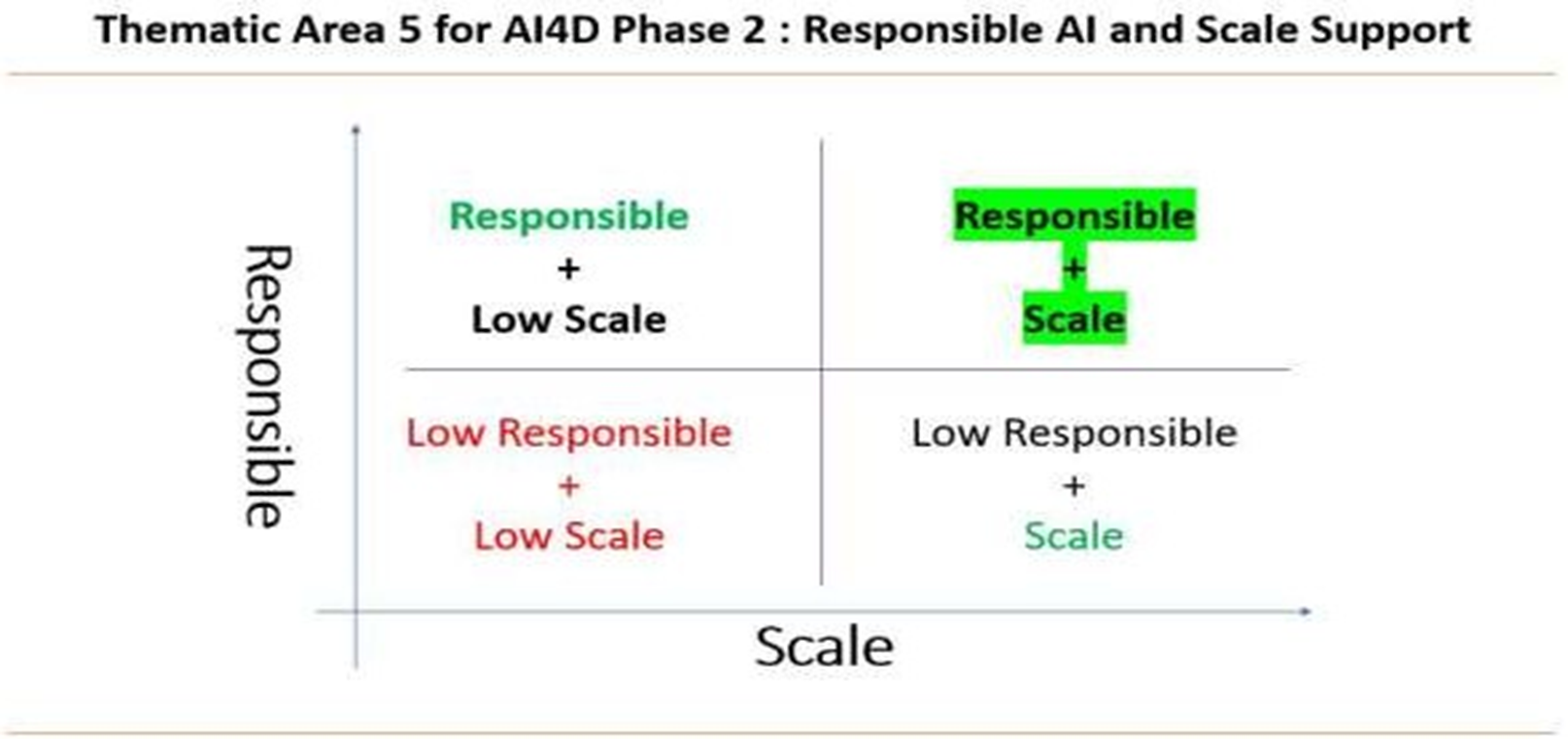
Figure 2 – The 2 Dimensions of Responsible AI and Scale Support [CEIMIA, 2023]
We propose a tri-axial framework of scaling responsible AI solutions. There is great value in combining: The principles of responsible AI, the principles of scalable AI and the stages of the AI lifecycle, and how they relate into a tri-axial space. It shall become apparent in the subsequent sections of this playbook that there exists a strong positive correlation between responsible and scalable AI across the stages of the AI lifecycle. The existence of such a correlation will hopefully trigger a persuasion among innovators of AI not to view responsible AI measures as burdensome caution, but a useful vehicle toward success in scaling their AI. Those who prioritize scaling of AI with little regard for responsible AI would view responsible AI measures as essential to the scaling of the AI.
Our tri-axial framework has added three important features:
A third axis represents the various stages of the AI lifecycle. For an AI solution to become a successful agent of socio-economic transformation, it must be both scalable and responsible across its entire development cycle. In (CEIMIA, 2023), an AI solution can easily occupy a different quadrant at a different stage in its development cycle. For instance, at data collection, desirable measures will focus more on privacy, confidentiality and data justice issues, while at deployment, focus would be more on accessibility through the right media e.g. basic phones, local language interfaces and voice for the illiterate. If an innovator observes the desirable measures of each lifecycle stage with varying diligence, it is likely that the same AI solution will not maintain the same quadrant through the entire lifecycle. It may then be logical to keenly evaluate the score of each solution at every stage.
Exact scores instead of an entire quadrant. While there is still much debate about the legitimacy of providing exact scores in such a youthful space where some definitions are still not conclusive, there must be an initial attempt to award more exact scores rather than the vagueness of 4 quadrants. Two solutions may really occupy the same quadrant while the scaling and responsibility efforts of developing each one of them vary significantly. An attempt at specifying exact efforts or measures may be controversial initially but will accelerate the efforts to converge on the definition of concepts in this space.
An attempt to link the 3 dimensions to the endpoint of an AI solution which is impact. When the 3-dimensional pathway of each AI solution is related to its impact score, would a picture emerge that suggests that specific pathways can predict high or low impact. Can this be a science to help monitor impact and intervene when a pathway seems to suggest low impact?
The tri-axial framework is as below:
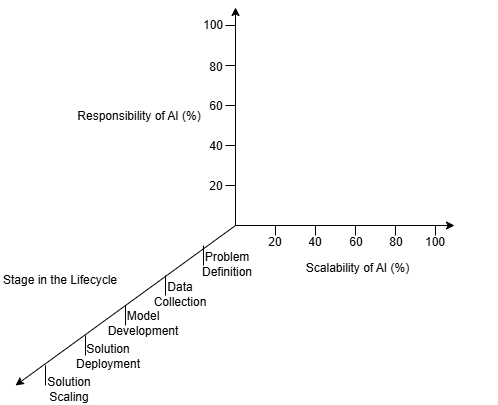
Figure 3 – The Tri-Axial Framework of AI
At each stage of the development of the AI, the innovator can record their compliance levels to both responsibility and scalability. A compliance auditor can do the same.
For instance, at Problem Definition, the innovator observes a responsibility compliance of around 15% with a scalability compliance of about 10%, as shown by the red dot on the tri-axial space of Figure 4, having originated from origin, O of the black dot. A near-perfect responsibility and scalability, since the solution is still in its early stage, would both be around 20%.
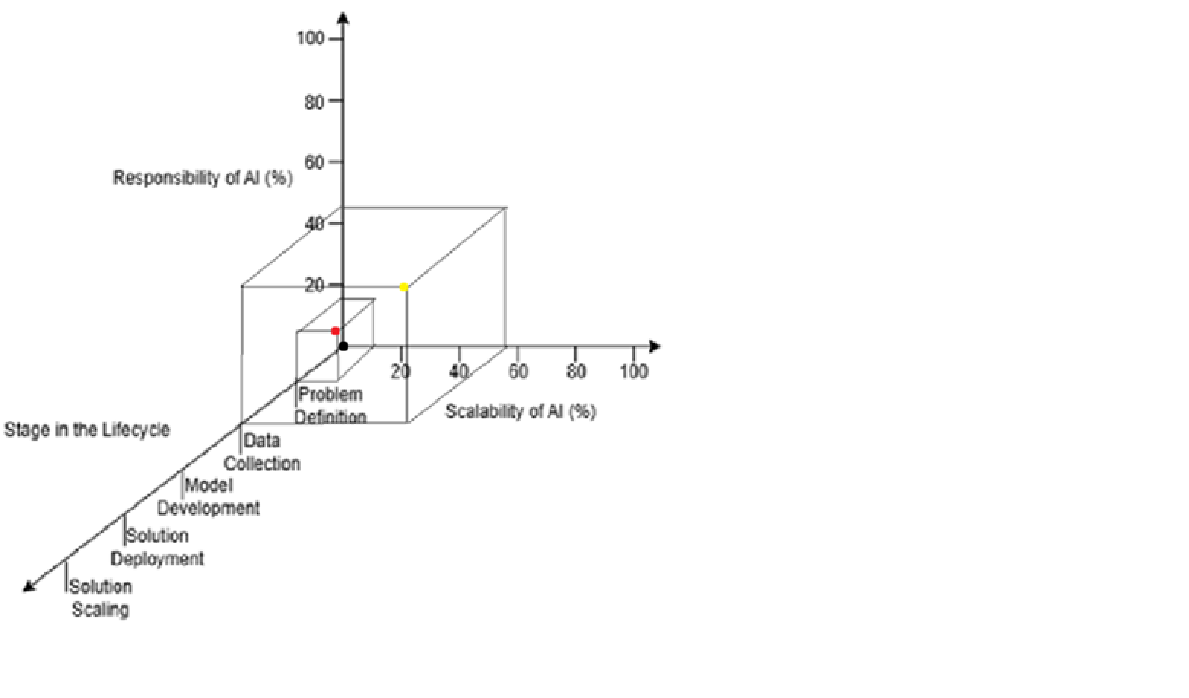
Figure 4 – Responsibility and Scalability Scores of an AI at Problem Definition and Data Collection
At Data Collection stage of this hypothetical solution, the responsibly compliance is around 45% with the scalability compliance at around 55% as shown by the yellow dot on Figure 4.
Figure 5 includes the responsibility and scalability compliances at model development stage shown on the tri-axial space by the blue dot. Figure 6 includes the compliances at solution deployment shown by the purple dot while Figure 7 includes compliances as illustrated by the green dot.
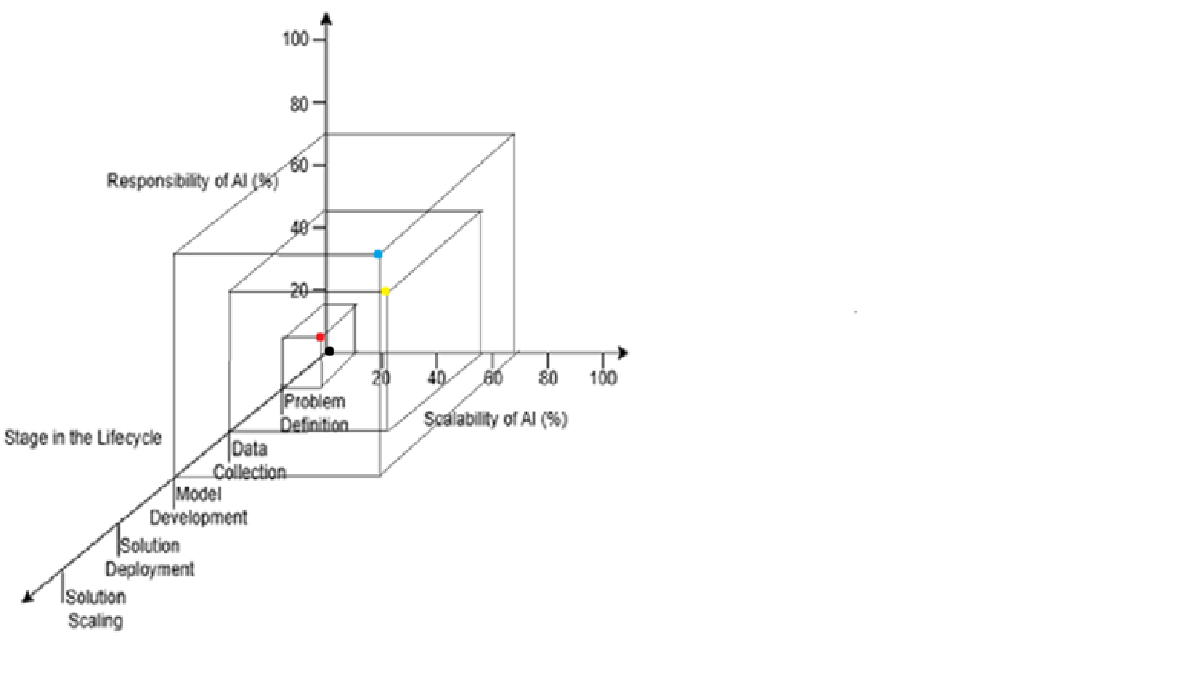
Figure 5 - Responsibility and Scalability Scores of the AI Solution at Problem Definition, Data Collection and Model Development
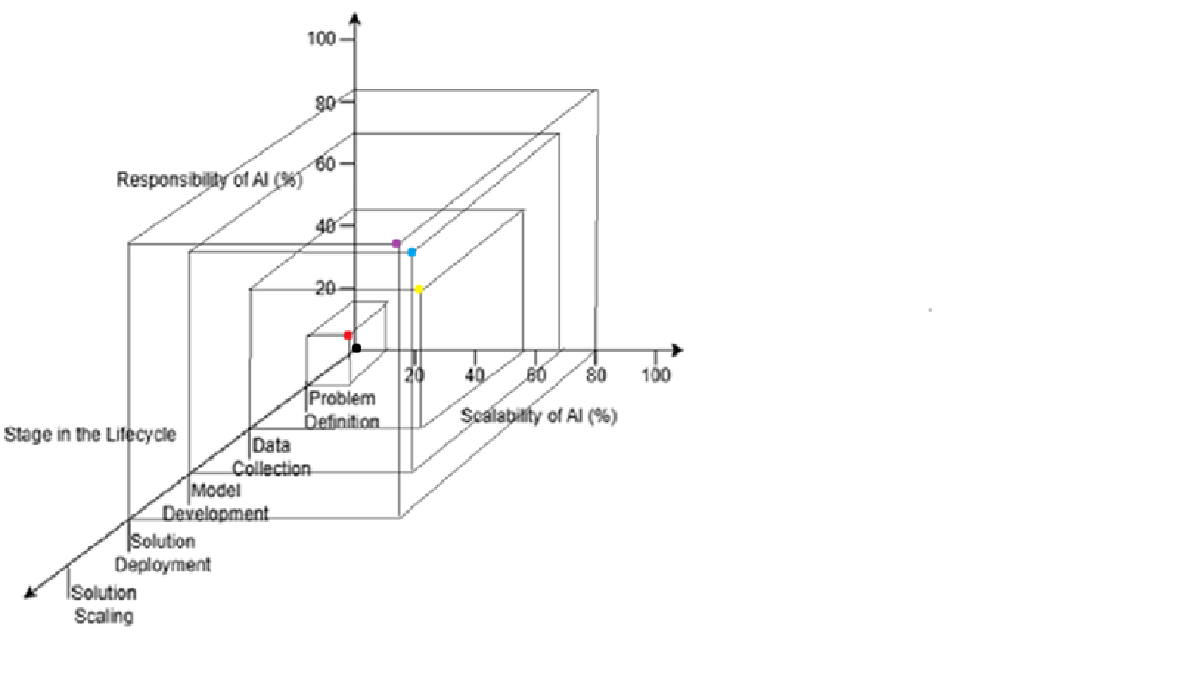
Figure 6 - Responsibility and Scalability Scores of the AI at Problem Definition, Data Collection, Model Development and Solution Deployment
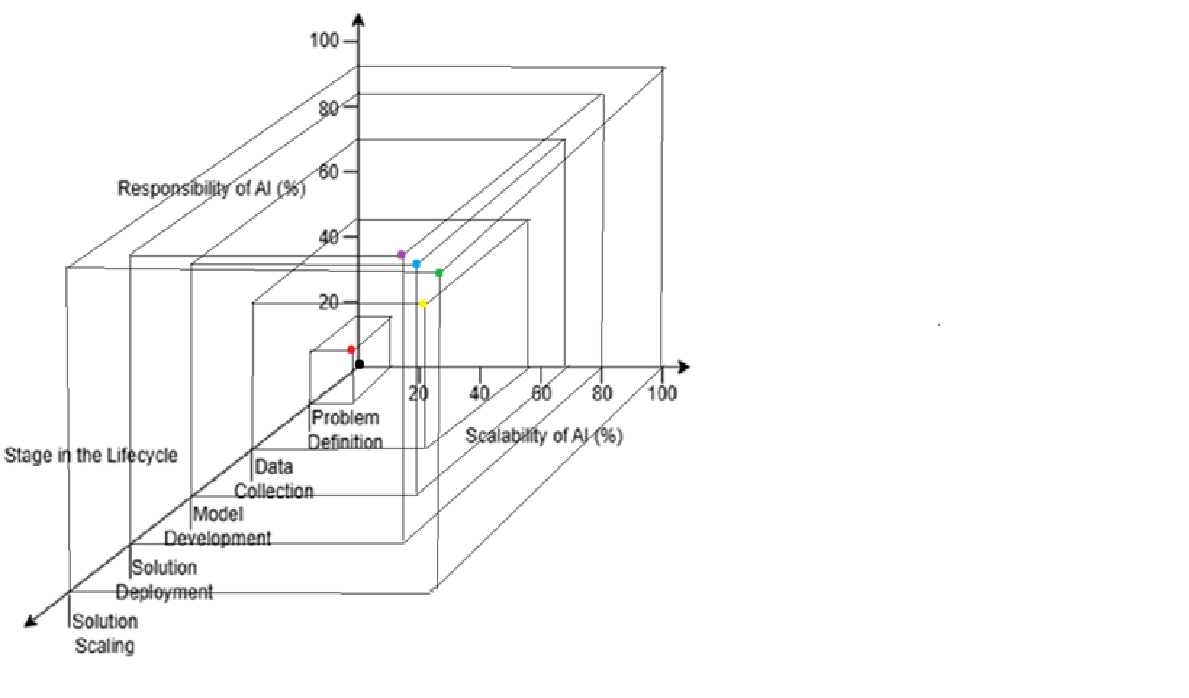
Figure 7 - Responsibility and Scalability Scores of an AI Across the Entire Lifecycle
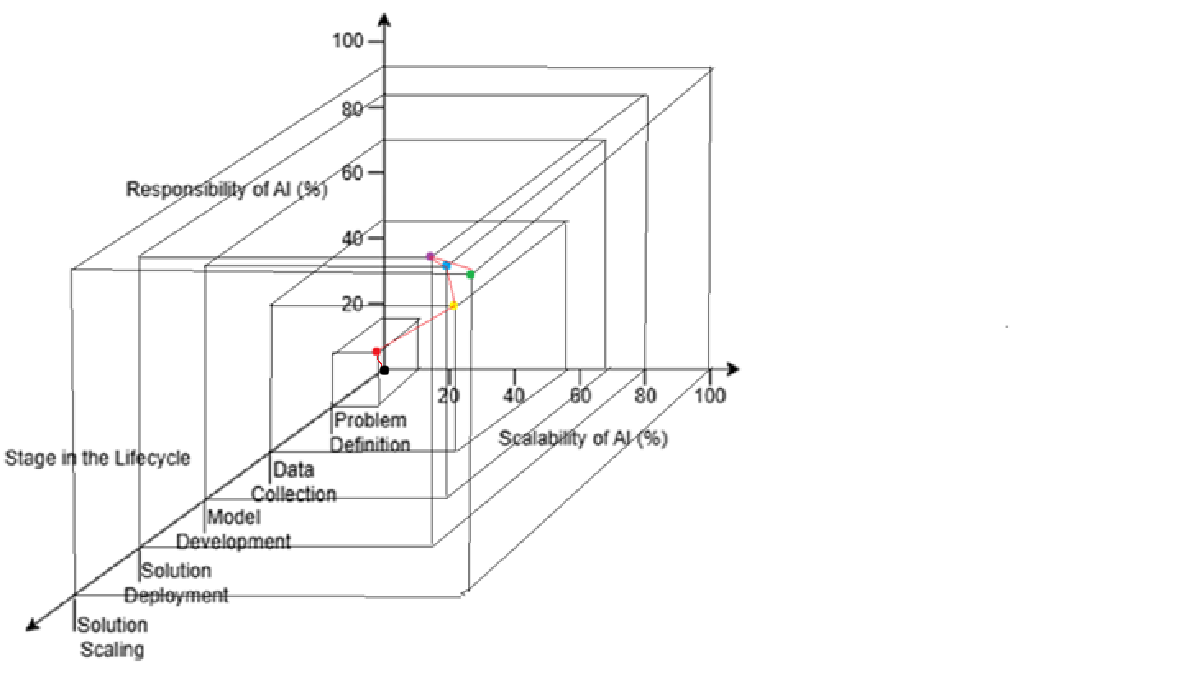
Figure 8 – Responsibility and Scalability Scores Pathway Across the Entire Lifecycle
Figure 8 illustrates the pathway of the hypothetical AI solution through the tri-axial space, to hit the impact ‘wall’ at scale. The Impact ‘wall’ is shaded on Figure 9.
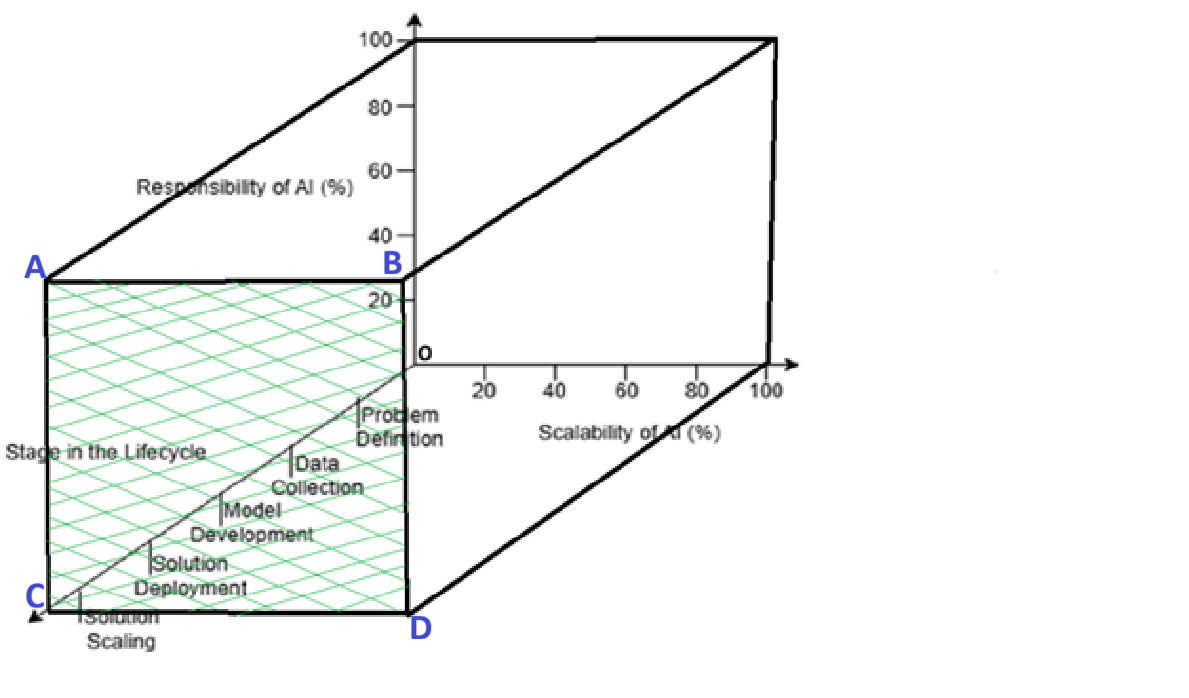
Figure 9 – The Tri-Axial Space for RAI and SAI Right Up To the Impact ‘Wall’
This shaded side is the end of the solution path and where impact is manifest. The solution path cannot end anywhere else beyond this shaded surface. This is because of the following logic:
If the solution is complete and scaled with zero scalability and zero responsibility, the responsibility-scalability path of the solution will follow the z-axis (the stage in the lifecycle axis) strictly and hit Point C. However, if the solution is complete and scaled hypothetically with zero scalability but 100% responsibility, the responsibility-scalability path of the solution will go to hit Point A. If the solution is complete and scaled hypothetically with 100% scalability but zero responsibility, the responsibility-scalability path of the solution will go to hit Point D. If, however, the solution is complete and scaled hypothetically with 100% scalability but 100% responsibility, the responsibility-scalability path of the solution will go to hit Point B which is the ideal point. The practical path of a solution is likely to fall within these four extremes and hit any part of the shaded ceiling. Perfect scalability and responsibility measures, Point B, should theoretically mean a perfectly scaling and perfectly responsible AI. A solution which is developed while observing both scalability and responsibility measures poorly should hit the shaded surface at near Point C. The big question is, does the solution path hitting near Point B indicate high impact? This is what is anticipated but must be practically confirmed through tracking of, or experimentation with countless AI solutions.
An interesting modeling initiative would involve profiling the paths taken by hundreds of AI solutions, assessing each solution’s impact, and developing a model or models of path VS impact. It is probable that impact may be realizable based on certain paths.
The Tri-Axial Tool for Support in Development and Audit of an AI Solution, and Support in Evidence-based Policy Development
Table 5 implements the tri-axial scaling of responsible AI solutions framework. It follows the AI lifecycle stages, showing what questions the innovator needs to ask themselves during the development process to stay compliant to both responsibility and scalability of the AI solution. The questions are distilled from the definition and discussions of the responsible AI principles of the UNESCO framework of Section B. The table additionally captures, in real time, challenges faced, and opportunities seen by the innovator. These challenges and opportunities need to be captured in real time as they are experienced since they are easily forgotten. Additionally, this would be a rare opportunity for an innovator to contribute evidence that can advise evidence-based policy. When such challenges and opportunities are collated across hundreds of AI solutions, prevalent challenges and opportunities are good candidates for policy.
For instance, many innovators may be experiencing challenges in putting together a multidisciplinary team for problem co-definition support. This fact would be more visible if challenges from hundreds of innovators were collated. Governments would then find value in developing a policy instrument that promotes team building of relevant faculty within local universities to offer more affordable and repeatable support to innovators. PLEASE RECALL THE IMPORTANCE OF A MULTI-DISCIPLINARY TEAM WITHIN THE AI LIFECYCLE IN THE TOPIC OF PRINCIPLES OF SCALABLE AI.
Table 5 – Implementation of the Tri-Axial Scaling of Responsible AI Solutions Framework
Source table (275 rows) Scroll horizontally to view all columns
| Stage of AI Lifecycle | RAI Principle | RAI Questions | Scaling Questions | Activities | Challenges Encountered at Each Stage | Opportunities for Improvement at Each Stage | |
|---|---|---|---|---|---|---|---|
| Problem Definition, Objectives, KPIs and Predictors (Features) | Proportionality and Do No Harm | Is there no other way to solve the problem apart from the use of AI? | Is there no other optional technique to the AI approach, with a better RoI estimate? | ||||
| Problem Definition, Objectives, KPIs and Predictors (Features) | Proportionality and Do No Harm | Is there no other way to solve the problem apart from the use of AI? | Is there no other optional technique to the AI approach, with a better RoI estimate? | ||||
| Problem Definition, Objectives, KPIs and Predictors (Features) | Proportionality and Do No Harm | Do you use a technique for anticipating, or measuring and profiling the benefits your AI solution brings to human beings, human rights and fundamental freedoms, communities, society and culture at large or the environment and ecosystems? | Do you use a technique for measuring the AI RoI? | ||||
| Problem Definition, Objectives, KPIs and Predictors (Features) | Proportionality and Do No Harm | Do you use a technique for anticipating, or measuring and profiling the benefits your AI solution brings to human beings, human rights and fundamental freedoms, communities, society and culture at large or the environment and ecosystems? | Do you use a technique for measuring the AI RoI? | ||||
| Problem Definition, Objectives, KPIs and Predictors (Features) | Proportionality and Do No Harm | Do you have a technique to anticipate, or measure, establish and profile which parts of the process of the AI do not add value toward achieving legitimate goals or objectives? | |||||
| Problem Definition, Objectives, KPIs and Predictors (Features) | Proportionality and Do No Harm | Do you have a technique to anticipate, or measure, establish and profile which parts of the process of the AI do not add value toward achieving legitimate goals or objectives? | |||||
| Problem Definition, Objectives, KPIs and Predictors (Features) | Proportionality and Do No Harm | Do you have a technique to anticipate, or measure, establish and profile risks that your AI bring to human beings, human rights and fundamental freedoms, communities, society and culture at large or the environment and ecosystems? | Do you use a technique for anticipating and measuring socio-economic risks presented by the AI project? | ||||
| Problem Definition, Objectives, KPIs and Predictors (Features) | Proportionality and Do No Harm | Do you have a technique to anticipate, or measure, establish and profile risks that your AI bring to human beings, human rights and fundamental freedoms, communities, society and culture at large or the environment and ecosystems? | Do you use a technique for anticipating and measuring socio-economic risks presented by the AI project? | ||||
| Problem Definition, Objectives, KPIs and Predictors (Features) | Proportionality and Do No Harm | Does your AI’s anticipated benefits outweigh the risks? | Does the AI’s anticipated benefits outweigh the risks? | ||||
| Problem Definition, Objectives, KPIs and Predictors (Features) | Proportionality and Do No Harm | Does your AI’s anticipated benefits outweigh the risks? | Does the AI’s anticipated benefits outweigh the risks? | ||||
| Problem Definition, Objectives, KPIs and Predictors (Features) | Proportionality and Do No Harm | Do you have a mitigation strategy to the risks? | Are you planning to use a mitigating strategy to the risks? | ||||
| Problem Definition, Objectives, KPIs and Predictors (Features) | Proportionality and Do No Harm | Do you have a mitigation strategy to the risks? | Are you planning to use a mitigating strategy to the risks? | ||||
| Problem Definition, Objectives, KPIs and Predictors (Features) | Proportionality and Do No Harm | What does the strategy involve, from this list? Tick all that apply: Human determination to accompany all AI decisions to compare deviations; Override the AI; Set up a reparation regime for the harms caused by penalizing developers, vendors, and owners of the AI, according to scientifically determined proportions? Decommission it; | What does the strategy involve, from this list? Tick all that apply: Human determination to accompany all AI decisions to compare deviations; Override the AI; Set up a reparation regime for the harms caused by penalizing developers, vendors, and owners of the AI, according to scientifically determined proportions? Decommission it; | ||||
| Problem Definition, Objectives, KPIs and Predictors (Features) | Proportionality and Do No Harm | What does the strategy involve, from this list? Tick all that apply: Human determination to accompany all AI decisions to compare deviations; Override the AI; Set up a reparation regime for the harms caused by penalizing developers, vendors, and owners of the AI, according to scientifically determined proportions? Decommission it; | What does the strategy involve, from this list? Tick all that apply: Human determination to accompany all AI decisions to compare deviations; Override the AI; Set up a reparation regime for the harms caused by penalizing developers, vendors, and owners of the AI, according to scientifically determined proportions? Decommission it; | ||||
| Problem Definition, Objectives, KPIs and Predictors (Features) | Proportionality and Do No Harm | What does the strategy involve, from this list? Tick all that apply: Human determination to accompany all AI decisions to compare deviations; Override the AI; Set up a reparation regime for the harms caused by penalizing developers, vendors, and owners of the AI, according to scientifically determined proportions? Decommission it; | What does the strategy involve, from this list? Tick all that apply: Human determination to accompany all AI decisions to compare deviations; Override the AI; Set up a reparation regime for the harms caused by penalizing developers, vendors, and owners of the AI, according to scientifically determined proportions? Decommission it; | ||||
| Problem Definition, Objectives, KPIs and Predictors (Features) | Proportionality and Do No Harm | What does the strategy involve, from this list? Tick all that apply: Human determination to accompany all AI decisions to compare deviations; Override the AI; Set up a reparation regime for the harms caused by penalizing developers, vendors, and owners of the AI, according to scientifically determined proportions? Decommission it; | What does the strategy involve, from this list? Tick all that apply: Human determination to accompany all AI decisions to compare deviations; Override the AI; Set up a reparation regime for the harms caused by penalizing developers, vendors, and owners of the AI, according to scientifically determined proportions? Decommission it; | ||||
| Proportionality and Do No Harm | Does your AI solution conduct social scoring or mass surveillance purposes? These are AI concepts that breach human rights greatly and should be discouraged. | ||||||
| Proportionality and Do No Harm | Does your AI solution conduct social scoring or mass surveillance purposes? These are AI concepts that breach human rights greatly and should be discouraged. | ||||||
| Proportionality and Do No Harm | Does your benefit and risk measurement and profiling technique consider reach to spaces occupied by the often-marginalized groups such as women/girls, the old, the youth, the illiterate, the PWD, the poor, etc, in terms of physical contact, language/media of communication used by them? | Does your benefit and risk measurement and profiling technique consider reach to spaces occupied by the often-marginalized groups such as women/girls, the old, the youth, the illiterate, the PWD, the poor, etc, in terms of physical contact, language/media of communication used by them? | |||||
| Proportionality and Do No Harm | Does your benefit and risk measurement and profiling technique consider reach to spaces occupied by the often-marginalized groups such as women/girls, the old, the youth, the illiterate, the PWD, the poor, etc, in terms of physical contact, language/media of communication used by them? | Does your benefit and risk measurement and profiling technique consider reach to spaces occupied by the often-marginalized groups such as women/girls, the old, the youth, the illiterate, the PWD, the poor, etc, in terms of physical contact, language/media of communication used by them? | |||||
| Fairness and non-discrimination | Is your process of problem co-definition done with a representative sample of the user communities in terms of; age, different language groups, race/color, political opinion, geography, nationality, ethnicity, affluency/economic condition, education level/literacy, persons with disabilities, girls and women, and disadvantaged, cultural systems/local communities (with locally-relevant content), rural/urban, marginalized and vulnerable people or people in vulnerable situations, where applicable? involve the anticipated user communities? | Is your process of problem co-definition done with a representative sample of the user communities in terms of; age, different language groups, race/color, political opinion, geography, nationality, ethnicity, affluency/economic condition, education level/literacy, persons with disabilities, girls and women, and disadvantaged, cultural systems/local communities (with locally-relevant content), rural/urban, marginalized and vulnerable people or people in vulnerable situations, where applicable? involve the anticipated user communities? | |||||
| Fairness and non-discrimination | Is your process of problem co-definition done with a representative sample of the user communities in terms of; age, different language groups, race/color, political opinion, geography, nationality, ethnicity, affluency/economic condition, education level/literacy, persons with disabilities, girls and women, and disadvantaged, cultural systems/local communities (with locally-relevant content), rural/urban, marginalized and vulnerable people or people in vulnerable situations, where applicable? involve the anticipated user communities? | Is your process of problem co-definition done with a representative sample of the user communities in terms of; age, different language groups, race/color, political opinion, geography, nationality, ethnicity, affluency/economic condition, education level/literacy, persons with disabilities, girls and women, and disadvantaged, cultural systems/local communities (with locally-relevant content), rural/urban, marginalized and vulnerable people or people in vulnerable situations, where applicable? involve the anticipated user communities? | |||||
| Is your process of problem co-definition conducted through accessible media, local language, voice, basic phones use, invasive telecom networks? | Is your process of problem co-definition conducted through accessible media, local language, voice, basic phones use, invasive telecom networks? | ||||||
| Is your process of problem co-definition conducted through accessible media, local language, voice, basic phones use, invasive telecom networks? | Is your process of problem co-definition conducted through accessible media, local language, voice, basic phones use, invasive telecom networks? | ||||||
| Is your process of problem co-definition conducted through accessible media, local language, voice, basic phones use, invasive telecom networks? | Is your process of problem co-definition conducted through accessible media, local language, voice, basic phones use, invasive telecom networks? | ||||||
| Is your problem co-definition conducted through a liaison who naturally belongs with the user community? | Is your problem co-definition conducted through a liaison who naturally belongs with the user community? | ||||||
| Is your problem co-definition conducted through a liaison who naturally belongs with the user community? | Is your problem co-definition conducted through a liaison who naturally belongs with the user community? | ||||||
| Is your problem co-definition conducted within a sociable, unhurried setting, and over multiple sessions? | Is your problem co-definition conducted within a sociable, unhurried setting, and over multiple sessions? | ||||||
| Is your problem co-definition conducted within a sociable, unhurried setting, and over multiple sessions? | Is your problem co-definition conducted within a sociable, unhurried setting, and over multiple sessions? | ||||||
| Sustainability | Do you have a plan and technique for tracking and assessing the impact of the AI in terms of its social, economic, cultural, and environmental sustainability? | Do you have a plan and technique for tracking and assessing the socio-economic impact of the AI? | |||||
| Sustainability | Do you have a plan and technique for tracking and assessing the impact of the AI in terms of its social, economic, cultural, and environmental sustainability? | Do you have a plan and technique for tracking and assessing the socio-economic impact of the AI? | |||||
| Sustainability | Is there a technique to mitigate negative impacts of this AI on social, economic, cultural, and environmental sustainability? | Is there a technique to mitigate negative impacts of this AI on social, economic, cultural, and environmental sustainability? | |||||
| Sustainability | Is there a technique to mitigate negative impacts of this AI on social, economic, cultural, and environmental sustainability? | Is there a technique to mitigate negative impacts of this AI on social, economic, cultural, and environmental sustainability? | |||||
| Sustainability | Do you have any plan and technique to track if the AI’s automation tends to create net job gains or losses? | ||||||
| Sustainability | Do you have any plan and technique to track if the AI’s automation tends to create net job gains or losses? | ||||||
| Sustainability | Does your plan and technique accommodate tracking the effect of this AI in terms of net job gains or losses to the often-excluded groups in terms of; age, different language groups, race/color, political opinion, geography, nationality, ethnicity, affluency/economic condition, education level/literacy, persons with disabilities, girls and women, and disadvantaged, cultural systems/local communities (with locally-relevant content), rural/urban, marginalized and vulnerable people or people in vulnerable situations, where applicable? GEDI | ||||||
| Sustainability | Does your plan and technique accommodate tracking the effect of this AI in terms of net job gains or losses to the often-excluded groups in terms of; age, different language groups, race/color, political opinion, geography, nationality, ethnicity, affluency/economic condition, education level/literacy, persons with disabilities, girls and women, and disadvantaged, cultural systems/local communities (with locally-relevant content), rural/urban, marginalized and vulnerable people or people in vulnerable situations, where applicable? GEDI | ||||||
| Sustainability | |||||||
| Right to Privacy and Data Protection | During problem co-definition with users, is their data, insights or opinions kept with appropriate privacy, according to national, regional or international privacy and confidentiality framework, or national judicial system? | During problem co-definition with users, is their data, insights or opinions kept with appropriate privacy, according to national, regional or international privacy and confidentiality framework, or national judicial system? | |||||
| Right to Privacy and Data Protection | During problem co-definition with users, is their data, insights or opinions kept with appropriate privacy, according to national, regional or international privacy and confidentiality framework, or national judicial system? | During problem co-definition with users, is their data, insights or opinions kept with appropriate privacy, according to national, regional or international privacy and confidentiality framework, or national judicial system? | |||||
| Multi-stakeholder and adaptive governance and collaboration | Is your development team made up of a significant part of the following expertise, or do you have a plan to consult them: AI expert; Domain expert; Ethics of AI or Responsible AI expert; Statistician; User community link person who is trusted by the community; Sociologist/psychologist; Policy expertise? | Is your team made up of a significant part of the following expertise, or do you have a plan to consult them: AI expert; Domain expert; Ethics of AI or Responsible AI expert; Statistician; User community link person who is trusted by the community; Sociologist/psychologist; Policy expertise? | |||||
| Multi-stakeholder and adaptive governance and collaboration | Is your development team made up of a significant part of the following expertise, or do you have a plan to consult them: AI expert; Domain expert; Ethics of AI or Responsible AI expert; Statistician; User community link person who is trusted by the community; Sociologist/psychologist; Policy expertise? | Is your team made up of a significant part of the following expertise, or do you have a plan to consult them: AI expert; Domain expert; Ethics of AI or Responsible AI expert; Statistician; User community link person who is trusted by the community; Sociologist/psychologist; Policy expertise? | |||||
| Multi-stakeholder and adaptive governance and collaboration | Do you have a reward system for innovativeness, creativity and curiosity. in your team? | ||||||
| Multi-stakeholder and adaptive governance and collaboration | Do you have a reward system for innovativeness, creativity and curiosity. in your team? | ||||||
| Data Collection | Safety and security | Have you defined the problem and converted the objectives, KPIs and Predictors (Features) to determine data variables for collection? | Have you defined the problem and converted the objectives, KPIs and Predictors (Features) to determine data variables for collection? | ||||
| Data Collection | Safety and security | Have you defined the problem and converted the objectives, KPIs and Predictors (Features) to determine data variables for collection? | Have you defined the problem and converted the objectives, KPIs and Predictors (Features) to determine data variables for collection? | ||||
| Data Collection | Safety and security | Do you consider data optimization techniques such as data augmentation or synthetic data generation to enhance the dataset? | Do you consider data optimization techniques such as data augmentation or synthetic data generation to enhance the dataset? | ||||
| Data Collection | Safety and security | Do you consider data optimization techniques such as data augmentation or synthetic data generation to enhance the dataset? | Do you consider data optimization techniques such as data augmentation or synthetic data generation to enhance the dataset? | ||||
| Data Collection | Safety and security | Do you regularly update the dataset with new data to reflect changes in the environment and refine the model? | Do you regularly update the dataset with new data to reflect changes in the environment and refine the model? | ||||
| Data Collection | Safety and security | Do you regularly update the dataset with new data to reflect changes in the environment and refine the model? | Do you regularly update the dataset with new data to reflect changes in the environment and refine the model? | ||||
| Data Collection | Safety and security | Have you considered IoT sensor-based /auto data collection and its advantages/disadvantages VS human / manually collected data? | Have you considered if the dataset would need the automation and accuracy of IoT sensors before selecting between sensors and manual human entry? | ||||
| Data Collection | Safety and security | Have you considered IoT sensor-based /auto data collection and its advantages/disadvantages VS human / manually collected data? | Have you considered if the dataset would need the automation and accuracy of IoT sensors before selecting between sensors and manual human entry? | ||||
| Data Collection | Safety and security | Do you have a plan for validating the accuracy of the data collected? | Do you make effort to validate the data collected? You may use techniques such as parallel collection regimes | ||||
| Data Collection | Safety and security | Do you have a plan for validating the accuracy of the data collected? | Do you make effort to validate the data collected? You may use techniques such as parallel collection regimes | ||||
| Data Collection | Safety and security | Are you making effort to pre-process data appropriately based on standard procedures such as missing values, encoding, etc? | Do you pre-process the dataset to make it AI-ready through procedures such as: Cleaning, transforming, encoding, labelling, standard meta-data? | ||||
| Data Collection | Safety and security | Are you making effort to pre-process data appropriately based on standard procedures such as missing values, encoding, etc? | Do you pre-process the dataset to make it AI-ready through procedures such as: Cleaning, transforming, encoding, labelling, standard meta-data? | ||||
| Data Collection | Fairness and non-discrimination | Are your data sources/subjects inclusive of your anticipated user communities in terms of; age, different language groups, race/color, political opinion, geography, nationality, ethnicity, affluency/economic condition, education level/literacy, persons with disabilities, girls and women, and disadvantaged, cultural systems/local communities (with locally-relevant content), rural/urban, marginalized and vulnerable people or people in vulnerable situations, where applicable? | Where universe is not possible, do you consider scientific sampling to enable inclusivity of all social groups and diversity? | ||||
| Data Collection | Fairness and non-discrimination | Are your data sources/subjects inclusive of your anticipated user communities in terms of; age, different language groups, race/color, political opinion, geography, nationality, ethnicity, affluency/economic condition, education level/literacy, persons with disabilities, girls and women, and disadvantaged, cultural systems/local communities (with locally-relevant content), rural/urban, marginalized and vulnerable people or people in vulnerable situations, where applicable? | Where universe is not possible, do you consider scientific sampling to enable inclusivity of all social groups and diversity? | ||||
| Data Collection | Fairness and non-discrimination | Are your data sources/subjects inclusive of your anticipated user communities in terms of; age, different language groups, race/color, political opinion, geography, nationality, ethnicity, affluency/economic condition, education level/literacy, persons with disabilities, girls and women, and disadvantaged, cultural systems/local communities (with locally-relevant content), rural/urban, marginalized and vulnerable people or people in vulnerable situations, where applicable? | Where universe is not possible, do you consider scientific sampling to enable inclusivity of all social groups and diversity? | ||||
| Fairness and non-discrimination | Do you endeavor to save costs of data collection by first evaluating if there exists the desired and contextual data of your anticipated users before collecting fresh data? | ||||||
| Fairness and non-discrimination | Do you endeavor to save costs of data collection by first evaluating if there exists the desired and contextual data of your anticipated users before collecting fresh data? | ||||||
| Fairness and non-discrimination | Are the human data sources engaged through accessible media, language, voice, basic phones use, invasive telecom networks? | Are the human data sources engaged through accessible media, language, voice, basic phones use, invasive telecom networks? | |||||
| Fairness and non-discrimination | Are the human data sources engaged through accessible media, language, voice, basic phones use, invasive telecom networks? | Are the human data sources engaged through accessible media, language, voice, basic phones use, invasive telecom networks? | |||||
| Fairness and non-discrimination | Are the human data sources engaged through a local person that they consider part of themselves? | Are the human data sources engaged through a local person that they consider part of themselves? | |||||
| Fairness and non-discrimination | Are the human data sources engaged through a local person that they consider part of themselves? | Are the human data sources engaged through a local person that they consider part of themselves? | |||||
| Sustainability | Is the data collection plan executed with respect to the cultural practices of the human sources? Local language, acceptable gender interactions (some communities disapprove of male collectors interacting in particular ways with their womenfolk etc), | Is the data collection plan executed with respect to the cultural practices of the human sources? Local language, acceptable gender interactions (some communities disapprove of male collectors interacting in particular ways with their womenfolk etc), | |||||
| Sustainability | Is the data collection plan executed with respect to the cultural practices of the human sources? Local language, acceptable gender interactions (some communities disapprove of male collectors interacting in particular ways with their womenfolk etc), | Is the data collection plan executed with respect to the cultural practices of the human sources? Local language, acceptable gender interactions (some communities disapprove of male collectors interacting in particular ways with their womenfolk etc), | |||||
| Sustainability | Is the rewarding of the human data sources equitably included in the data economics and revenue? Are there fair plans to equitably reward them? | Is the rewarding of the human data sources equitably included in the data economics and revenue? Are there fair plans to equitably reward them? | |||||
| Sustainability | Is the rewarding of the human data sources equitably included in the data economics and revenue? Are there fair plans to equitably reward them? | Is the rewarding of the human data sources equitably included in the data economics and revenue? Are there fair plans to equitably reward them? | |||||
| Sustainability | |||||||
| Right to Privacy and Data Protection | In your process of data collection and management, do you follow any national, regional or international privacy and confidentiality framework, or national judicial system? LINK TO REFERENCE | In your process of data collection and management, do you follow any national, regional or international privacy and confidentiality framework, or national judicial system? LINK TO REFERENCE | |||||
| Right to Privacy and Data Protection | In your process of data collection and management, do you follow any national, regional or international privacy and confidentiality framework, or national judicial system? LINK TO REFERENCE | In your process of data collection and management, do you follow any national, regional or international privacy and confidentiality framework, or national judicial system? LINK TO REFERENCE | |||||
| Right to Privacy and Data Protection | Do you have a plan for measuring and mitigating privacy and confidentiality breaches? | Do you have a plan for measuring and mitigating privacy and confidentiality breaches? | |||||
| Right to Privacy and Data Protection | Do you have a plan for measuring and mitigating privacy and confidentiality breaches? | Do you have a plan for measuring and mitigating privacy and confidentiality breaches? | |||||
| Right to Privacy and Data Protection | Do you document the processes dealing with how privacy, confidentiality and appropriate data management practices were achieved? | Do you document the processes dealing with how privacy, confidentiality and appropriate data management practices were achieved? | |||||
| Right to Privacy and Data Protection | Do you document the processes dealing with how privacy, confidentiality and appropriate data management practices were achieved? | Do you document the processes dealing with how privacy, confidentiality and appropriate data management practices were achieved? | |||||
| Right to Privacy and Data Protection | Is the data collected from adequately informed persons in terms of how their data will be used and handled, including the reward system, with the informed consent requested in the right language and medium e.g. voice? The two stages of a standard informed consent are as follows; Stage 1 (giving information): the person reflects on the information given about the purpose of the research and what is required of them; they are under no pressure to respond to the researcher immediately. Stage 2 (obtaining consent): the researcher reiterates the terms of the research, often as separate bullet points or clauses; the person agrees to each term (giving explicit consent) before agreeing to take part in the project as a whole. Now that consent has been obtained, | Is the data collected from adequately informed persons in terms of how their data will be used and handled, including the reward system, with the informed consent requested in the right language and medium e.g. voice? The two stages of a standard informed consent are as follows; Stage 1 (giving information): the person reflects on the information given about the purpose of the research and what is required of them; they are under no pressure to respond to the researcher immediately. Stage 2 (obtaining consent): the researcher reiterates the terms of the research, often as separate bullet points or clauses; the person agrees to each term (giving explicit consent) before agreeing to take part in the project as a whole. Now that consent has been obtained, | |||||
| Right to Privacy and Data Protection | Is the data collected from adequately informed persons in terms of how their data will be used and handled, including the reward system, with the informed consent requested in the right language and medium e.g. voice? The two stages of a standard informed consent are as follows; Stage 1 (giving information): the person reflects on the information given about the purpose of the research and what is required of them; they are under no pressure to respond to the researcher immediately. Stage 2 (obtaining consent): the researcher reiterates the terms of the research, often as separate bullet points or clauses; the person agrees to each term (giving explicit consent) before agreeing to take part in the project as a whole. Now that consent has been obtained, | Is the data collected from adequately informed persons in terms of how their data will be used and handled, including the reward system, with the informed consent requested in the right language and medium e.g. voice? The two stages of a standard informed consent are as follows; Stage 1 (giving information): the person reflects on the information given about the purpose of the research and what is required of them; they are under no pressure to respond to the researcher immediately. Stage 2 (obtaining consent): the researcher reiterates the terms of the research, often as separate bullet points or clauses; the person agrees to each term (giving explicit consent) before agreeing to take part in the project as a whole. Now that consent has been obtained, | |||||
| Right to Privacy and Data Protection | Is the data collected from adequately informed persons in terms of how their data will be used and handled, including the reward system, with the informed consent requested in the right language and medium e.g. voice? The two stages of a standard informed consent are as follows; Stage 1 (giving information): the person reflects on the information given about the purpose of the research and what is required of them; they are under no pressure to respond to the researcher immediately. Stage 2 (obtaining consent): the researcher reiterates the terms of the research, often as separate bullet points or clauses; the person agrees to each term (giving explicit consent) before agreeing to take part in the project as a whole. Now that consent has been obtained, | Is the data collected from adequately informed persons in terms of how their data will be used and handled, including the reward system, with the informed consent requested in the right language and medium e.g. voice? The two stages of a standard informed consent are as follows; Stage 1 (giving information): the person reflects on the information given about the purpose of the research and what is required of them; they are under no pressure to respond to the researcher immediately. Stage 2 (obtaining consent): the researcher reiterates the terms of the research, often as separate bullet points or clauses; the person agrees to each term (giving explicit consent) before agreeing to take part in the project as a whole. Now that consent has been obtained, | |||||
| Right to Privacy and Data Protection | Is the data collected from adequately informed persons in terms of how their data will be used and handled, including the reward system, with the informed consent requested in the right language and medium e.g. voice? The two stages of a standard informed consent are as follows; Stage 1 (giving information): the person reflects on the information given about the purpose of the research and what is required of them; they are under no pressure to respond to the researcher immediately. Stage 2 (obtaining consent): the researcher reiterates the terms of the research, often as separate bullet points or clauses; the person agrees to each term (giving explicit consent) before agreeing to take part in the project as a whole. Now that consent has been obtained, | Is the data collected from adequately informed persons in terms of how their data will be used and handled, including the reward system, with the informed consent requested in the right language and medium e.g. voice? The two stages of a standard informed consent are as follows; Stage 1 (giving information): the person reflects on the information given about the purpose of the research and what is required of them; they are under no pressure to respond to the researcher immediately. Stage 2 (obtaining consent): the researcher reiterates the terms of the research, often as separate bullet points or clauses; the person agrees to each term (giving explicit consent) before agreeing to take part in the project as a whole. Now that consent has been obtained, | |||||
| Responsibility and accountability | Does your data management protocol include who is responsible and accountable for data usage which is unacceptable with an attached penalty? | Does your data management protocol include who is responsible and accountable for data usage which is unacceptable, with an attached penalty? | |||||
| Responsibility and accountability | Does your data management protocol include who is responsible and accountable for data usage which is unacceptable with an attached penalty? | Does your data management protocol include who is responsible and accountable for data usage which is unacceptable, with an attached penalty? | |||||
| Responsibility and accountability | |||||||
| Model Development | Safety and security | Do you compare the performance of various ML and GenAI algorithms to compare performances and use the best? | Do you select the right algorithm and features for the right type of data and task, and based on the compared model precision? For instance, linear regression for predicting continuous outcomes; decision trees for classification tasks; deep learning such as CNN for image analytics; unlabeled data for unsupervised clustering K-means clustering etc. | ||||
| Model Development | Safety and security | Do you compare the performance of various ML and GenAI algorithms to compare performances and use the best? | Do you select the right algorithm and features for the right type of data and task, and based on the compared model precision? For instance, linear regression for predicting continuous outcomes; decision trees for classification tasks; deep learning such as CNN for image analytics; unlabeled data for unsupervised clustering K-means clustering etc. | ||||
| Model Development | Safety and security | Do you try to strike a balance between algorithm complexity and computational efficiency? | Do you try to strike a balance between algorithm complexity and computational efficiency? | ||||
| Model Development | Safety and security | Do you try to strike a balance between algorithm complexity and computational efficiency? | Do you try to strike a balance between algorithm complexity and computational efficiency? | ||||
| Model Development | Safety and security | Do you employ existing infrastructure that follows proven technological best practices to enable easy and scalable model development leading to affordable but precise models? | Do you consider infrastructure, platforms and open-source libraries that support easy development and deployment of the AI system by enabling 0scalability, interpretability and computational efficiency, e.g. Cloud services platforms such as AWS, Azure, GCP, Keras and Scikit-Learn etc? | ||||
| Model Development | Safety and security | Do you employ existing infrastructure that follows proven technological best practices to enable easy and scalable model development leading to affordable but precise models? | Do you consider infrastructure, platforms and open-source libraries that support easy development and deployment of the AI system by enabling 0scalability, interpretability and computational efficiency, e.g. Cloud services platforms such as AWS, Azure, GCP, Keras and Scikit-Learn etc? | ||||
| Model Development | Safety and security | Do you employ existing infrastructure that follows proven technological best practices to enable easy and scalable model development leading to affordable but precise models? | Do you consider infrastructure, platforms and open-source libraries that support easy development and deployment of the AI system by enabling 0scalability, interpretability and computational efficiency, e.g. Cloud services platforms such as AWS, Azure, GCP, Keras and Scikit-Learn etc? | ||||
| Model Development | Safety and security | Do you compare the model’s prediction/generation/diagnosis against the human expert’s to refine the model? | Do you employ the post-training model evaluation techniques of fresh testing dataset and evaluation? | ||||
| Model Development | Safety and security | Do you compare the model’s prediction/generation/diagnosis against the human expert’s to refine the model? | Do you employ the post-training model evaluation techniques of fresh testing dataset and evaluation? | ||||
| Do you compare predicted against eventual/actual outcome with representative sample of users in terms of: Age, different language groups, race/color, political opinion, geography, nationality, ethnicity, affluency/economic condition, education level/literacy, persons with disabilities, girls and women, and disadvantaged, cultural systems/local communities (with locally-relevant content), rural/urban, marginalized and vulnerable people or people in vulnerable situations, where applicable? | Do you conduct robustness testing by evaluating the model's performance under various conditions, with various groups of people, including adversarial examples and edge cases? | ||||||
| Do you compare predicted against eventual/actual outcome with representative sample of users in terms of: Age, different language groups, race/color, political opinion, geography, nationality, ethnicity, affluency/economic condition, education level/literacy, persons with disabilities, girls and women, and disadvantaged, cultural systems/local communities (with locally-relevant content), rural/urban, marginalized and vulnerable people or people in vulnerable situations, where applicable? | Do you conduct robustness testing by evaluating the model's performance under various conditions, with various groups of people, including adversarial examples and edge cases? | ||||||
| Do you perform A/B testing by comparing model performance against baselines or alternative models in real-world scenarios? | Do you perform A/B testing by comparing model performance against baselines or alternative models in real-world scenarios? | ||||||
| Do you perform A/B testing by comparing model performance against baselines or alternative models in real-world scenarios? | Do you perform A/B testing by comparing model performance against baselines or alternative models in real-world scenarios? | ||||||
| Do your models demonstrate accuracy, precision, and recall? | |||||||
| Do your models demonstrate accuracy, precision, and recall? | |||||||
| If the model displays significant imprecision, do you determine whether the imprecision arises from data or algorithm? | Systematically analyze model errors to identify areas for improvement? | ||||||
| If the model displays significant imprecision, do you determine whether the imprecision arises from data or algorithm? | Systematically analyze model errors to identify areas for improvement? | ||||||
| Does the team carry out security and breach assessment at vulnerable points of the platforms used for model development? | Do you consider existing platforms which can be used to integrate security features into the model architecture to prevent adversarial attacks? | ||||||
| Does the team carry out security and breach assessment at vulnerable points of the platforms used for model development? | Do you consider existing platforms which can be used to integrate security features into the model architecture to prevent adversarial attacks? | ||||||
| Sustainability | Does the model recommend any action which is unacceptable culturally for the anticipated user community? | Does your AI offer services in areas which reconcile and not disagree with the cultures and values of the user community | |||||
| Sustainability | Does the model recommend any action which is unacceptable culturally for the anticipated user community? | Does your AI offer services in areas which reconcile and not disagree with the cultures and values of the user community | |||||
| Sustainability | Does you invite local communities to share indigenous knowledge to consider including in the model? | Does you invite local communities to share indigenous knowledge to consider including in the model? | |||||
| Sustainability | Does you invite local communities to share indigenous knowledge to consider including in the model? | Does you invite local communities to share indigenous knowledge to consider including in the model? | |||||
| Sustainability | Do you compare the power consumptions of the various models, during training and querying (depending on the ML algorithm) and considering the least power consumers? | During training and querying, does the AI algorithm consume energy to such an extent that would exert unmanageable power costs or penalize the carbon footprint of the users or owners? | |||||
| Sustainability | Do you compare the power consumptions of the various models, during training and querying (depending on the ML algorithm) and considering the least power consumers? | During training and querying, does the AI algorithm consume energy to such an extent that would exert unmanageable power costs or penalize the carbon footprint of the users or owners? | |||||
| Sustainability | |||||||
| Solution Deployment | Proportionality, Do No Harm / Safety and security | Are there actual benefits that your AI brings to human beings, human rights and fundamental freedoms, communities, society? | Are there actual benefits that your AI brings to human beings, human rights and fundamental freedoms, communities, society? | ||||
| Solution Deployment | Proportionality, Do No Harm / Safety and security | Are there actual benefits that your AI brings to human beings, human rights and fundamental freedoms, communities, society? | Are there actual benefits that your AI brings to human beings, human rights and fundamental freedoms, communities, society? | ||||
| Solution Deployment | Proportionality, Do No Harm / Safety and security | Are there actual risks that your AI brings to human beings, human rights and fundamental freedoms, communities, society? | Are there actual risks that your AI brings to human beings, human rights and fundamental freedoms, communities, society? | ||||
| Solution Deployment | Proportionality, Do No Harm / Safety and security | Are there actual risks that your AI brings to human beings, human rights and fundamental freedoms, communities, society? | Are there actual risks that your AI brings to human beings, human rights and fundamental freedoms, communities, society? | ||||
| Solution Deployment | Proportionality, Do No Harm / Safety and security | Are there actual risks that your AI brings to human beings, human rights and fundamental freedoms, communities, society? | Are there actual risks that your AI brings to human beings, human rights and fundamental freedoms, communities, society? | ||||
| If the AI displays significant imprecision, do you determine whether the imprecision arises from data or algorithm? | If the AI displays significant imprecision, do you determine whether the imprecision arises from data or algorithm? | ||||||
| If the AI displays significant imprecision, do you determine whether the imprecision arises from data or algorithm? | If the AI displays significant imprecision, do you determine whether the imprecision arises from data or algorithm? | ||||||
| If the AI solution displays significant imprecision, what strategy do you use among the following? Human determination to accompany all AI decisions to compare deviations; Override the AI; Set up a reparation regime for the harm caused by penalizing developers, vendors, and owners of the AI, according to scientifically determined proportions? Decommission it; | If the AI solution displays significant imprecision, what strategy do you use among the following? Human determination to accompany all AI decisions to compare deviations; Override the AI; Set up a reparation regime for the harm caused by penalizing developers, vendors, and owners of the AI, according to scientifically determined proportions? Decommission it; | ||||||
| If the AI solution displays significant imprecision, what strategy do you use among the following? Human determination to accompany all AI decisions to compare deviations; Override the AI; Set up a reparation regime for the harm caused by penalizing developers, vendors, and owners of the AI, according to scientifically determined proportions? Decommission it; | If the AI solution displays significant imprecision, what strategy do you use among the following? Human determination to accompany all AI decisions to compare deviations; Override the AI; Set up a reparation regime for the harm caused by penalizing developers, vendors, and owners of the AI, according to scientifically determined proportions? Decommission it; | ||||||
| If the AI solution displays significant imprecision, what strategy do you use among the following? Human determination to accompany all AI decisions to compare deviations; Override the AI; Set up a reparation regime for the harm caused by penalizing developers, vendors, and owners of the AI, according to scientifically determined proportions? Decommission it; | If the AI solution displays significant imprecision, what strategy do you use among the following? Human determination to accompany all AI decisions to compare deviations; Override the AI; Set up a reparation regime for the harm caused by penalizing developers, vendors, and owners of the AI, according to scientifically determined proportions? Decommission it; | ||||||
| If the AI solution displays significant imprecision, what strategy do you use among the following? Human determination to accompany all AI decisions to compare deviations; Override the AI; Set up a reparation regime for the harm caused by penalizing developers, vendors, and owners of the AI, according to scientifically determined proportions? Decommission it; | If the AI solution displays significant imprecision, what strategy do you use among the following? Human determination to accompany all AI decisions to compare deviations; Override the AI; Set up a reparation regime for the harm caused by penalizing developers, vendors, and owners of the AI, according to scientifically determined proportions? Decommission it; | ||||||
| Does the AI solution inform the user about the precision level of the predicted value? | Does the AI solution inform the user about the precision level of the predicted value? | ||||||
| Does the AI solution inform the user about the precision level of the predicted value? | Does the AI solution inform the user about the precision level of the predicted value? | ||||||
| Does the AI embed a module that asks users to rate the predictive precision levels based on the actual VS the predicted? | Does the AI embed a module that asks users to rate the predictive precision levels based on the actual VS the predicted? | ||||||
| Does the AI embed a module that asks users to rate the predictive precision levels based on the actual VS the predicted? | Does the AI embed a module that asks users to rate the predictive precision levels based on the actual VS the predicted? | ||||||
| Fairness and non-discrimination | Does your deployment intentionally target the various groups of the user community in terms of: Age, different language groups, race/color, political opinion, geography, nationality, ethnicity, affluency/economic condition, education level/literacy, persons with disabilities, girls and women, and disadvantaged, cultural systems/local communities (with locally-relevant content), rural/urban, marginalized and vulnerable people or people in vulnerable situations, where applicable? | Does your deployment intentionally target the various groups of the user community in terms of: Age, different language groups, race/color, political opinion, geography, nationality, ethnicity, affluency/economic condition, education level/literacy, persons with disabilities, girls and women, and disadvantaged, cultural systems/local communities (with locally-relevant content), rural/urban, marginalized and vulnerable people or people in vulnerable situations, where applicable? | |||||
| Fairness and non-discrimination | Does your deployment intentionally target the various groups of the user community in terms of: Age, different language groups, race/color, political opinion, geography, nationality, ethnicity, affluency/economic condition, education level/literacy, persons with disabilities, girls and women, and disadvantaged, cultural systems/local communities (with locally-relevant content), rural/urban, marginalized and vulnerable people or people in vulnerable situations, where applicable? | Does your deployment intentionally target the various groups of the user community in terms of: Age, different language groups, race/color, political opinion, geography, nationality, ethnicity, affluency/economic condition, education level/literacy, persons with disabilities, girls and women, and disadvantaged, cultural systems/local communities (with locally-relevant content), rural/urban, marginalized and vulnerable people or people in vulnerable situations, where applicable? | |||||
| Fairness and non-discrimination | Does your deployment intentionally target the various groups of the user community in terms of: Age, different language groups, race/color, political opinion, geography, nationality, ethnicity, affluency/economic condition, education level/literacy, persons with disabilities, girls and women, and disadvantaged, cultural systems/local communities (with locally-relevant content), rural/urban, marginalized and vulnerable people or people in vulnerable situations, where applicable? | Does your deployment intentionally target the various groups of the user community in terms of: Age, different language groups, race/color, political opinion, geography, nationality, ethnicity, affluency/economic condition, education level/literacy, persons with disabilities, girls and women, and disadvantaged, cultural systems/local communities (with locally-relevant content), rural/urban, marginalized and vulnerable people or people in vulnerable situations, where applicable? | |||||
| Fairness and non-discrimination | Is the solution packaged with ICT tools that enable easy access within that specific community, in terms of: Tools that can communicate in local languages; Voice tools for the illiterate; Basic phones; Invasive but basic telecommunications networks; Affordable costs? | Do you make the solution effortless to use through friendly user interface that aligns with lifestyles, exposure levels, tech levels of the user community e.g. interfaces for basic phones, local languages and voice for illiterate in rural or marginalized spaces? | |||||
| Fairness and non-discrimination | Is the solution packaged with ICT tools that enable easy access within that specific community, in terms of: Tools that can communicate in local languages; Voice tools for the illiterate; Basic phones; Invasive but basic telecommunications networks; Affordable costs? | Do you make the solution effortless to use through friendly user interface that aligns with lifestyles, exposure levels, tech levels of the user community e.g. interfaces for basic phones, local languages and voice for illiterate in rural or marginalized spaces? | |||||
| Do you make the solution easy to try through the following - free access (if premium), interactive landing page, and one-click login etc? | |||||||
| Do you make the solution easy to try through the following - free access (if premium), interactive landing page, and one-click login etc? | |||||||
| Does the solution have a module that prompts user to provide easy feedback about their opinion of the service and what could be made better? | Does the solution have a module that prompts user to provide easy feedback about their opinion of the service and what could be made better? | ||||||
| Does the solution have a module that prompts user to provide easy feedback about their opinion of the service and what could be made better? | Does the solution have a module that prompts user to provide easy feedback about their opinion of the service and what could be made better? | ||||||
| Do you have a plan to consider updating solution to consider integrating prevalently desired features in the feedback? | Do you have a plan to consider updating solution to consider integrating prevalently desired features in the feedback? | ||||||
| Do you have a plan to consider updating solution to consider integrating prevalently desired features in the feedback? | Do you have a plan to consider updating solution to consider integrating prevalently desired features in the feedback? | ||||||
| Do you deploy through locally trusted persons? | Do you use simple, clear, non-technical language and metrics that users care about, in creating awareness, value proposition and promotion to anticipated users? Such statements are such as “accurately predicts the first day of rainfall” or “accurately diagnoses the illness” etc. | ||||||
| Do you deploy through locally trusted persons? | Do you use simple, clear, non-technical language and metrics that users care about, in creating awareness, value proposition and promotion to anticipated users? Such statements are such as “accurately predicts the first day of rainfall” or “accurately diagnoses the illness” etc. | ||||||
| Sustainability | Do you have a plan and technique for tracking and assessing the impact of an AI in terms of its social, economic, cultural, and environmental sustainability? | Do you have a plan and technique for tracking and assessing the impact of an AI in terms of its social, economic, cultural, and environmental sustainability? | |||||
| Sustainability | Do you have a plan and technique for tracking and assessing the impact of an AI in terms of its social, economic, cultural, and environmental sustainability? | Do you have a plan and technique for tracking and assessing the impact of an AI in terms of its social, economic, cultural, and environmental sustainability? | |||||
| Sustainability | Is there a technique to mitigate negative impacts of this AI on social, economic, cultural, and environmental sustainability? | Is there a technique to mitigate negative impacts of this AI on social, economic, cultural, and environmental sustainability? | |||||
| Sustainability | Is there a technique to mitigate negative impacts of this AI on social, economic, cultural, and environmental sustainability? | Is there a technique to mitigate negative impacts of this AI on social, economic, cultural, and environmental sustainability? | |||||
| Sustainability | Do you consider accessibility, scalability, sustainability and costs of integrating AI models into existing systems e.g. Docker and Kubernetes, cloud deployment, etc to ensure smooth adoption, usability and scalable deployment? | Do you consider accessibility, scalability, sustainability and costs of integrating AI models into existing systems e.g. Docker and Kubernetes, cloud deployment, etc to ensure smooth adoption, usability and scalable deployment? | |||||
| Sustainability | Do you consider accessibility, scalability, sustainability and costs of integrating AI models into existing systems e.g. Docker and Kubernetes, cloud deployment, etc to ensure smooth adoption, usability and scalable deployment? | Do you consider accessibility, scalability, sustainability and costs of integrating AI models into existing systems e.g. Docker and Kubernetes, cloud deployment, etc to ensure smooth adoption, usability and scalable deployment? | |||||
| Sustainability | Do you first build and deploy a simple, working MVP that is easy to use to evaluate initial user responses? | ||||||
| Sustainability | Does the AI recognize, respect, and / or attempt to preserve cultural practices, particularly those that do not breach human rights? | Does the interfaces of the solution and how it interacts with users respect cultures, values and patterns of lifestyles of the user community? | |||||
| Sustainability | Does the AI recognize, respect, and / or attempt to preserve cultural practices, particularly those that do not breach human rights? | Does the interfaces of the solution and how it interacts with users respect cultures, values and patterns of lifestyles of the user community? | |||||
| Sustainability | |||||||
| Sustainability | Do you have any plan and technique to track if the AI’s automation tends to create net job gains or losses? | ||||||
| Sustainability | Do you have any plan and technique to track if the AI’s automation tends to create net job gains or losses? | ||||||
| Does your plan and technique accommodate tracking the effect of this AI in terms of net job gains or losses to the often-excluded groups in terms of; age, different language groups, race/color, political opinion, geography, nationality, ethnicity, affluency/economic condition, education level/literacy, persons with disabilities, girls and women, and disadvantaged, cultural systems/local communities (with locally-relevant content), rural/urban, marginalized and vulnerable people or people in vulnerable situations, where applicable? GEDI | |||||||
| Does your plan and technique accommodate tracking the effect of this AI in terms of net job gains or losses to the often-excluded groups in terms of; age, different language groups, race/color, political opinion, geography, nationality, ethnicity, affluency/economic condition, education level/literacy, persons with disabilities, girls and women, and disadvantaged, cultural systems/local communities (with locally-relevant content), rural/urban, marginalized and vulnerable people or people in vulnerable situations, where applicable? GEDI | |||||||
| Does the AI have a module to monitor and declare its power consumption (proportional to the carbon footprint) during training and querying? | Does the AI have a module to monitor and declare its power consumption (to manage power costs etc) during scaling training and querying? | ||||||
| Does the AI have a module to monitor and declare its power consumption (proportional to the carbon footprint) during training and querying? | Does the AI have a module to monitor and declare its power consumption (to manage power costs etc) during scaling training and querying? | ||||||
| Right to Privacy and Data Protection | Do you have a plan to establish and intervene if the data center or cloud equipment is not free of surveillance that unknowingly shares user data? | ||||||
| Right to Privacy and Data Protection | Do you have a plan to establish and intervene if the data center or cloud equipment is not free of surveillance that unknowingly shares user data? | ||||||
| Right to Privacy and Data Protection | |||||||
| Human oversight and determination | Does the decision of your AI solution call the attention of the user to also scrutinize the decision first before implementing? | Do you put a human in the loop to keep auditing the precision and accuracy of the solution | |||||
| Human oversight and determination | Does the decision of your AI solution call the attention of the user to also scrutinize the decision first before implementing? | Do you put a human in the loop to keep auditing the precision and accuracy of the solution | |||||
| Human oversight and determination | Does the AI embed a module which prompts the whistle-blowing user to submit a concern with their identification protected? | Does the AI embed a module which prompts the whistle-blowing user to submit a concern with their identification protected? | |||||
| Human oversight and determination | Does the AI embed a module which prompts the whistle-blowing user to submit a concern with their identification protected? | Does the AI embed a module which prompts the whistle-blowing user to submit a concern with their identification protected? | |||||
| Human oversight and determination | |||||||
| Transparency and explainability | Does the AI provide users with the understanding of how each stage is developed, connected, how every application stage/functionality of the AI works, the responsibility of the various stages of development? | Does the AI provide users with the understanding of how each stage is developed, connected, how collected, how data is managed, every application stage/functionality of the AI works, the responsibility of the various stages of development? | |||||
| Transparency and explainability | Does the AI provide users with the understanding of how each stage is developed, connected, how every application stage/functionality of the AI works, the responsibility of the various stages of development? | Does the AI provide users with the understanding of how each stage is developed, connected, how collected, how data is managed, every application stage/functionality of the AI works, the responsibility of the various stages of development? | |||||
| Transparency and explainability | Does the AI let the user know what it can do, what it cannot do under what circumstances, and the risks involved? | Does the AI let the user know what it can do, what it cannot do under what circumstances, and the risks involved? | |||||
| Transparency and explainability | Does the AI let the user know what it can do, what it cannot do under what circumstances, and the risks involved? | Does the AI let the user know what it can do, what it cannot do under what circumstances, and the risks involved? | |||||
| Transparency and explainability | Do users know how the risks are being mitigated? | Do users know how the risks are being mitigated? | |||||
| Transparency and explainability | Do users know how the risks are being mitigated? | Do users know how the risks are being mitigated? | |||||
| Transparency and explainability | Does the AI explain why it has arrived at a decision? | Does the AI explain why it has arrived at a decision? | |||||
| Transparency and explainability | Does the AI explain why it has arrived at a decision? | Does the AI explain why it has arrived at a decision? | |||||
| Does the AI give confidence levels of its decision (e.g. probability of that decision being true)? | Does the AI give confidence levels of its decision (e.g. probability of that decision being true)? | ||||||
| Does the AI give confidence levels of its decision (e.g. probability of that decision being true)? | Does the AI give confidence levels of its decision (e.g. probability of that decision being true)? | ||||||
| Is all the above information given in the right media, language, voice for illiterate etc? | Is all the above information given in the right media, language, voice for illiterate etc? | ||||||
| Is all the above information given in the right media, language, voice for illiterate etc? | Is all the above information given in the right media, language, voice for illiterate etc? | ||||||
| Responsibility and accountability | Does the AI solution attribute ethical and legal responsibility for any stage of the life cycle of AI systems, as well as in cases of remedy related to AI systems, to physical persons or to existing legal entities? For instance: At research stage, the researcher and university unit and even funder sponsoring the research; At development, the developer, their sponsors and also the data sources; At deployment and scaling, the researcher/developer/vendor/user/data sources]? Any concern in the algorithm, the BigTech owner of the algorithm is liable. | Does the AI solution attribute ethical and legal responsibility for any stage of the life cycle of AI systems, as well as in cases of remedy related to AI systems, to physical persons or to existing legal entities? For instance: At research stage, the researcher and university unit and even funder sponsoring the research; At development, the developer, their sponsors and also the data sources; At deployment and scaling, the researcher/developer/vendor/user/data sources]? Any concern in the algorithm, the BigTech owner of the algorithm is liable. | |||||
| Responsibility and accountability | Does the AI solution attribute ethical and legal responsibility for any stage of the life cycle of AI systems, as well as in cases of remedy related to AI systems, to physical persons or to existing legal entities? For instance: At research stage, the researcher and university unit and even funder sponsoring the research; At development, the developer, their sponsors and also the data sources; At deployment and scaling, the researcher/developer/vendor/user/data sources]? Any concern in the algorithm, the BigTech owner of the algorithm is liable. | Does the AI solution attribute ethical and legal responsibility for any stage of the life cycle of AI systems, as well as in cases of remedy related to AI systems, to physical persons or to existing legal entities? For instance: At research stage, the researcher and university unit and even funder sponsoring the research; At development, the developer, their sponsors and also the data sources; At deployment and scaling, the researcher/developer/vendor/user/data sources]? Any concern in the algorithm, the BigTech owner of the algorithm is liable. | |||||
| Responsibility and accountability | Is this attribution public? | Is this attribution public? | |||||
| Responsibility and accountability | Is this attribution public? | Is this attribution public? | |||||
| Responsibility and accountability | Does the AI solution freely provide, to the users, information about the data that was used to train it (metadata)? | Does the AI solution freely provide, to the users, information about the data that was used to train it (metadata)? | |||||
| Responsibility and accountability | Does the AI solution freely provide, to the users, information about the data that was used to train it (metadata)? | Does the AI solution freely provide, to the users, information about the data that was used to train it (metadata)? | |||||
| Responsibility and accountability | Do you audit the quality of service in terms of accuracy, accessibility, ease of use, costs, etc | Do you audit the quality of service in terms of accuracy, accessibility, ease of use, costs, etc | |||||
| Responsibility and accountability | Do you audit the quality of service in terms of accuracy, accessibility, ease of use, costs, etc | Do you audit the quality of service in terms of accuracy, accessibility, ease of use, costs, etc | |||||
| Responsibility and accountability | |||||||
| Multi-stakeholder and adaptive governance and collaboration | Do you share any of your concerns about the safety of the AI with the entire AI eco-system – government, regulators, user community, vendors, algorithm developers etc | Do you share any of your concerns about the safety of the AI with the entire AI eco-system – government, regulators, user community, vendors, algorithm developers etc | |||||
| Multi-stakeholder and adaptive governance and collaboration | Do you share any of your concerns about the safety of the AI with the entire AI eco-system – government, regulators, user community, vendors, algorithm developers etc | Do you share any of your concerns about the safety of the AI with the entire AI eco-system – government, regulators, user community, vendors, algorithm developers etc | |||||
| Multi-stakeholder and adaptive governance and collaboration | |||||||
| Solution Scaling | Proportionality, Do No Harm / Safety and security | Given the risks brought by AI, and the values of the users and developers, is there a moral justification for scaling? | Does the scaling benefits outweigh the risks in terms of Return on Investment? | ||||
| Solution Scaling | Proportionality, Do No Harm / Safety and security | Given the risks brought by AI, and the values of the users and developers, is there a moral justification for scaling? | Does the scaling benefits outweigh the risks in terms of Return on Investment? | ||||
| Solution Scaling | Proportionality, Do No Harm / Safety and security | Do you coordinate or plan to coordinate the various actors – users, vendors, owners, developers, etc in the process of scaling your AI solution? | Do you establish mechanisms to incorporate user feedback and new data to improve model performance? | ||||
| Solution Scaling | Proportionality, Do No Harm / Safety and security | Do you coordinate or plan to coordinate the various actors – users, vendors, owners, developers, etc in the process of scaling your AI solution? | Do you establish mechanisms to incorporate user feedback and new data to improve model performance? | ||||
| Solution Scaling | Proportionality, Do No Harm / Safety and security | Considering that in AI for social good, bigger in not always better, do you consider an optimal extent to the scaling of your AI solution if it’s for social good? | Considering that in AI for social good, bigger in not always better, do you consider an optimal extent to the scaling of your AI solution if it’s for social good? | ||||
| Solution Scaling | Proportionality, Do No Harm / Safety and security | Considering that in AI for social good, bigger in not always better, do you consider an optimal extent to the scaling of your AI solution if it’s for social good? | Considering that in AI for social good, bigger in not always better, do you consider an optimal extent to the scaling of your AI solution if it’s for social good? | ||||
| Solution Scaling | Proportionality, Do No Harm / Safety and security | Do you plan to, or do you conduct, dynamic evaluation to stay attuned to changing impact of the AI to the ecosystem or user community, by continuously gathering, assessing, and integrating data at scale, circumstances, and outcomes change? | Do you regularly check for data drift, caused by changes in data distribution by regularly retraining with new data and validating models to sustain performance? | ||||
| Solution Scaling | Proportionality, Do No Harm / Safety and security | Do you plan to, or do you conduct, dynamic evaluation to stay attuned to changing impact of the AI to the ecosystem or user community, by continuously gathering, assessing, and integrating data at scale, circumstances, and outcomes change? | Do you regularly check for data drift, caused by changes in data distribution by regularly retraining with new data and validating models to sustain performance? | ||||
| Solution Scaling | Proportionality, Do No Harm / Safety and security | Does your solution demonstrate safe levels of predictive/diagnostic/generative accuracy? | Does your solution demonstrate high levels of predictive/diagnostic/generative accuracy, precision, and recall? | ||||
| Solution Scaling | Proportionality, Do No Harm / Safety and security | Does your solution demonstrate safe levels of predictive/diagnostic/generative accuracy? | Does your solution demonstrate high levels of predictive/diagnostic/generative accuracy, precision, and recall? | ||||
| Solution Scaling | Proportionality, Do No Harm / Safety and security | If the AI displays significant imprecision, do you determine whether the imprecision arises from data or algorithm? | If the AI displays significant imprecision, do you determine whether the imprecision arises from data or algorithm? | ||||
| Solution Scaling | Proportionality, Do No Harm / Safety and security | If the AI displays significant imprecision, do you determine whether the imprecision arises from data or algorithm? | If the AI displays significant imprecision, do you determine whether the imprecision arises from data or algorithm? | ||||
| Solution Scaling | Proportionality, Do No Harm / Safety and security | If the AI solution displays significant imprecision, what strategy do you use among the following? Human determination to accompany all AI decisions to compare deviations; Override the AI; Set up a reparation regime for the harm caused by penalizing developers, vendors, and owners of the AI, according to scientifically determined proportions? Decommission it; | If the AI solution displays significant imprecision, what strategy do you use among the following? Human determination to accompany all AI decisions to compare deviations; Override the AI; Set up a reparation regime for the harm caused by penalizing developers, vendors, and owners of the AI, according to scientifically determined proportions? Decommission it; | ||||
| Solution Scaling | Proportionality, Do No Harm / Safety and security | If the AI solution displays significant imprecision, what strategy do you use among the following? Human determination to accompany all AI decisions to compare deviations; Override the AI; Set up a reparation regime for the harm caused by penalizing developers, vendors, and owners of the AI, according to scientifically determined proportions? Decommission it; | If the AI solution displays significant imprecision, what strategy do you use among the following? Human determination to accompany all AI decisions to compare deviations; Override the AI; Set up a reparation regime for the harm caused by penalizing developers, vendors, and owners of the AI, according to scientifically determined proportions? Decommission it; | ||||
| Solution Scaling | Proportionality, Do No Harm / Safety and security | If the AI solution displays significant imprecision, what strategy do you use among the following? Human determination to accompany all AI decisions to compare deviations; Override the AI; Set up a reparation regime for the harm caused by penalizing developers, vendors, and owners of the AI, according to scientifically determined proportions? Decommission it; | If the AI solution displays significant imprecision, what strategy do you use among the following? Human determination to accompany all AI decisions to compare deviations; Override the AI; Set up a reparation regime for the harm caused by penalizing developers, vendors, and owners of the AI, according to scientifically determined proportions? Decommission it; | ||||
| Solution Scaling | Proportionality, Do No Harm / Safety and security | If the AI solution displays significant imprecision, what strategy do you use among the following? Human determination to accompany all AI decisions to compare deviations; Override the AI; Set up a reparation regime for the harm caused by penalizing developers, vendors, and owners of the AI, according to scientifically determined proportions? Decommission it; | If the AI solution displays significant imprecision, what strategy do you use among the following? Human determination to accompany all AI decisions to compare deviations; Override the AI; Set up a reparation regime for the harm caused by penalizing developers, vendors, and owners of the AI, according to scientifically determined proportions? Decommission it; | ||||
| Solution Scaling | Proportionality, Do No Harm / Safety and security | Does the AI solution inform the user about the precision level of the predicted value? | Does the AI solution inform the user about the precision level of the predicted value? | ||||
| Solution Scaling | Proportionality, Do No Harm / Safety and security | Does the AI solution inform the user about the precision level of the predicted value? | Does the AI solution inform the user about the precision level of the predicted value? | ||||
| Solution Scaling | Proportionality, Do No Harm / Safety and security | Does the AI embed a module that asks users to rate the predictive precision levels based on the actual VS the predicted? | Does the AI embed a module that asks users to rate the predictive precision levels based on the actual VS the predicted? | ||||
| Solution Scaling | Proportionality, Do No Harm / Safety and security | Does the AI embed a module that asks users to rate the predictive precision levels based on the actual VS the predicted? | Does the AI embed a module that asks users to rate the predictive precision levels based on the actual VS the predicted? | ||||
| Solution Scaling | Proportionality, Do No Harm / Safety and security | ||||||
| Solution Scaling | Fairness and non-discrimination | Does your deployment intentionally target the various groups of the user community in terms of: Age, different language groups, race/color, political opinion, geography, nationality, ethnicity, affluency/economic condition, education level/literacy, persons with disabilities, girls and women, and disadvantaged, cultural systems/local communities (with locally-relevant content), rural/urban, marginalized and vulnerable people or people in vulnerable situations, where applicable? | Does your deployment intentionally target the various groups of the user community in terms of: Age, different language groups, race/color, political opinion, geography, nationality, ethnicity, affluency/economic condition, education level/literacy, persons with disabilities, girls and women, and disadvantaged, cultural systems/local communities (with locally-relevant content), rural/urban, marginalized and vulnerable people or people in vulnerable situations, where applicable? | ||||
| Solution Scaling | Fairness and non-discrimination | Does your deployment intentionally target the various groups of the user community in terms of: Age, different language groups, race/color, political opinion, geography, nationality, ethnicity, affluency/economic condition, education level/literacy, persons with disabilities, girls and women, and disadvantaged, cultural systems/local communities (with locally-relevant content), rural/urban, marginalized and vulnerable people or people in vulnerable situations, where applicable? | Does your deployment intentionally target the various groups of the user community in terms of: Age, different language groups, race/color, political opinion, geography, nationality, ethnicity, affluency/economic condition, education level/literacy, persons with disabilities, girls and women, and disadvantaged, cultural systems/local communities (with locally-relevant content), rural/urban, marginalized and vulnerable people or people in vulnerable situations, where applicable? | ||||
| Fairness and non-discrimination | Is the solution packaged with ICT tools that enable easy access within that specific community, in terms of: Tools that can communicate in local languages; Voice tools for the illiterate; basic phones; invasive but basic telecommunications networks; affordable costs? | Is the solution packaged with ICT tools that enable easy access within that specific community, in terms of: Tools that can communicate in local languages; Voice tools for the illiterate; basic phones; invasive but basic telecommunications networks; affordable costs? | |||||
| Fairness and non-discrimination | Is the solution packaged with ICT tools that enable easy access within that specific community, in terms of: Tools that can communicate in local languages; Voice tools for the illiterate; basic phones; invasive but basic telecommunications networks; affordable costs? | Is the solution packaged with ICT tools that enable easy access within that specific community, in terms of: Tools that can communicate in local languages; Voice tools for the illiterate; basic phones; invasive but basic telecommunications networks; affordable costs? | |||||
| Fairness and non-discrimination | Does the solution have a module that prompts user to provide easy feedback about their opinion of the service and what could be made better? | Do you establish mechanisms to incorporate user feedback and new data to improve model performance? | |||||
| Fairness and non-discrimination | Does the solution have a module that prompts user to provide easy feedback about their opinion of the service and what could be made better? | Do you establish mechanisms to incorporate user feedback and new data to improve model performance? | |||||
| Fairness and non-discrimination | Do you have a plan to consider updating solution to consider integrating prevalently desired features in the feedback? | Do you iterate and refine features, including functionalities, media, user interfaces, accessibility, costs, etc. continuously based on feedback data, particularly sentiments that seem prevalent or of wider concern? | |||||
| Fairness and non-discrimination | Do you have a plan to consider updating solution to consider integrating prevalently desired features in the feedback? | Do you iterate and refine features, including functionalities, media, user interfaces, accessibility, costs, etc. continuously based on feedback data, particularly sentiments that seem prevalent or of wider concern? | |||||
| Fairness and non-discrimination | Do you deploy through locally trusted persons? | Do you deploy through locally trusted persons? | |||||
| Fairness and non-discrimination | Do you deploy through locally trusted persons? | Do you deploy through locally trusted persons? | |||||
| Fairness and non-discrimination | |||||||
| Sustainability | Do you have a plan and technique for tracking and assessing the impact of an AI solution in terms of its social, economic, cultural, and environmental sustainability? LINK TO AI IMPACT ASSESSMENT TOOL | Do you have a plan and technique for tracking and assessing the impact of an AI solution in terms of its social, economic, cultural, and environmental sustainability? LINK TO AI SCALING IMPACT ASSESSMENT TOOL | |||||
| Sustainability | Do you have a plan and technique for tracking and assessing the impact of an AI solution in terms of its social, economic, cultural, and environmental sustainability? LINK TO AI IMPACT ASSESSMENT TOOL | Do you have a plan and technique for tracking and assessing the impact of an AI solution in terms of its social, economic, cultural, and environmental sustainability? LINK TO AI SCALING IMPACT ASSESSMENT TOOL | |||||
| Sustainability | Do you track metrics such as how many have used, and particularly repeat use, and their reasons for repeat use of lack of? | Do you track metrics such as how many have used, and particularly repeat use, and their reasons for repeat use of lack of? | |||||
| Sustainability | Do you track metrics such as how many have used, and particularly repeat use, and their reasons for repeat use of lack of? | Do you track metrics such as how many have used, and particularly repeat use, and their reasons for repeat use of lack of? | |||||
| Sustainability | Is there a technique to mitigate negative impacts of this AI on social, economic, cultural, and environmental sustainability? | Is there a technique to mitigate negative impacts of this AI on social, economic, cultural, and environmental sustainability? | |||||
| Sustainability | Is there a technique to mitigate negative impacts of this AI on social, economic, cultural, and environmental sustainability? | Is there a technique to mitigate negative impacts of this AI on social, economic, cultural, and environmental sustainability? | |||||
| Sustainability | Does the AI recognize, respect, and / or attempt to preserve cultural practices, particularly those that do not breach human rights? | Does the AI recognize, respect, and / or attempt to preserve cultural practices, particularly those that do not breach human rights? | |||||
| Sustainability | Does the AI recognize, respect, and / or attempt to preserve cultural practices, particularly those that do not breach human rights? | Does the AI recognize, respect, and / or attempt to preserve cultural practices, particularly those that do not breach human rights? | |||||
| Sustainability | Do you have any plan and technique to track if the AI’s automation tends to create net job gains or losses? | ||||||
| Sustainability | Do you have any plan and technique to track if the AI’s automation tends to create net job gains or losses? | ||||||
| Does your plan and technique accommodate tracking the effect of this AI in terms of net job gains or losses to the often-excluded groups in terms of; age, different language groups, race/color, political opinion, geography, nationality, ethnicity, affluency/economic condition, education level/literacy, persons with disabilities, girls and women, and disadvantaged, cultural systems/local communities (with locally-relevant content), rural/urban, marginalized and vulnerable people or people in vulnerable situations, where applicable? GEDI | |||||||
| Does your plan and technique accommodate tracking the effect of this AI in terms of net job gains or losses to the often-excluded groups in terms of; age, different language groups, race/color, political opinion, geography, nationality, ethnicity, affluency/economic condition, education level/literacy, persons with disabilities, girls and women, and disadvantaged, cultural systems/local communities (with locally-relevant content), rural/urban, marginalized and vulnerable people or people in vulnerable situations, where applicable? GEDI | |||||||
| Does the AI have a module to monitor and declare its power consumption (proportional to the carbon footprint) during training and querying? | Does the AI have a module to monitor and declare its power consumption (for the sake of managing power costs) during training and querying? | ||||||
| Does the AI have a module to monitor and declare its power consumption (proportional to the carbon footprint) during training and querying? | Does the AI have a module to monitor and declare its power consumption (for the sake of managing power costs) during training and querying? | ||||||
| Right to Privacy and Data Protection | Is your solution designed to enable seamless scaling by having ready interfaces for more language tools, more functionalities, new data, different telecommunications media etc? | Is your solution designed to enable seamless scaling by having ready interfaces for more language tools, more functionalities, new data, different telecommunications media etc? | |||||
| Right to Privacy and Data Protection | Is your solution designed to enable seamless scaling by having ready interfaces for more language tools, more functionalities, new data, different telecommunications media etc? | Is your solution designed to enable seamless scaling by having ready interfaces for more language tools, more functionalities, new data, different telecommunications media etc? | |||||
| Right to Privacy and Data Protection | Do you have a plan to establish and intervene if the data center or cloud equipment is not free of surveillance that unknowingly shares user data? | ||||||
| Right to Privacy and Data Protection | Do you have a plan to establish and intervene if the data center or cloud equipment is not free of surveillance that unknowingly shares user data? | ||||||
| Right to Privacy and Data Protection | |||||||
| Human oversight and determination | Does the decision of your AI solution call the attention of the user to also scrutinize the decision first before implementing? | Does the decision of your AI solution call the attention of the user to also scrutinize the decision first before implementing? | |||||
| Human oversight and determination | Does the decision of your AI solution call the attention of the user to also scrutinize the decision first before implementing? | Does the decision of your AI solution call the attention of the user to also scrutinize the decision first before implementing? | |||||
| Human oversight and determination | Does the AI embed a module which prompts the whistle-blowing user to submit a concern with their identification protected? | Does the AI embed a module which prompts the whistle-blowing user to submit a concern with their identification protected? | |||||
| Human oversight and determination | Does the AI embed a module which prompts the whistle-blowing user to submit a concern with their identification protected? | Does the AI embed a module which prompts the whistle-blowing user to submit a concern with their identification protected? | |||||
| Human oversight and determination | |||||||
| Transparency and explainability | Does the AI provide users with the understanding of how each stage is developed, connected, what type of data, how collected, how data is managed, every application stage/functionality of the AI works, the responsibility of the various stages of development? | Does the AI provide users with the understanding of how each stage is developed, connected, what type of data, how collected, how data is managed, every application stage/functionality of the AI works, the responsibility of the various stages of development? | |||||
| Transparency and explainability | Does the AI provide users with the understanding of how each stage is developed, connected, what type of data, how collected, how data is managed, every application stage/functionality of the AI works, the responsibility of the various stages of development? | Does the AI provide users with the understanding of how each stage is developed, connected, what type of data, how collected, how data is managed, every application stage/functionality of the AI works, the responsibility of the various stages of development? | |||||
| Transparency and explainability | Does the AI let the user know what it can do, what it cannot do under what circumstances, and the risks involved? | Does the AI let the user know what it can do, what it cannot do under what circumstances, and the risks involved? | |||||
| Transparency and explainability | Does the AI let the user know what it can do, what it cannot do under what circumstances, and the risks involved? | Does the AI let the user know what it can do, what it cannot do under what circumstances, and the risks involved? | |||||
| Transparency and explainability | Do users know how the risks are being mitigated? | Do users know how the risks are being mitigated? | |||||
| Transparency and explainability | Do users know how the risks are being mitigated? | Do users know how the risks are being mitigated? | |||||
| Does the AI explain why it has arrived at a decision? | Does the AI explain why it has arrived at a decision? | ||||||
| Does the AI explain why it has arrived at a decision? | Does the AI explain why it has arrived at a decision? | ||||||
| Does the AI give confidence levels of its decision (e.g. probability of that decision being true)? | Does the AI give confidence levels of its decision (e.g. probability of that decision being true)? | ||||||
| Does the AI give confidence levels of its decision (e.g. probability of that decision being true)? | Does the AI give confidence levels of its decision (e.g. probability of that decision being true)? | ||||||
| Is all the above information given in the right media, language, voice for illiterate etc? | Is all the above information given in the right media, language, voice for illiterate etc? | ||||||
| Is all the above information given in the right media, language, voice for illiterate etc? | Is all the above information given in the right media, language, voice for illiterate etc? | ||||||
| Responsibility and accountability | Does the AI solution attribute ethical and legal responsibility for any stage of the life cycle of AI systems, as well as in cases of remedy related to AI systems, to physical persons or to existing legal entities? For instance: At research stage, the researcher and university unit and even funder sponsoring the research; At development, the developer, their sponsors and also the data sources; At deployment and scaling, the researcher/developer/vendor/user/data sources]? Any concern in the algorithm, the BigTech owner of the algorithm is liable. | Does the AI solution attribute ethical and legal responsibility for any stage of the life cycle of AI systems, as well as in cases of remedy related to AI systems, to physical persons or to existing legal entities? For instance: At research stage, the researcher and university unit and even funder sponsoring the research; At development, the developer, their sponsors and also the data sources; At deployment and scaling, the researcher/developer/vendor/user/data sources]? Any concern in the algorithm, the BigTech owner of the algorithm is liable. | |||||
| Responsibility and accountability | Does the AI solution attribute ethical and legal responsibility for any stage of the life cycle of AI systems, as well as in cases of remedy related to AI systems, to physical persons or to existing legal entities? For instance: At research stage, the researcher and university unit and even funder sponsoring the research; At development, the developer, their sponsors and also the data sources; At deployment and scaling, the researcher/developer/vendor/user/data sources]? Any concern in the algorithm, the BigTech owner of the algorithm is liable. | Does the AI solution attribute ethical and legal responsibility for any stage of the life cycle of AI systems, as well as in cases of remedy related to AI systems, to physical persons or to existing legal entities? For instance: At research stage, the researcher and university unit and even funder sponsoring the research; At development, the developer, their sponsors and also the data sources; At deployment and scaling, the researcher/developer/vendor/user/data sources]? Any concern in the algorithm, the BigTech owner of the algorithm is liable. | |||||
| Responsibility and accountability | Is this attribution public? | Is this attribution public? | |||||
| Responsibility and accountability | Is this attribution public? | Is this attribution public? | |||||
| Responsibility and accountability | Do you audit the quality of service in terms of accuracy, accessibility, ease of use, costs, etc | Do you regularly check the model's accuracy and efficiency, watching for any signs of degradation? | |||||
| Responsibility and accountability | Do you audit the quality of service in terms of accuracy, accessibility, ease of use, costs, etc | Do you regularly check the model's accuracy and efficiency, watching for any signs of degradation? | |||||
| Responsibility and accountability | Does the solution demonstrate any early indications of impact? | Does the solution demonstrate any initial impact? | |||||
| Responsibility and accountability | Does the solution demonstrate any early indications of impact? | Does the solution demonstrate any initial impact? | |||||
| Multi-stakeholder and adaptive governance and collaboration | Do you share any of your concerns about the safety of the AI with the entire AI eco-system – government, regulators, user community, vendors, algorithm developers etc | Do you regularly audit the model to ensure ongoing compliance with relevant regulations and standards and share with authorities? | |||||
| Multi-stakeholder and adaptive governance and collaboration | Do you share any of your concerns about the safety of the AI with the entire AI eco-system – government, regulators, user community, vendors, algorithm developers etc | Do you regularly audit the model to ensure ongoing compliance with relevant regulations and standards and share with authorities? | |||||
An online self-assessment tool can be found here.
Table 6 adds columns for scoring both responsibility and scalability of an AI solution. While these scores are estimates which indicate the importance level of each Responsibility or Scalability measure, they can serve as a useful tool for self-assessment by the innovator. The scores can also enable easy auditing of an AI solution.
Some Maximum compliance levels are; 5, 4 or 3 depending on their importance. Minimum compliance level is 0.
Table 6 – Audit Version of the Tool
Source table (275 rows) Scroll horizontally to view all columns
| Stage of AI Lifecycle | RAI Principle | RAI Questions | Possible Responses | RAI Complia nce Score (Responsibility) | Scaling Questions | Possible Responses | Scaling Compliance Score (Scalability) | Activities | Challenges Encountered at Each Stage | Opportunities for Improvement at Each Stage | |
|---|---|---|---|---|---|---|---|---|---|---|---|
| Problem Definition, Objectives, KPIs and Predictors (Features) | Proportionality and Do No Harm | Is there no other way to solve the problem apart from the use of AI? | Yes | 5 | Is there no other optional technique to the AI approach, with a better RoI estimate? | Yes | 5 | ||||
| Problem Definition, Objectives, KPIs and Predictors (Features) | Proportionality and Do No Harm | Is there no other way to solve the problem apart from the use of AI? | No | 0 | Is there no other optional technique to the AI approach, with a better RoI estimate? | No | 0 | ||||
| Problem Definition, Objectives, KPIs and Predictors (Features) | Proportionality and Do No Harm | Do you use a technique for anticipating, or measuring and profiling the benefits your AI solution brings to human beings, human rights and fundamental freedoms, communities, society and culture at large or the environment and ecosystems? | Yes | 5 | Do you use a technique for measuring the AI RoI? | Yes | 5 | ||||
| Problem Definition, Objectives, KPIs and Predictors (Features) | Proportionality and Do No Harm | Do you use a technique for anticipating, or measuring and profiling the benefits your AI solution brings to human beings, human rights and fundamental freedoms, communities, society and culture at large or the environment and ecosystems? | No | 0 | Do you use a technique for measuring the AI RoI? | No | 0 | ||||
| Problem Definition, Objectives, KPIs and Predictors (Features) | Proportionality and Do No Harm | Do you have a technique to anticipate, or measure, establish and profile which parts of the process of the AI do not add value toward achieving legitimate goals or objectives? | Yes | Yes | |||||||
| Problem Definition, Objectives, KPIs and Predictors (Features) | Proportionality and Do No Harm | Do you have a technique to anticipate, or measure, establish and profile which parts of the process of the AI do not add value toward achieving legitimate goals or objectives? | No | No | |||||||
| Problem Definition, Objectives, KPIs and Predictors (Features) | Proportionality and Do No Harm | Do you have a technique to anticipate, or measure, establish and profile risks that your AI bring to human beings, human rights and fundamental freedoms, communities, society and culture at large or the environment and ecosystems? | Yes | 5 | Do you use a technique for anticipating and measuring socio-economic risks presented by the AI project? | Yes | 5 | ||||
| Problem Definition, Objectives, KPIs and Predictors (Features) | Proportionality and Do No Harm | Do you have a technique to anticipate, or measure, establish and profile risks that your AI bring to human beings, human rights and fundamental freedoms, communities, society and culture at large or the environment and ecosystems? | No | 0 | Do you use a technique for anticipating and measuring socio-economic risks presented by the AI project? | No | 0 | ||||
| Problem Definition, Objectives, KPIs and Predictors (Features) | Proportionality and Do No Harm | Does your AI’s anticipated benefits outweigh the risks? | Yes | 3 | Does the AI’s anticipated benefits outweigh the risks? | Yes | 5 | ||||
| Problem Definition, Objectives, KPIs and Predictors (Features) | Proportionality and Do No Harm | Does your AI’s anticipated benefits outweigh the risks? | No | 0 | Does the AI’s anticipated benefits outweigh the risks? | No | 0 | ||||
| Problem Definition, Objectives, KPIs and Predictors (Features) | Proportionality and Do No Harm | Do you have a mitigation strategy to the risks? | Yes | 5 | Are you planning to use a mitigating strategy to the risks? | Yes | 5 | ||||
| Problem Definition, Objectives, KPIs and Predictors (Features) | Proportionality and Do No Harm | Do you have a mitigation strategy to the risks? | No | 0 | Are you planning to use a mitigating strategy to the risks? | No | 0 | ||||
| Problem Definition, Objectives, KPIs and Predictors (Features) | Proportionality and Do No Harm | What does the strategy involve, from this list? Tick all that apply: Human determination to accompany all AI decisions to compare deviations; Override the AI; Set up a reparation regime for the harms caused by penalizing developers, vendors, and owners of the AI, according to scientifically determined proportions? Decommission it; | Yes | 2 | What does the strategy involve, from this list? Tick all that apply: Human determination to accompany all AI decisions to compare deviations; Override the AI; Set up a reparation regime for the harms caused by penalizing developers, vendors, and owners of the AI, according to scientifically determined proportions? Decommission it; | Yes | 2 | ||||
| Problem Definition, Objectives, KPIs and Predictors (Features) | Proportionality and Do No Harm | What does the strategy involve, from this list? Tick all that apply: Human determination to accompany all AI decisions to compare deviations; Override the AI; Set up a reparation regime for the harms caused by penalizing developers, vendors, and owners of the AI, according to scientifically determined proportions? Decommission it; | Yes | 3 | What does the strategy involve, from this list? Tick all that apply: Human determination to accompany all AI decisions to compare deviations; Override the AI; Set up a reparation regime for the harms caused by penalizing developers, vendors, and owners of the AI, according to scientifically determined proportions? Decommission it; | No | 3 | ||||
| Problem Definition, Objectives, KPIs and Predictors (Features) | Proportionality and Do No Harm | What does the strategy involve, from this list? Tick all that apply: Human determination to accompany all AI decisions to compare deviations; Override the AI; Set up a reparation regime for the harms caused by penalizing developers, vendors, and owners of the AI, according to scientifically determined proportions? Decommission it; | Yes | 4 | What does the strategy involve, from this list? Tick all that apply: Human determination to accompany all AI decisions to compare deviations; Override the AI; Set up a reparation regime for the harms caused by penalizing developers, vendors, and owners of the AI, according to scientifically determined proportions? Decommission it; | Yes | 4 | ||||
| Problem Definition, Objectives, KPIs and Predictors (Features) | Proportionality and Do No Harm | What does the strategy involve, from this list? Tick all that apply: Human determination to accompany all AI decisions to compare deviations; Override the AI; Set up a reparation regime for the harms caused by penalizing developers, vendors, and owners of the AI, according to scientifically determined proportions? Decommission it; | Yes | 5 | What does the strategy involve, from this list? Tick all that apply: Human determination to accompany all AI decisions to compare deviations; Override the AI; Set up a reparation regime for the harms caused by penalizing developers, vendors, and owners of the AI, according to scientifically determined proportions? Decommission it; | Yes | 5 | ||||
| Proportionality and Do No Harm | Does your AI solution conduct social scoring or mass surveillance purposes? These are AI concepts that breach human rights greatly and should be discouraged. | Yes | 2 | Yes | |||||||
| Proportionality and Do No Harm | Does your AI solution conduct social scoring or mass surveillance purposes? These are AI concepts that breach human rights greatly and should be discouraged. | No | 4 | No | |||||||
| Proportionality and Do No Harm | Does your benefit and risk measurement and profiling technique consider reach to spaces occupied by the often-marginalized groups such as women/girls, the old, the youth, the illiterate, the PWD, the poor, etc, in terms of physical contact, language/media of communication used by them? | Yes | 5 | Does your benefit and risk measurement and profiling technique consider reach to spaces occupied by the often-marginalized groups such as women/girls, the old, the youth, the illiterate, the PWD, the poor, etc, in terms of physical contact, language/media of communication used by them? | Yes | 3 | |||||
| Proportionality and Do No Harm | Does your benefit and risk measurement and profiling technique consider reach to spaces occupied by the often-marginalized groups such as women/girls, the old, the youth, the illiterate, the PWD, the poor, etc, in terms of physical contact, language/media of communication used by them? | No | 0 | Does your benefit and risk measurement and profiling technique consider reach to spaces occupied by the often-marginalized groups such as women/girls, the old, the youth, the illiterate, the PWD, the poor, etc, in terms of physical contact, language/media of communication used by them? | No | 0 | |||||
| Fairness and non-discrimination | Is your process of problem co-definition done with a representative sample of the user communities in terms of; age, different language groups, race/color, political opinion, geography, nationality, ethnicity, affluency/economic condition, education level/literacy, persons with disabilities, girls and women, and disadvantaged, cultural systems/local communities (with locally-relevant content), rural/urban, marginalized and vulnerable people or people in vulnerable situations, where applicable? involve the anticipated user communities? | Yes | 5 | Is your process of problem co-definition done with a representative sample of the user communities in terms of; age, different language groups, race/color, political opinion, geography, nationality, ethnicity, affluency/economic condition, education level/literacy, persons with disabilities, girls and women, and disadvantaged, cultural systems/local communities (with locally-relevant content), rural/urban, marginalized and vulnerable people or people in vulnerable situations, where applicable? involve the anticipated user communities? | Yes | 5 | |||||
| Fairness and non-discrimination | Is your process of problem co-definition done with a representative sample of the user communities in terms of; age, different language groups, race/color, political opinion, geography, nationality, ethnicity, affluency/economic condition, education level/literacy, persons with disabilities, girls and women, and disadvantaged, cultural systems/local communities (with locally-relevant content), rural/urban, marginalized and vulnerable people or people in vulnerable situations, where applicable? involve the anticipated user communities? | No | 0 | Is your process of problem co-definition done with a representative sample of the user communities in terms of; age, different language groups, race/color, political opinion, geography, nationality, ethnicity, affluency/economic condition, education level/literacy, persons with disabilities, girls and women, and disadvantaged, cultural systems/local communities (with locally-relevant content), rural/urban, marginalized and vulnerable people or people in vulnerable situations, where applicable? involve the anticipated user communities? | No | 0 | |||||
| Is your process of problem co-definition conducted through accessible media, local language, voice, basic phones use, invasive telecom networks? | Yes | 5 | Is your process of problem co-definition conducted through accessible media, local language, voice, basic phones use, invasive telecom networks? | Yes | 5 | ||||||
| Is your process of problem co-definition conducted through accessible media, local language, voice, basic phones use, invasive telecom networks? | No | 0 | Is your process of problem co-definition conducted through accessible media, local language, voice, basic phones use, invasive telecom networks? | Yes | 5 | ||||||
| Is your process of problem co-definition conducted through accessible media, local language, voice, basic phones use, invasive telecom networks? | No | 0 | Is your process of problem co-definition conducted through accessible media, local language, voice, basic phones use, invasive telecom networks? | No | 0 | ||||||
| Is your problem co-definition conducted through a liaison who naturally belongs with the user community? | Yes | 5 | Is your problem co-definition conducted through a liaison who naturally belongs with the user community? | Yes | 5 | ||||||
| Is your problem co-definition conducted through a liaison who naturally belongs with the user community? | No | 0 | Is your problem co-definition conducted through a liaison who naturally belongs with the user community? | No | 0 | ||||||
| Is your problem co-definition conducted within a sociable, unhurried setting, and over multiple sessions? | Yes | 5 | Is your problem co-definition conducted within a sociable, unhurried setting, and over multiple sessions? | Yes | 5 | ||||||
| Is your problem co-definition conducted within a sociable, unhurried setting, and over multiple sessions? | No | 0 | Is your problem co-definition conducted within a sociable, unhurried setting, and over multiple sessions? | No | 0 | ||||||
| Sustainability | Do you have a plan and technique for tracking and assessing the impact of the AI in terms of its social, economic, cultural, and environmental sustainability? | Yes | 5 | Do you have a plan and technique for tracking and assessing the socio-economic impact of the AI? | Yes | 5 | |||||
| Sustainability | Do you have a plan and technique for tracking and assessing the impact of the AI in terms of its social, economic, cultural, and environmental sustainability? | No | 0 | Do you have a plan and technique for tracking and assessing the socio-economic impact of the AI? | No | 0 | |||||
| Sustainability | Is there a technique to mitigate negative impacts of this AI on social, economic, cultural, and environmental sustainability? | Yes | 5 | Is there a technique to mitigate negative impacts of this AI on social, economic, cultural, and environmental sustainability? | Yes | 5 | |||||
| Sustainability | Is there a technique to mitigate negative impacts of this AI on social, economic, cultural, and environmental sustainability? | No | 0 | Is there a technique to mitigate negative impacts of this AI on social, economic, cultural, and environmental sustainability? | No | 0 | |||||
| Sustainability | Do you have any plan and technique to track if the AI’s automation tends to create net job gains or losses? | Yes | 3 | Yes | |||||||
| Sustainability | Do you have any plan and technique to track if the AI’s automation tends to create net job gains or losses? | No | 0 | No | |||||||
| Sustainability | Does your plan and technique accommodate tracking the effect of this AI in terms of net job gains or losses to the often-excluded groups in terms of; age, different language groups, race/color, political opinion, geography, nationality, ethnicity, affluency/economic condition, education level/literacy, persons with disabilities, girls and women, and disadvantaged, cultural systems/local communities (with locally-relevant content), rural/urban, marginalized and vulnerable people or people in vulnerable situations, where applicable? GEDI | Yes | 3 | ||||||||
| Sustainability | Does your plan and technique accommodate tracking the effect of this AI in terms of net job gains or losses to the often-excluded groups in terms of; age, different language groups, race/color, political opinion, geography, nationality, ethnicity, affluency/economic condition, education level/literacy, persons with disabilities, girls and women, and disadvantaged, cultural systems/local communities (with locally-relevant content), rural/urban, marginalized and vulnerable people or people in vulnerable situations, where applicable? GEDI | No | 0 | ||||||||
| Sustainability | |||||||||||
| Right to Privacy and Data Protection | During problem co-definition with users, is their data, insights or opinions kept with appropriate privacy, according to national, regional or international privacy and confidentiality framework, or national judicial system? | Yes | 5 | During problem co-definition with users, is their data, insights or opinions kept with appropriate privacy, according to national, regional or international privacy and confidentiality framework, or national judicial system? | Yes | 5 | |||||
| Right to Privacy and Data Protection | During problem co-definition with users, is their data, insights or opinions kept with appropriate privacy, according to national, regional or international privacy and confidentiality framework, or national judicial system? | No | 0 | During problem co-definition with users, is their data, insights or opinions kept with appropriate privacy, according to national, regional or international privacy and confidentiality framework, or national judicial system? | No | 0 | |||||
| Multi-stakeholder and adaptive governance and collaboration | Is your development team made up of a significant part of the following expertise, or do you have a plan to consult them: AI expert; Domain expert; Ethics of AI or Responsible AI expert; Statistician; User community link person who is trusted by the community; Sociologist/psychologist; Policy expertise? | Yes | 5 | Is your team made up of a significant part of the following expertise, or do you have a plan to consult them: AI expert; Domain expert; Ethics of AI or Responsible AI expert; Statistician; User community link person who is trusted by the community; Sociologist/psychologist; Policy expertise? | Yes | 5 | |||||
| Multi-stakeholder and adaptive governance and collaboration | Is your development team made up of a significant part of the following expertise, or do you have a plan to consult them: AI expert; Domain expert; Ethics of AI or Responsible AI expert; Statistician; User community link person who is trusted by the community; Sociologist/psychologist; Policy expertise? | No | 0 | Is your team made up of a significant part of the following expertise, or do you have a plan to consult them: AI expert; Domain expert; Ethics of AI or Responsible AI expert; Statistician; User community link person who is trusted by the community; Sociologist/psychologist; Policy expertise? | No | 0 | |||||
| Multi-stakeholder and adaptive governance and collaboration | Do you have a reward system for innovativeness, creativity and curiosity. in your team? | Yes | 5 | ||||||||
| Multi-stakeholder and adaptive governance and collaboration | Do you have a reward system for innovativeness, creativity and curiosity. in your team? | No | 0 | ||||||||
| Data Collection | Safety and security | Have you defined the problem and converted the objectives, KPIs and Predictors (Features) to determine data variables for collection? | Yes | 5 | Have you defined the problem and converted the objectives, KPIs and Predictors (Features) to determine data variables for collection? | Yes | 5 | ||||
| Data Collection | Safety and security | Have you defined the problem and converted the objectives, KPIs and Predictors (Features) to determine data variables for collection? | No | 0 | Have you defined the problem and converted the objectives, KPIs and Predictors (Features) to determine data variables for collection? | No | 0 | ||||
| Data Collection | Safety and security | Do you consider data optimization techniques such as data augmentation or synthetic data generation to enhance the dataset? | Yes | 3 | Do you consider data optimization techniques such as data augmentation or synthetic data generation to enhance the dataset? | Yes | 3 | ||||
| Data Collection | Safety and security | Do you consider data optimization techniques such as data augmentation or synthetic data generation to enhance the dataset? | No | 0 | Do you consider data optimization techniques such as data augmentation or synthetic data generation to enhance the dataset? | No | 0 | ||||
| Data Collection | Safety and security | Do you regularly update the dataset with new data to reflect changes in the environment and refine the model? | Yes | 5 | Do you regularly update the dataset with new data to reflect changes in the environment and refine the model? | Yes | 5 | ||||
| Data Collection | Safety and security | Do you regularly update the dataset with new data to reflect changes in the environment and refine the model? | No | 0 | Do you regularly update the dataset with new data to reflect changes in the environment and refine the model? | No | 0 | ||||
| Data Collection | Safety and security | Have you considered IoT sensor-based /auto data collection and its advantages/disadvantages VS human / manually collected data? | Yes | 5 | Have you considered if the dataset would need the automation and accuracy of IoT sensors before selecting between sensors and manual human entry? | Yes | 5 | ||||
| Data Collection | Safety and security | Have you considered IoT sensor-based /auto data collection and its advantages/disadvantages VS human / manually collected data? | No | 0 | Have you considered if the dataset would need the automation and accuracy of IoT sensors before selecting between sensors and manual human entry? | No | 0 | ||||
| Data Collection | Safety and security | Do you have a plan for validating the accuracy of the data collected? | Yes | 5 | Do you make effort to validate the data collected? You may use techniques such as parallel collection regimes | Yes | 5 | ||||
| Data Collection | Safety and security | Do you have a plan for validating the accuracy of the data collected? | No | 0 | Do you make effort to validate the data collected? You may use techniques such as parallel collection regimes | No | 0 | ||||
| Data Collection | Safety and security | Are you making effort to pre-process data appropriately based on standard procedures such as missing values, encoding, etc? | Yes | 5 | Do you pre-process the dataset to make it AI-ready through procedures such as: Cleaning, transforming, encoding, labelling, standard meta-data? | Yes | 5 | ||||
| Data Collection | Safety and security | Are you making effort to pre-process data appropriately based on standard procedures such as missing values, encoding, etc? | No | 0 | Do you pre-process the dataset to make it AI-ready through procedures such as: Cleaning, transforming, encoding, labelling, standard meta-data? | No | 0 | ||||
| Data Collection | Fairness and non-discrimination | Are your data sources/subjects inclusive of your anticipated user communities in terms of; age, different language groups, race/color, political opinion, geography, nationality, ethnicity, affluency/economic condition, education level/literacy, persons with disabilities, girls and women, and disadvantaged, cultural systems/local communities (with locally-relevant content), rural/urban, marginalized and vulnerable people or people in vulnerable situations, where applicable? | Yes | 5 | Where universe is not possible, do you consider scientific sampling to enable inclusivity of all social groups and diversity? | Yes | 5 | ||||
| Data Collection | Fairness and non-discrimination | Are your data sources/subjects inclusive of your anticipated user communities in terms of; age, different language groups, race/color, political opinion, geography, nationality, ethnicity, affluency/economic condition, education level/literacy, persons with disabilities, girls and women, and disadvantaged, cultural systems/local communities (with locally-relevant content), rural/urban, marginalized and vulnerable people or people in vulnerable situations, where applicable? | Where universe is not possible, do you consider scientific sampling to enable inclusivity of all social groups and diversity? | ||||||||
| Data Collection | Fairness and non-discrimination | Are your data sources/subjects inclusive of your anticipated user communities in terms of; age, different language groups, race/color, political opinion, geography, nationality, ethnicity, affluency/economic condition, education level/literacy, persons with disabilities, girls and women, and disadvantaged, cultural systems/local communities (with locally-relevant content), rural/urban, marginalized and vulnerable people or people in vulnerable situations, where applicable? | No | 0 | Where universe is not possible, do you consider scientific sampling to enable inclusivity of all social groups and diversity? | No | 0 | ||||
| Fairness and non-discrimination | Do you endeavor to save costs of data collection by first evaluating if there exists the desired and contextual data of your anticipated users before collecting fresh data? | Yes | 3 | ||||||||
| Fairness and non-discrimination | Do you endeavor to save costs of data collection by first evaluating if there exists the desired and contextual data of your anticipated users before collecting fresh data? | No | 2 | ||||||||
| Fairness and non-discrimination | Are the human data sources engaged through accessible media, language, voice, basic phones use, invasive telecom networks? | Yes | 5 | Are the human data sources engaged through accessible media, language, voice, basic phones use, invasive telecom networks? | Yes | 5 | |||||
| Fairness and non-discrimination | Are the human data sources engaged through accessible media, language, voice, basic phones use, invasive telecom networks? | No | 0 | Are the human data sources engaged through accessible media, language, voice, basic phones use, invasive telecom networks? | No | 0 | |||||
| Fairness and non-discrimination | Are the human data sources engaged through a local person that they consider part of themselves? | Yes | 5 | Are the human data sources engaged through a local person that they consider part of themselves? | Yes | 5 | |||||
| Fairness and non-discrimination | Are the human data sources engaged through a local person that they consider part of themselves? | No | 0 | Are the human data sources engaged through a local person that they consider part of themselves? | No | 0 | |||||
| Sustainability | Is the data collection plan executed with respect to the cultural practices of the human sources? Local language, acceptable gender interactions (some communities disapprove of male collectors interacting in particular ways with their womenfolk etc), | Yes | 5 | Is the data collection plan executed with respect to the cultural practices of the human sources? Local language, acceptable gender interactions (some communities disapprove of male collectors interacting in particular ways with their womenfolk etc), | Yes | 5 | |||||
| Sustainability | Is the data collection plan executed with respect to the cultural practices of the human sources? Local language, acceptable gender interactions (some communities disapprove of male collectors interacting in particular ways with their womenfolk etc), | No | 0 | Is the data collection plan executed with respect to the cultural practices of the human sources? Local language, acceptable gender interactions (some communities disapprove of male collectors interacting in particular ways with their womenfolk etc), | No | 0 | |||||
| Sustainability | Is the rewarding of the human data sources equitably included in the data economics and revenue? Are there fair plans to equitably reward them? | Yes | 5 | Is the rewarding of the human data sources equitably included in the data economics and revenue? Are there fair plans to equitably reward them? | Yes | 4 | |||||
| Sustainability | Is the rewarding of the human data sources equitably included in the data economics and revenue? Are there fair plans to equitably reward them? | No | 0 | Is the rewarding of the human data sources equitably included in the data economics and revenue? Are there fair plans to equitably reward them? | No | 0 | |||||
| Sustainability | |||||||||||
| Right to Privacy and Data Protection | In your process of data collection and management, do you follow any national, regional or international privacy and confidentiality framework, or national judicial system? LINK TO REFERENCE | Yes | 5 | In your process of data collection and management, do you follow any national, regional or international privacy and confidentiality framework, or national judicial system? LINK TO REFERENCE | Yes | 4 | |||||
| Right to Privacy and Data Protection | In your process of data collection and management, do you follow any national, regional or international privacy and confidentiality framework, or national judicial system? LINK TO REFERENCE | No | 0 | In your process of data collection and management, do you follow any national, regional or international privacy and confidentiality framework, or national judicial system? LINK TO REFERENCE | No | 0 | |||||
| Right to Privacy and Data Protection | Do you have a plan for measuring and mitigating privacy and confidentiality breaches? | Yes | 5 | Do you have a plan for measuring and mitigating privacy and confidentiality breaches? | Yes | 4 | |||||
| Right to Privacy and Data Protection | Do you have a plan for measuring and mitigating privacy and confidentiality breaches? | No | 0 | Do you have a plan for measuring and mitigating privacy and confidentiality breaches? | No | 0 | |||||
| Right to Privacy and Data Protection | Do you document the processes dealing with how privacy, confidentiality and appropriate data management practices were achieved? | Yes | 5 | Do you document the processes dealing with how privacy, confidentiality and appropriate data management practices were achieved? | Yes | 4 | |||||
| Right to Privacy and Data Protection | Do you document the processes dealing with how privacy, confidentiality and appropriate data management practices were achieved? | No | 0 | Do you document the processes dealing with how privacy, confidentiality and appropriate data management practices were achieved? | No | 0 | |||||
| Right to Privacy and Data Protection | Is the data collected from adequately informed persons in terms of how their data will be used and handled, including the reward system, with the informed consent requested in the right language and medium e.g. voice? The two stages of a standard informed consent, according to Research Support Office at the Oxford University, are as follows; Stage 1 (giving information): the person reflects on the information given about the purpose of the research and what is required of them; they are under no pressure to respond to the researcher immediately. Stage 2 (obtaining consent): the researcher reiterates the terms of the research, often as separate bullet points or clauses; the person agrees to each term (giving explicit consent) before agreeing to take part in the project as a whole. Now that consent has been obtained, | Yes | 5 | Is the data collected from adequately informed persons in terms of how their data will be used and handled, including the reward system, with the informed consent requested in the right language and medium e.g. voice? The two stages of a standard informed consent, according to Research Support Office at the Oxford University, are as follows; Stage 1 (giving information): the person reflects on the information given about the purpose of the research and what is required of them; they are under no pressure to respond to the researcher immediately. Stage 2 (obtaining consent): the researcher reiterates the terms of the research, often as separate bullet points or clauses; the person agrees to each term (giving explicit consent) before agreeing to take part in the project as a whole. Now that consent has been obtained, | Yes | 4 | |||||
| Right to Privacy and Data Protection | Is the data collected from adequately informed persons in terms of how their data will be used and handled, including the reward system, with the informed consent requested in the right language and medium e.g. voice? The two stages of a standard informed consent, according to Research Support Office at the Oxford University, are as follows; Stage 1 (giving information): the person reflects on the information given about the purpose of the research and what is required of them; they are under no pressure to respond to the researcher immediately. Stage 2 (obtaining consent): the researcher reiterates the terms of the research, often as separate bullet points or clauses; the person agrees to each term (giving explicit consent) before agreeing to take part in the project as a whole. Now that consent has been obtained, | Is the data collected from adequately informed persons in terms of how their data will be used and handled, including the reward system, with the informed consent requested in the right language and medium e.g. voice? The two stages of a standard informed consent, according to Research Support Office at the Oxford University, are as follows; Stage 1 (giving information): the person reflects on the information given about the purpose of the research and what is required of them; they are under no pressure to respond to the researcher immediately. Stage 2 (obtaining consent): the researcher reiterates the terms of the research, often as separate bullet points or clauses; the person agrees to each term (giving explicit consent) before agreeing to take part in the project as a whole. Now that consent has been obtained, | |||||||||
| Right to Privacy and Data Protection | Is the data collected from adequately informed persons in terms of how their data will be used and handled, including the reward system, with the informed consent requested in the right language and medium e.g. voice? The two stages of a standard informed consent, according to Research Support Office at the Oxford University, are as follows; Stage 1 (giving information): the person reflects on the information given about the purpose of the research and what is required of them; they are under no pressure to respond to the researcher immediately. Stage 2 (obtaining consent): the researcher reiterates the terms of the research, often as separate bullet points or clauses; the person agrees to each term (giving explicit consent) before agreeing to take part in the project as a whole. Now that consent has been obtained, | No | 0 | Is the data collected from adequately informed persons in terms of how their data will be used and handled, including the reward system, with the informed consent requested in the right language and medium e.g. voice? The two stages of a standard informed consent, according to Research Support Office at the Oxford University, are as follows; Stage 1 (giving information): the person reflects on the information given about the purpose of the research and what is required of them; they are under no pressure to respond to the researcher immediately. Stage 2 (obtaining consent): the researcher reiterates the terms of the research, often as separate bullet points or clauses; the person agrees to each term (giving explicit consent) before agreeing to take part in the project as a whole. Now that consent has been obtained, | |||||||
| Right to Privacy and Data Protection | Is the data collected from adequately informed persons in terms of how their data will be used and handled, including the reward system, with the informed consent requested in the right language and medium e.g. voice? The two stages of a standard informed consent, according to Research Support Office at the Oxford University, are as follows; Stage 1 (giving information): the person reflects on the information given about the purpose of the research and what is required of them; they are under no pressure to respond to the researcher immediately. Stage 2 (obtaining consent): the researcher reiterates the terms of the research, often as separate bullet points or clauses; the person agrees to each term (giving explicit consent) before agreeing to take part in the project as a whole. Now that consent has been obtained, | No | 0 | Is the data collected from adequately informed persons in terms of how their data will be used and handled, including the reward system, with the informed consent requested in the right language and medium e.g. voice? The two stages of a standard informed consent, according to Research Support Office at the Oxford University, are as follows; Stage 1 (giving information): the person reflects on the information given about the purpose of the research and what is required of them; they are under no pressure to respond to the researcher immediately. Stage 2 (obtaining consent): the researcher reiterates the terms of the research, often as separate bullet points or clauses; the person agrees to each term (giving explicit consent) before agreeing to take part in the project as a whole. Now that consent has been obtained, | No | 0 | |||||
| Responsibility and accountability | Does your data management protocol include who is responsible and accountable for data usage which is unacceptable with an attached penalty? | Yes | 5 | Does your data management protocol include who is responsible and accountable for data usage which is unacceptable, with an attached penalty? | Yes | 5 | |||||
| Responsibility and accountability | Does your data management protocol include who is responsible and accountable for data usage which is unacceptable with an attached penalty? | No | 0 | Does your data management protocol include who is responsible and accountable for data usage which is unacceptable, with an attached penalty? | No | 0 | |||||
| Responsibility and accountability | |||||||||||
| Model Development | Safety and security | Do you compare the performance of various ML and GenAI algorithms to compare performances and use the best? | Yes | 5 | Do you select the right algorithm and features for the right type of data and task, and based on the compared model precision? For instance, linear regression for predicting continuous outcomes; decision trees for classification tasks; deep learning such as CNN for image analytics; unlabeled data for unsupervised clustering K-means clustering etc. | Yes | 5 | ||||
| Model Development | Safety and security | Do you compare the performance of various ML and GenAI algorithms to compare performances and use the best? | No | 0 | Do you select the right algorithm and features for the right type of data and task, and based on the compared model precision? For instance, linear regression for predicting continuous outcomes; decision trees for classification tasks; deep learning such as CNN for image analytics; unlabeled data for unsupervised clustering K-means clustering etc. | No | 0 | ||||
| Model Development | Safety and security | Do you try to strike a balance between algorithm complexity and computational efficiency? | Yes | 3 | Do you try to strike a balance between algorithm complexity and computational efficiency? | Yes | 5 | ||||
| Model Development | Safety and security | Do you try to strike a balance between algorithm complexity and computational efficiency? | No | 0 | Do you try to strike a balance between algorithm complexity and computational efficiency? | No | 0 | ||||
| Model Development | Safety and security | Do you employ existing infrastructure that follows proven technological best practices to enable easy and scalable model development leading to affordable but precise models? | Yes | 5 | Do you consider infrastructure, platforms and open-source libraries that support easy development and deployment of the AI system by enabling 0scalability, interpretability and computational efficiency, e.g. Cloud services platforms such as AWS, Azure, GCP, Keras and Scikit-Learn etc? | Yes | 5 | ||||
| Model Development | Safety and security | Do you employ existing infrastructure that follows proven technological best practices to enable easy and scalable model development leading to affordable but precise models? | Yes | 5 | Do you consider infrastructure, platforms and open-source libraries that support easy development and deployment of the AI system by enabling 0scalability, interpretability and computational efficiency, e.g. Cloud services platforms such as AWS, Azure, GCP, Keras and Scikit-Learn etc? | 0 | |||||
| Model Development | Safety and security | Do you employ existing infrastructure that follows proven technological best practices to enable easy and scalable model development leading to affordable but precise models? | No | 0 | Do you consider infrastructure, platforms and open-source libraries that support easy development and deployment of the AI system by enabling 0scalability, interpretability and computational efficiency, e.g. Cloud services platforms such as AWS, Azure, GCP, Keras and Scikit-Learn etc? | 0 | |||||
| Model Development | Safety and security | Do you compare the model’s prediction/generation/diagnosis against the human expert’s to refine the model? | Yes | 5 | Do you employ the post-training model evaluation techniques of fresh testing dataset and evaluation? | Yes | 5 | ||||
| Model Development | Safety and security | Do you compare the model’s prediction/generation/diagnosis against the human expert’s to refine the model? | No | 0 | Do you employ the post-training model evaluation techniques of fresh testing dataset and evaluation? | No | 0 | ||||
| Do you compare predicted against eventual/actual outcome with representative sample of users in terms of: Age, different language groups, race/color, political opinion, geography, nationality, ethnicity, affluency/economic condition, education level/literacy, persons with disabilities, girls and women, and disadvantaged, cultural systems/local communities (with locally-relevant content), rural/urban, marginalized and vulnerable people or people in vulnerable situations, where applicable? | Yes | 5 | Do you conduct robustness testing by evaluating the model's performance under various conditions, with various groups of people, including adversarial examples and edge cases? | Yes | 5 | ||||||
| Do you compare predicted against eventual/actual outcome with representative sample of users in terms of: Age, different language groups, race/color, political opinion, geography, nationality, ethnicity, affluency/economic condition, education level/literacy, persons with disabilities, girls and women, and disadvantaged, cultural systems/local communities (with locally-relevant content), rural/urban, marginalized and vulnerable people or people in vulnerable situations, where applicable? | No | 0 | Do you conduct robustness testing by evaluating the model's performance under various conditions, with various groups of people, including adversarial examples and edge cases? | No | 0 | ||||||
| Do you perform A/B testing by comparing model performance against baselines or alternative models in real-world scenarios? | Yes | 5 | Do you perform A/B testing by comparing model performance against baselines or alternative models in real-world scenarios? | Yes | 5 | ||||||
| Do you perform A/B testing by comparing model performance against baselines or alternative models in real-world scenarios? | No | 0 | Do you perform A/B testing by comparing model performance against baselines or alternative models in real-world scenarios? | No | 0 | ||||||
| Do your models demonstrate accuracy, precision, and recall? | Yes | 5 | |||||||||
| Do your models demonstrate accuracy, precision, and recall? | No | 0 | |||||||||
| If the model displays significant imprecision, do you determine whether the imprecision arises from data or algorithm? | Yes | 5 | Systematically analyze model errors to identify areas for improvement? | Yes | 5 | ||||||
| If the model displays significant imprecision, do you determine whether the imprecision arises from data or algorithm? | No | 0 | Systematically analyze model errors to identify areas for improvement? | No | 0 | ||||||
| Does the team carry out security and breach assessment at vulnerable points of the platforms used for model development? | Yes | 5 | Do you consider existing platforms which can be used to integrate security features into the model architecture to prevent adversarial attacks? | Yes | 5 | ||||||
| Does the team carry out security and breach assessment at vulnerable points of the platforms used for model development? | No | 0 | Do you consider existing platforms which can be used to integrate security features into the model architecture to prevent adversarial attacks? | No | 0 | ||||||
| Sustainability | Does the model recommend any action which is unacceptable culturally for the anticipated user community? | Yes | 0 | Does your AI offer services in areas which reconcile and not disagree with the cultures and values of the user community | Yes | 5 | |||||
| Sustainability | Does the model recommend any action which is unacceptable culturally for the anticipated user community? | No | 5 | Does your AI offer services in areas which reconcile and not disagree with the cultures and values of the user community | No | 0 | |||||
| Sustainability | Does you invite local communities to share indigenous knowledge to consider including in the model? | Yes | 5 | Does you invite local communities to share indigenous knowledge to consider including in the model? | Yes | 5 | |||||
| Sustainability | Does you invite local communities to share indigenous knowledge to consider including in the model? | No | 0 | Does you invite local communities to share indigenous knowledge to consider including in the model? | No | 0 | |||||
| Sustainability | Do you compare the power consumptions of the various models, during training and querying (depending on the ML algorithm) and considering the least power consumers? | Yes | 3 | During training and querying, does the AI algorithm consume energy to such an extent that would exert unmanageable power costs or penalize the carbon footprint of the users or owners? | Yes | 5 | |||||
| Sustainability | Do you compare the power consumptions of the various models, during training and querying (depending on the ML algorithm) and considering the least power consumers? | No | 0 | During training and querying, does the AI algorithm consume energy to such an extent that would exert unmanageable power costs or penalize the carbon footprint of the users or owners? | No | 0 | |||||
| Sustainability | |||||||||||
| Solution Deployment | Proportionality, Do No Harm / Safety and security | Are there actual benefits that your AI brings to human beings, human rights and fundamental freedoms, communities, society? | Yes | 5 | Are there actual benefits that your AI brings to human beings, human rights and fundamental freedoms, communities, society? | Yes | 5 | ||||
| Solution Deployment | Proportionality, Do No Harm / Safety and security | Are there actual benefits that your AI brings to human beings, human rights and fundamental freedoms, communities, society? | No | 0 | Are there actual benefits that your AI brings to human beings, human rights and fundamental freedoms, communities, society? | No | 0 | ||||
| Solution Deployment | Proportionality, Do No Harm / Safety and security | Are there actual risks that your AI brings to human beings, human rights and fundamental freedoms, communities, society? | Yes | 0 | Are there actual risks that your AI brings to human beings, human rights and fundamental freedoms, communities, society? | Yes | 0 | ||||
| Solution Deployment | Proportionality, Do No Harm / Safety and security | Are there actual risks that your AI brings to human beings, human rights and fundamental freedoms, communities, society? | No | 5 | Are there actual risks that your AI brings to human beings, human rights and fundamental freedoms, communities, society? | Yes | 0 | ||||
| Solution Deployment | Proportionality, Do No Harm / Safety and security | Are there actual risks that your AI brings to human beings, human rights and fundamental freedoms, communities, society? | No | 5 | Are there actual risks that your AI brings to human beings, human rights and fundamental freedoms, communities, society? | No | 5 | ||||
| If the AI displays significant imprecision, do you determine whether the imprecision arises from data or algorithm? | Yes | 5 | If the AI displays significant imprecision, do you determine whether the imprecision arises from data or algorithm? | Yes | 5 | ||||||
| If the AI displays significant imprecision, do you determine whether the imprecision arises from data or algorithm? | No | 0 | If the AI displays significant imprecision, do you determine whether the imprecision arises from data or algorithm? | No | 0 | ||||||
| If the AI solution displays significant imprecision, what strategy do you use among the following? Human determination to accompany all AI decisions to compare deviations; Override the AI; Set up a reparation regime for the harm caused by penalizing developers, vendors, and owners of the AI, according to scientifically determined proportions? Decommission it; | Yes | 2 | If the AI solution displays significant imprecision, what strategy do you use among the following? Human determination to accompany all AI decisions to compare deviations; Override the AI; Set up a reparation regime for the harm caused by penalizing developers, vendors, and owners of the AI, according to scientifically determined proportions? Decommission it; | Yes | 2 | ||||||
| If the AI solution displays significant imprecision, what strategy do you use among the following? Human determination to accompany all AI decisions to compare deviations; Override the AI; Set up a reparation regime for the harm caused by penalizing developers, vendors, and owners of the AI, according to scientifically determined proportions? Decommission it; | Yes | 3 | If the AI solution displays significant imprecision, what strategy do you use among the following? Human determination to accompany all AI decisions to compare deviations; Override the AI; Set up a reparation regime for the harm caused by penalizing developers, vendors, and owners of the AI, according to scientifically determined proportions? Decommission it; | Yes | 3 | ||||||
| If the AI solution displays significant imprecision, what strategy do you use among the following? Human determination to accompany all AI decisions to compare deviations; Override the AI; Set up a reparation regime for the harm caused by penalizing developers, vendors, and owners of the AI, according to scientifically determined proportions? Decommission it; | Yes | 4 | If the AI solution displays significant imprecision, what strategy do you use among the following? Human determination to accompany all AI decisions to compare deviations; Override the AI; Set up a reparation regime for the harm caused by penalizing developers, vendors, and owners of the AI, according to scientifically determined proportions? Decommission it; | Yes | 4 | ||||||
| If the AI solution displays significant imprecision, what strategy do you use among the following? Human determination to accompany all AI decisions to compare deviations; Override the AI; Set up a reparation regime for the harm caused by penalizing developers, vendors, and owners of the AI, according to scientifically determined proportions? Decommission it; | Yes | 5 | If the AI solution displays significant imprecision, what strategy do you use among the following? Human determination to accompany all AI decisions to compare deviations; Override the AI; Set up a reparation regime for the harm caused by penalizing developers, vendors, and owners of the AI, according to scientifically determined proportions? Decommission it; | Yes | 5 | ||||||
| Does the AI solution inform the user about the precision level of the predicted value? | Yes | 5 | Does the AI solution inform the user about the precision level of the predicted value? | Yes | 5 | ||||||
| Does the AI solution inform the user about the precision level of the predicted value? | No | 0 | Does the AI solution inform the user about the precision level of the predicted value? | No | 0 | ||||||
| Does the AI embed a module that asks users to rate the predictive precision levels based on the actual VS the predicted? | Yes | 5 | Does the AI embed a module that asks users to rate the predictive precision levels based on the actual VS the predicted? | Yes | 5 | ||||||
| Does the AI embed a module that asks users to rate the predictive precision levels based on the actual VS the predicted? | No | 0 | Does the AI embed a module that asks users to rate the predictive precision levels based on the actual VS the predicted? | No | 0 | ||||||
| Fairness and non-discrimination | Does your deployment intentionally target the various groups of the user community in terms of: Age, different language groups, race/color, political opinion, geography, nationality, ethnicity, affluency/economic condition, education level/literacy, persons with disabilities, girls and women, and disadvantaged, cultural systems/local communities (with locally-relevant content), rural/urban, marginalized and vulnerable people or people in vulnerable situations, where applicable? | Yes | 5 | Does your deployment intentionally target the various groups of the user community in terms of: Age, different language groups, race/color, political opinion, geography, nationality, ethnicity, affluency/economic condition, education level/literacy, persons with disabilities, girls and women, and disadvantaged, cultural systems/local communities (with locally-relevant content), rural/urban, marginalized and vulnerable people or people in vulnerable situations, where applicable? | Yes | 5 | |||||
| Fairness and non-discrimination | Does your deployment intentionally target the various groups of the user community in terms of: Age, different language groups, race/color, political opinion, geography, nationality, ethnicity, affluency/economic condition, education level/literacy, persons with disabilities, girls and women, and disadvantaged, cultural systems/local communities (with locally-relevant content), rural/urban, marginalized and vulnerable people or people in vulnerable situations, where applicable? | No | 0 | Does your deployment intentionally target the various groups of the user community in terms of: Age, different language groups, race/color, political opinion, geography, nationality, ethnicity, affluency/economic condition, education level/literacy, persons with disabilities, girls and women, and disadvantaged, cultural systems/local communities (with locally-relevant content), rural/urban, marginalized and vulnerable people or people in vulnerable situations, where applicable? | Yes | 5 | |||||
| Fairness and non-discrimination | Does your deployment intentionally target the various groups of the user community in terms of: Age, different language groups, race/color, political opinion, geography, nationality, ethnicity, affluency/economic condition, education level/literacy, persons with disabilities, girls and women, and disadvantaged, cultural systems/local communities (with locally-relevant content), rural/urban, marginalized and vulnerable people or people in vulnerable situations, where applicable? | No | 0 | Does your deployment intentionally target the various groups of the user community in terms of: Age, different language groups, race/color, political opinion, geography, nationality, ethnicity, affluency/economic condition, education level/literacy, persons with disabilities, girls and women, and disadvantaged, cultural systems/local communities (with locally-relevant content), rural/urban, marginalized and vulnerable people or people in vulnerable situations, where applicable? | No | 0 | |||||
| Fairness and non-discrimination | Is the solution packaged with ICT tools that enable easy access within that specific community, in terms of: Tools that can communicate in local languages; Voice tools for the illiterate; Basic phones; Invasive but basic telecommunications networks; Affordable costs? | Yes | 5 | Do you make the solution effortless to use through friendly user interface that aligns with lifestyles, exposure levels, tech levels of the user community e.g. interfaces for basic phones, local languages and voice for illiterate in rural or marginalized spaces? | Yes | 5 | |||||
| Fairness and non-discrimination | Is the solution packaged with ICT tools that enable easy access within that specific community, in terms of: Tools that can communicate in local languages; Voice tools for the illiterate; Basic phones; Invasive but basic telecommunications networks; Affordable costs? | No | 0 | Do you make the solution effortless to use through friendly user interface that aligns with lifestyles, exposure levels, tech levels of the user community e.g. interfaces for basic phones, local languages and voice for illiterate in rural or marginalized spaces? | No | 0 | |||||
| Do you make the solution easy to try through the following - free access (if premium), interactive landing page, and one-click login etc? | Yes | 5 | |||||||||
| Do you make the solution easy to try through the following - free access (if premium), interactive landing page, and one-click login etc? | No | 0 | |||||||||
| Does the solution have a module that prompts user to provide easy feedback about their opinion of the service and what could be made better? | Yes | 5 | Does the solution have a module that prompts user to provide easy feedback about their opinion of the service and what could be made better? | Yes | 5 | ||||||
| Does the solution have a module that prompts user to provide easy feedback about their opinion of the service and what could be made better? | No | 0 | Does the solution have a module that prompts user to provide easy feedback about their opinion of the service and what could be made better? | No | 0 | ||||||
| Do you have a plan to consider updating solution to consider integrating prevalently desired features in the feedback? | Yes | 5 | Do you have a plan to consider updating solution to consider integrating prevalently desired features in the feedback? | Yes | 5 | ||||||
| Do you have a plan to consider updating solution to consider integrating prevalently desired features in the feedback? | No | 0 | Do you have a plan to consider updating solution to consider integrating prevalently desired features in the feedback? | No | 0 | ||||||
| Do you deploy through locally trusted persons? | Yes | 5 | Do you use simple, clear, non-technical language and metrics that users care about, in creating awareness, value proposition and promotion to anticipated users? Such statements are such as “accurately predicts the first day of rainfall” or “accurately diagnoses the illness” etc. | Yes | 5 | ||||||
| Do you deploy through locally trusted persons? | No | 0 | Do you use simple, clear, non-technical language and metrics that users care about, in creating awareness, value proposition and promotion to anticipated users? Such statements are such as “accurately predicts the first day of rainfall” or “accurately diagnoses the illness” etc. | No | 0 | ||||||
| Sustainability | Do you have a plan and technique for tracking and assessing the impact of an AI in terms of its social, economic, cultural, and environmental sustainability? | Yes | 5 | Do you have a plan and technique for tracking and assessing the impact of an AI in terms of its social, economic, cultural, and environmental sustainability? | Yes | 5 | |||||
| Sustainability | Do you have a plan and technique for tracking and assessing the impact of an AI in terms of its social, economic, cultural, and environmental sustainability? | No | 0 | Do you have a plan and technique for tracking and assessing the impact of an AI in terms of its social, economic, cultural, and environmental sustainability? | No | 0 | |||||
| Sustainability | Is there a technique to mitigate negative impacts of this AI on social, economic, cultural, and environmental sustainability? | Yes | 5 | Is there a technique to mitigate negative impacts of this AI on social, economic, cultural, and environmental sustainability? | Yes | 5 | |||||
| Sustainability | Is there a technique to mitigate negative impacts of this AI on social, economic, cultural, and environmental sustainability? | No | 0 | Is there a technique to mitigate negative impacts of this AI on social, economic, cultural, and environmental sustainability? | No | 0 | |||||
| Sustainability | Do you consider accessibility, scalability, sustainability and costs of integrating AI models into existing systems e.g. Docker and Kubernetes, cloud deployment, etc to ensure smooth adoption, usability and scalable deployment? | Yes | 5 | Do you consider accessibility, scalability, sustainability and costs of integrating AI models into existing systems e.g. Docker and Kubernetes, cloud deployment, etc to ensure smooth adoption, usability and scalable deployment? | Yes | 5 | |||||
| Sustainability | Do you consider accessibility, scalability, sustainability and costs of integrating AI models into existing systems e.g. Docker and Kubernetes, cloud deployment, etc to ensure smooth adoption, usability and scalable deployment? | No | 0 | Do you consider accessibility, scalability, sustainability and costs of integrating AI models into existing systems e.g. Docker and Kubernetes, cloud deployment, etc to ensure smooth adoption, usability and scalable deployment? | No | 0 | |||||
| Sustainability | Do you first build and deploy a simple, working MVP that is easy to use to evaluate initial user responses? | ||||||||||
| Sustainability | Does the AI recognize, respect, and / or attempt to preserve cultural practices, particularly those that do not breach human rights? | Yes | 5 | Does the interfaces of the solution and how it interacts with users respect cultures, values and patterns of lifestyles of the user community? | Yes | 5 | |||||
| Sustainability | Does the AI recognize, respect, and / or attempt to preserve cultural practices, particularly those that do not breach human rights? | No | 0 | Does the interfaces of the solution and how it interacts with users respect cultures, values and patterns of lifestyles of the user community? | No | 0 | |||||
| Sustainability | |||||||||||
| Sustainability | Do you have any plan and technique to track if the AI’s automation tends to create net job gains or losses? | Yes | 3 | ||||||||
| Sustainability | Do you have any plan and technique to track if the AI’s automation tends to create net job gains or losses? | No | 0 | ||||||||
| Does your plan and technique accommodate tracking the effect of this AI in terms of net job gains or losses to the often-excluded groups in terms of; age, different language groups, race/color, political opinion, geography, nationality, ethnicity, affluency/economic condition, education level/literacy, persons with disabilities, girls and women, and disadvantaged, cultural systems/local communities (with locally-relevant content), rural/urban, marginalized and vulnerable people or people in vulnerable situations, where applicable? GEDI | Yes | 3 | |||||||||
| Does your plan and technique accommodate tracking the effect of this AI in terms of net job gains or losses to the often-excluded groups in terms of; age, different language groups, race/color, political opinion, geography, nationality, ethnicity, affluency/economic condition, education level/literacy, persons with disabilities, girls and women, and disadvantaged, cultural systems/local communities (with locally-relevant content), rural/urban, marginalized and vulnerable people or people in vulnerable situations, where applicable? GEDI | No | 0 | |||||||||
| Does the AI have a module to monitor and declare its power consumption (proportional to the carbon footprint) during training and querying? | Yes | 5 | Does the AI have a module to monitor and declare its power consumption (to manage power costs etc) during scaling training and querying? | Yes | 5 | ||||||
| Does the AI have a module to monitor and declare its power consumption (proportional to the carbon footprint) during training and querying? | No | 0 | Does the AI have a module to monitor and declare its power consumption (to manage power costs etc) during scaling training and querying? | No | 0 | ||||||
| Right to Privacy and Data Protection | Do you have a plan to establish and intervene if the data center or cloud equipment is not free of surveillance that unknowingly shares user data? | Yes | 3 | ||||||||
| Right to Privacy and Data Protection | Do you have a plan to establish and intervene if the data center or cloud equipment is not free of surveillance that unknowingly shares user data? | No | 0 | ||||||||
| Right to Privacy and Data Protection | |||||||||||
| Human oversight and determination | Does the decision of your AI solution call the attention of the user to also scrutinize the decision first before implementing? | Yes | 5 | Do you put a human in the loop to keep auditing the precision and accuracy of the solution | Yes | 5 | |||||
| Human oversight and determination | Does the decision of your AI solution call the attention of the user to also scrutinize the decision first before implementing? | No | 0 | Do you put a human in the loop to keep auditing the precision and accuracy of the solution | No | 0 | |||||
| Human oversight and determination | Does the AI embed a module which prompts the whistle-blowing user to submit a concern with their identification protected? | Yes | 5 | Does the AI embed a module which prompts the whistle-blowing user to submit a concern with their identification protected? | Yes | 3 | |||||
| Human oversight and determination | Does the AI embed a module which prompts the whistle-blowing user to submit a concern with their identification protected? | No | 0 | Does the AI embed a module which prompts the whistle-blowing user to submit a concern with their identification protected? | No | 0 | |||||
| Human oversight and determination | |||||||||||
| Transparency and explainability | Does the AI provide users with the understanding of how each stage is developed, connected, how every application stage/functionality of the AI works, the responsibility of the various stages of development? | Yes | 5 | Does the AI provide users with the understanding of how each stage is developed, connected, how collected, how data is managed, every application stage/functionality of the AI works, the responsibility of the various stages of development? | Yes | 5 | |||||
| Transparency and explainability | Does the AI provide users with the understanding of how each stage is developed, connected, how every application stage/functionality of the AI works, the responsibility of the various stages of development? | No | 0 | Does the AI provide users with the understanding of how each stage is developed, connected, how collected, how data is managed, every application stage/functionality of the AI works, the responsibility of the various stages of development? | No | 0 | |||||
| Transparency and explainability | Does the AI let the user know what it can do, what it cannot do under what circumstances, and the risks involved? | Yes | 5 | Does the AI let the user know what it can do, what it cannot do under what circumstances, and the risks involved? | Yes | 5 | |||||
| Transparency and explainability | Does the AI let the user know what it can do, what it cannot do under what circumstances, and the risks involved? | No | 0 | Does the AI let the user know what it can do, what it cannot do under what circumstances, and the risks involved? | No | 0 | |||||
| Transparency and explainability | Do users know how the risks are being mitigated? | Yes | 5 | Do users know how the risks are being mitigated? | Yes | 5 | |||||
| Transparency and explainability | Do users know how the risks are being mitigated? | No | 0 | Do users know how the risks are being mitigated? | No | 0 | |||||
| Transparency and explainability | Does the AI explain why it has arrived at a decision? | Yes | 5 | Does the AI explain why it has arrived at a decision? | Yes | 5 | |||||
| Transparency and explainability | Does the AI explain why it has arrived at a decision? | No | 0 | Does the AI explain why it has arrived at a decision? | No | 0 | |||||
| Does the AI give confidence levels of its decision (e.g. probability of that decision being true)? | Yes | 5 | Does the AI give confidence levels of its decision (e.g. probability of that decision being true)? | Yes | 5 | ||||||
| Does the AI give confidence levels of its decision (e.g. probability of that decision being true)? | No | 0 | Does the AI give confidence levels of its decision (e.g. probability of that decision being true)? | No | 0 | ||||||
| Is all the above information given in the right media, language, voice for illiterate etc? | Yes | 5 | Is all the above information given in the right media, language, voice for illiterate etc? | Yes | 5 | ||||||
| Is all the above information given in the right media, language, voice for illiterate etc? | No | 0 | Is all the above information given in the right media, language, voice for illiterate etc? | No | 0 | ||||||
| Responsibility and accountability | Does the AI solution attribute ethical and legal responsibility for any stage of the life cycle of AI systems, as well as in cases of remedy related to AI systems, to physical persons or to existing legal entities? For instance: At research stage, the researcher and university unit and even funder sponsoring the research; At development, the developer, their sponsors and also the data sources; At deployment and scaling, the researcher/developer/vendor/user/data sources]? Any concern in the algorithm, the BigTech owner of the algorithm is liable. | Yes | 5 | Does the AI solution attribute ethical and legal responsibility for any stage of the life cycle of AI systems, as well as in cases of remedy related to AI systems, to physical persons or to existing legal entities? For instance: At research stage, the researcher and university unit and even funder sponsoring the research; At development, the developer, their sponsors and also the data sources; At deployment and scaling, the researcher/developer/vendor/user/data sources]? Any concern in the algorithm, the BigTech owner of the algorithm is liable. | Yes | 5 | |||||
| Responsibility and accountability | Does the AI solution attribute ethical and legal responsibility for any stage of the life cycle of AI systems, as well as in cases of remedy related to AI systems, to physical persons or to existing legal entities? For instance: At research stage, the researcher and university unit and even funder sponsoring the research; At development, the developer, their sponsors and also the data sources; At deployment and scaling, the researcher/developer/vendor/user/data sources]? Any concern in the algorithm, the BigTech owner of the algorithm is liable. | No | 0 | Does the AI solution attribute ethical and legal responsibility for any stage of the life cycle of AI systems, as well as in cases of remedy related to AI systems, to physical persons or to existing legal entities? For instance: At research stage, the researcher and university unit and even funder sponsoring the research; At development, the developer, their sponsors and also the data sources; At deployment and scaling, the researcher/developer/vendor/user/data sources]? Any concern in the algorithm, the BigTech owner of the algorithm is liable. | No | 0 | |||||
| Responsibility and accountability | Is this attribution public? | Yes | 5 | Is this attribution public? | Yes | 5 | |||||
| Responsibility and accountability | Is this attribution public? | No | 0 | Is this attribution public? | No | 0 | |||||
| Responsibility and accountability | Does the AI solution freely provide, to the users, information about the data that was used to train it (metadata)? | Yes | 5 | Does the AI solution freely provide, to the users, information about the data that was used to train it (metadata)? | Yes | 5 | |||||
| Responsibility and accountability | Does the AI solution freely provide, to the users, information about the data that was used to train it (metadata)? | No | 0 | Does the AI solution freely provide, to the users, information about the data that was used to train it (metadata)? | No | 0 | |||||
| Responsibility and accountability | Do you audit the quality of service in terms of accuracy, accessibility, ease of use, costs, etc | Yes | 5 | Do you audit the quality of service in terms of accuracy, accessibility, ease of use, costs, etc | Yes | 5 | |||||
| Responsibility and accountability | Do you audit the quality of service in terms of accuracy, accessibility, ease of use, costs, etc | No | 0 | Do you audit the quality of service in terms of accuracy, accessibility, ease of use, costs, etc | No | 0 | |||||
| Responsibility and accountability | |||||||||||
| Multi-stakeholder and adaptive governance and collaboration | Do you share any of your concerns about the safety of the AI with the entire AI eco-system – government, regulators, user community, vendors, algorithm developers etc | Yes | 5 | Do you share any of your concerns about the safety of the AI with the entire AI eco-system – government, regulators, user community, vendors, algorithm developers etc | Yes | 5 | |||||
| Multi-stakeholder and adaptive governance and collaboration | Do you share any of your concerns about the safety of the AI with the entire AI eco-system – government, regulators, user community, vendors, algorithm developers etc | No | 0 | Do you share any of your concerns about the safety of the AI with the entire AI eco-system – government, regulators, user community, vendors, algorithm developers etc | No | 0 | |||||
| Multi-stakeholder and adaptive governance and collaboration | |||||||||||
| Solution Scaling | Proportionality, Do No Harm / Safety and security | Given the risks brought by AI, and the values of the users and developers, is there a moral justification for scaling? | Yes | 5 | Does the scaling benefits outweigh the risks in terms of Return on Investment? | Yes | 5 | ||||
| Solution Scaling | Proportionality, Do No Harm / Safety and security | Given the risks brought by AI, and the values of the users and developers, is there a moral justification for scaling? | No | 0 | Does the scaling benefits outweigh the risks in terms of Return on Investment? | No | 0 | ||||
| Solution Scaling | Proportionality, Do No Harm / Safety and security | Do you coordinate or plan to coordinate the various actors – users, vendors, owners, developers, etc in the process of scaling your AI solution? | Yes | 5 | Do you establish mechanisms to incorporate user feedback and new data to improve model performance? | Yes | 5 | ||||
| Solution Scaling | Proportionality, Do No Harm / Safety and security | Do you coordinate or plan to coordinate the various actors – users, vendors, owners, developers, etc in the process of scaling your AI solution? | No | 0 | Do you establish mechanisms to incorporate user feedback and new data to improve model performance? | No | 0 | ||||
| Solution Scaling | Proportionality, Do No Harm / Safety and security | Considering that in AI for social good, bigger in not always better, do you consider an optimal extent to the scaling of your AI solution if it’s for social good? | Yes | 5 | Considering that in AI for social good, bigger in not always better, do you consider an optimal extent to the scaling of your AI solution if it’s for social good? | Yes | 5 | ||||
| Solution Scaling | Proportionality, Do No Harm / Safety and security | Considering that in AI for social good, bigger in not always better, do you consider an optimal extent to the scaling of your AI solution if it’s for social good? | No | 0 | Considering that in AI for social good, bigger in not always better, do you consider an optimal extent to the scaling of your AI solution if it’s for social good? | No | 0 | ||||
| Solution Scaling | Proportionality, Do No Harm / Safety and security | Do you plan to, or do you conduct, dynamic evaluation to stay attuned to changing impact of the AI to the ecosystem or user community, by continuously gathering, assessing, and integrating data at scale, circumstances, and outcomes change? | Yes | 5 | Do you regularly check for data drift, caused by changes in data distribution by regularly retraining with new data and validating models to sustain performance? | Yes | 5 | ||||
| Solution Scaling | Proportionality, Do No Harm / Safety and security | Do you plan to, or do you conduct, dynamic evaluation to stay attuned to changing impact of the AI to the ecosystem or user community, by continuously gathering, assessing, and integrating data at scale, circumstances, and outcomes change? | No | 0 | Do you regularly check for data drift, caused by changes in data distribution by regularly retraining with new data and validating models to sustain performance? | No | 0 | ||||
| Solution Scaling | Proportionality, Do No Harm / Safety and security | Does your solution demonstrate safe levels of predictive/diagnostic/generative accuracy? | Yes | 5 | Does your solution demonstrate high levels of predictive/diagnostic/generative accuracy, precision, and recall? | Yes | 5 | ||||
| Solution Scaling | Proportionality, Do No Harm / Safety and security | Does your solution demonstrate safe levels of predictive/diagnostic/generative accuracy? | No | 0 | Does your solution demonstrate high levels of predictive/diagnostic/generative accuracy, precision, and recall? | No | 0 | ||||
| Solution Scaling | Proportionality, Do No Harm / Safety and security | If the AI displays significant imprecision, do you determine whether the imprecision arises from data or algorithm? | Yes | 5 | If the AI displays significant imprecision, do you determine whether the imprecision arises from data or algorithm? | Yes | 5 | ||||
| Solution Scaling | Proportionality, Do No Harm / Safety and security | If the AI displays significant imprecision, do you determine whether the imprecision arises from data or algorithm? | No | 0 | If the AI displays significant imprecision, do you determine whether the imprecision arises from data or algorithm? | No | 0 | ||||
| Solution Scaling | Proportionality, Do No Harm / Safety and security | If the AI solution displays significant imprecision, what strategy do you use among the following? Human determination to accompany all AI decisions to compare deviations; Override the AI; Set up a reparation regime for the harm caused by penalizing developers, vendors, and owners of the AI, according to scientifically determined proportions? Decommission it; | Yes | 2 | If the AI solution displays significant imprecision, what strategy do you use among the following? Human determination to accompany all AI decisions to compare deviations; Override the AI; Set up a reparation regime for the harm caused by penalizing developers, vendors, and owners of the AI, according to scientifically determined proportions? Decommission it; | Yes | 2 | ||||
| Solution Scaling | Proportionality, Do No Harm / Safety and security | If the AI solution displays significant imprecision, what strategy do you use among the following? Human determination to accompany all AI decisions to compare deviations; Override the AI; Set up a reparation regime for the harm caused by penalizing developers, vendors, and owners of the AI, according to scientifically determined proportions? Decommission it; | Yes | 3 | If the AI solution displays significant imprecision, what strategy do you use among the following? Human determination to accompany all AI decisions to compare deviations; Override the AI; Set up a reparation regime for the harm caused by penalizing developers, vendors, and owners of the AI, according to scientifically determined proportions? Decommission it; | Yes | 3 | ||||
| Solution Scaling | Proportionality, Do No Harm / Safety and security | If the AI solution displays significant imprecision, what strategy do you use among the following? Human determination to accompany all AI decisions to compare deviations; Override the AI; Set up a reparation regime for the harm caused by penalizing developers, vendors, and owners of the AI, according to scientifically determined proportions? Decommission it; | Yes | 4 | If the AI solution displays significant imprecision, what strategy do you use among the following? Human determination to accompany all AI decisions to compare deviations; Override the AI; Set up a reparation regime for the harm caused by penalizing developers, vendors, and owners of the AI, according to scientifically determined proportions? Decommission it; | Yes | 4 | ||||
| Solution Scaling | Proportionality, Do No Harm / Safety and security | If the AI solution displays significant imprecision, what strategy do you use among the following? Human determination to accompany all AI decisions to compare deviations; Override the AI; Set up a reparation regime for the harm caused by penalizing developers, vendors, and owners of the AI, according to scientifically determined proportions? Decommission it; | Yes | 5 | If the AI solution displays significant imprecision, what strategy do you use among the following? Human determination to accompany all AI decisions to compare deviations; Override the AI; Set up a reparation regime for the harm caused by penalizing developers, vendors, and owners of the AI, according to scientifically determined proportions? Decommission it; | Yes | 5 | ||||
| Solution Scaling | Proportionality, Do No Harm / Safety and security | Does the AI solution inform the user about the precision level of the predicted value? | Yes | 5 | Does the AI solution inform the user about the precision level of the predicted value? | Yes | 5 | ||||
| Solution Scaling | Proportionality, Do No Harm / Safety and security | Does the AI solution inform the user about the precision level of the predicted value? | No | 0 | Does the AI solution inform the user about the precision level of the predicted value? | No | 0 | ||||
| Solution Scaling | Proportionality, Do No Harm / Safety and security | Does the AI embed a module that asks users to rate the predictive precision levels based on the actual VS the predicted? | Yes | 5 | Does the AI embed a module that asks users to rate the predictive precision levels based on the actual VS the predicted? | Yes | 5 | ||||
| Solution Scaling | Proportionality, Do No Harm / Safety and security | Does the AI embed a module that asks users to rate the predictive precision levels based on the actual VS the predicted? | No | 0 | Does the AI embed a module that asks users to rate the predictive precision levels based on the actual VS the predicted? | No | 0 | ||||
| Solution Scaling | Proportionality, Do No Harm / Safety and security | ||||||||||
| Solution Scaling | Fairness and non-discrimination | Does your deployment intentionally target the various groups of the user community in terms of: Age, different language groups, race/color, political opinion, geography, nationality, ethnicity, affluency/economic condition, education level/literacy, persons with disabilities, girls and women, and disadvantaged, cultural systems/local communities (with locally-relevant content), rural/urban, marginalized and vulnerable people or people in vulnerable situations, where applicable? | Yes | 5 | Does your deployment intentionally target the various groups of the user community in terms of: Age, different language groups, race/color, political opinion, geography, nationality, ethnicity, affluency/economic condition, education level/literacy, persons with disabilities, girls and women, and disadvantaged, cultural systems/local communities (with locally-relevant content), rural/urban, marginalized and vulnerable people or people in vulnerable situations, where applicable? | Yes | 5 | ||||
| Solution Scaling | Fairness and non-discrimination | Does your deployment intentionally target the various groups of the user community in terms of: Age, different language groups, race/color, political opinion, geography, nationality, ethnicity, affluency/economic condition, education level/literacy, persons with disabilities, girls and women, and disadvantaged, cultural systems/local communities (with locally-relevant content), rural/urban, marginalized and vulnerable people or people in vulnerable situations, where applicable? | No | 0 | Does your deployment intentionally target the various groups of the user community in terms of: Age, different language groups, race/color, political opinion, geography, nationality, ethnicity, affluency/economic condition, education level/literacy, persons with disabilities, girls and women, and disadvantaged, cultural systems/local communities (with locally-relevant content), rural/urban, marginalized and vulnerable people or people in vulnerable situations, where applicable? | No | 0 | ||||
| Fairness and non-discrimination | Is the solution packaged with ICT tools that enable easy access within that specific community, in terms of: Tools that can communicate in local languages; Voice tools for the illiterate; basic phones; invasive but basic telecommunications networks; affordable costs? | Yes | 5 | Is the solution packaged with ICT tools that enable easy access within that specific community, in terms of: Tools that can communicate in local languages; Voice tools for the illiterate; basic phones; invasive but basic telecommunications networks; affordable costs? | Yes | 5 | |||||
| Fairness and non-discrimination | Is the solution packaged with ICT tools that enable easy access within that specific community, in terms of: Tools that can communicate in local languages; Voice tools for the illiterate; basic phones; invasive but basic telecommunications networks; affordable costs? | No | 0 | Is the solution packaged with ICT tools that enable easy access within that specific community, in terms of: Tools that can communicate in local languages; Voice tools for the illiterate; basic phones; invasive but basic telecommunications networks; affordable costs? | No | 0 | |||||
| Fairness and non-discrimination | Does the solution have a module that prompts user to provide easy feedback about their opinion of the service and what could be made better? | Yes | 5 | Do you establish mechanisms to incorporate user feedback and new data to improve model performance? | Yes | 5 | |||||
| Fairness and non-discrimination | Does the solution have a module that prompts user to provide easy feedback about their opinion of the service and what could be made better? | No | 0 | Do you establish mechanisms to incorporate user feedback and new data to improve model performance? | No | 0 | |||||
| Fairness and non-discrimination | Do you have a plan to consider updating solution to consider integrating prevalently desired features in the feedback? | Yes | 5 | Do you iterate and refine features, including functionalities, media, user interfaces, accessibility, costs, etc. continuously based on feedback data, particularly sentiments that seem prevalent or of wider concern? | Yes | 5 | |||||
| Fairness and non-discrimination | Do you have a plan to consider updating solution to consider integrating prevalently desired features in the feedback? | No | 0 | Do you iterate and refine features, including functionalities, media, user interfaces, accessibility, costs, etc. continuously based on feedback data, particularly sentiments that seem prevalent or of wider concern? | No | 0 | |||||
| Fairness and non-discrimination | Do you deploy through locally trusted persons? | Yes | 5 | Do you deploy through locally trusted persons? | Yes | 5 | |||||
| Fairness and non-discrimination | Do you deploy through locally trusted persons? | No | 0 | Do you deploy through locally trusted persons? | No | 0 | |||||
| Fairness and non-discrimination | |||||||||||
| Sustainability | Do you have a plan and technique for tracking and assessing the impact of an AI solution in terms of its social, economic, cultural, and environmental sustainability? LINK TO AI IMPACT ASSESSMENT TOOL | Yes | 5 | Do you have a plan and technique for tracking and assessing the impact of an AI solution in terms of its social, economic, cultural, and environmental sustainability? LINK TO AI SCALING IMPACT ASSESSMENT TOOL | Yes | 5 | |||||
| Sustainability | Do you have a plan and technique for tracking and assessing the impact of an AI solution in terms of its social, economic, cultural, and environmental sustainability? LINK TO AI IMPACT ASSESSMENT TOOL | No | 0 | Do you have a plan and technique for tracking and assessing the impact of an AI solution in terms of its social, economic, cultural, and environmental sustainability? LINK TO AI SCALING IMPACT ASSESSMENT TOOL | No | 0 | |||||
| Sustainability | Do you track metrics such as how many have used, and particularly repeat use, and their reasons for repeat use of lack of? | Yes | 5 | Do you track metrics such as how many have used, and particularly repeat use, and their reasons for repeat use of lack of? | Yes | 5 | |||||
| Sustainability | Do you track metrics such as how many have used, and particularly repeat use, and their reasons for repeat use of lack of? | No | 0 | Do you track metrics such as how many have used, and particularly repeat use, and their reasons for repeat use of lack of? | No | 0 | |||||
| Sustainability | Is there a technique to mitigate negative impacts of this AI on social, economic, cultural, and environmental sustainability? | Yes | 5 | Is there a technique to mitigate negative impacts of this AI on social, economic, cultural, and environmental sustainability? | Yes | 5 | |||||
| Sustainability | Is there a technique to mitigate negative impacts of this AI on social, economic, cultural, and environmental sustainability? | No | 0 | Is there a technique to mitigate negative impacts of this AI on social, economic, cultural, and environmental sustainability? | No | 0 | |||||
| Sustainability | Does the AI recognize, respect, and / or attempt to preserve cultural practices, particularly those that do not breach human rights? | Yes | 5 | Does the AI recognize, respect, and / or attempt to preserve cultural practices, particularly those that do not breach human rights? | Yes | 5 | |||||
| Sustainability | Does the AI recognize, respect, and / or attempt to preserve cultural practices, particularly those that do not breach human rights? | No | 0 | Does the AI recognize, respect, and / or attempt to preserve cultural practices, particularly those that do not breach human rights? | No | 0 | |||||
| Sustainability | Do you have any plan and technique to track if the AI’s automation tends to create net job gains or losses? | Yes | 5 | ||||||||
| Sustainability | Do you have any plan and technique to track if the AI’s automation tends to create net job gains or losses? | No | 0 | ||||||||
| Does your plan and technique accommodate tracking the effect of this AI in terms of net job gains or losses to the often-excluded groups in terms of; age, different language groups, race/color, political opinion, geography, nationality, ethnicity, affluency/economic condition, education level/literacy, persons with disabilities, girls and women, and disadvantaged, cultural systems/local communities (with locally-relevant content), rural/urban, marginalized and vulnerable people or people in vulnerable situations, where applicable? GEDI | Yes | 5 | |||||||||
| Does your plan and technique accommodate tracking the effect of this AI in terms of net job gains or losses to the often-excluded groups in terms of; age, different language groups, race/color, political opinion, geography, nationality, ethnicity, affluency/economic condition, education level/literacy, persons with disabilities, girls and women, and disadvantaged, cultural systems/local communities (with locally-relevant content), rural/urban, marginalized and vulnerable people or people in vulnerable situations, where applicable? GEDI | No | 0 | |||||||||
| Does the AI have a module to monitor and declare its power consumption (proportional to the carbon footprint) during training and querying? | Yes | 5 | Does the AI have a module to monitor and declare its power consumption (for the sake of managing power costs) during training and querying? | Yes | 5 | ||||||
| Does the AI have a module to monitor and declare its power consumption (proportional to the carbon footprint) during training and querying? | No | 0 | Does the AI have a module to monitor and declare its power consumption (for the sake of managing power costs) during training and querying? | No | 0 | ||||||
| Right to Privacy and Data Protection | Is your solution designed to enable seamless scaling by having ready interfaces for more language tools, more functionalities, new data, different telecommunications media etc? | Yes | 5 | Is your solution designed to enable seamless scaling by having ready interfaces for more language tools, more functionalities, new data, different telecommunications media etc? | Yes | 5 | |||||
| Right to Privacy and Data Protection | Is your solution designed to enable seamless scaling by having ready interfaces for more language tools, more functionalities, new data, different telecommunications media etc? | No | 0 | Is your solution designed to enable seamless scaling by having ready interfaces for more language tools, more functionalities, new data, different telecommunications media etc? | No | 0 | |||||
| Right to Privacy and Data Protection | Do you have a plan to establish and intervene if the data center or cloud equipment is not free of surveillance that unknowingly shares user data? | Yes | 5 | ||||||||
| Right to Privacy and Data Protection | Do you have a plan to establish and intervene if the data center or cloud equipment is not free of surveillance that unknowingly shares user data? | No | 0 | ||||||||
| Right to Privacy and Data Protection | |||||||||||
| Human oversight and determination | Does the decision of your AI solution call the attention of the user to also scrutinize the decision first before implementing? | Yes | 5 | Does the decision of your AI solution call the attention of the user to also scrutinize the decision first before implementing? | Yes | 5 | |||||
| Human oversight and determination | Does the decision of your AI solution call the attention of the user to also scrutinize the decision first before implementing? | No | 0 | Does the decision of your AI solution call the attention of the user to also scrutinize the decision first before implementing? | No | 0 | |||||
| Human oversight and determination | Does the AI embed a module which prompts the whistle-blowing user to submit a concern with their identification protected? | Yes | 5 | Does the AI embed a module which prompts the whistle-blowing user to submit a concern with their identification protected? | Yes | 5 | |||||
| Human oversight and determination | Does the AI embed a module which prompts the whistle-blowing user to submit a concern with their identification protected? | No | 0 | Does the AI embed a module which prompts the whistle-blowing user to submit a concern with their identification protected? | No | 0 | |||||
| Human oversight and determination | |||||||||||
| Transparency and explainability | Does the AI provide users with the understanding of how each stage is developed, connected, what type of data, how collected, how data is managed, every application stage/functionality of the AI works, the responsibility of the various stages of development? | Yes | 5 | Does the AI provide users with the understanding of how each stage is developed, connected, what type of data, how collected, how data is managed, every application stage/functionality of the AI works, the responsibility of the various stages of development? | Yes | 5 | |||||
| Transparency and explainability | Does the AI provide users with the understanding of how each stage is developed, connected, what type of data, how collected, how data is managed, every application stage/functionality of the AI works, the responsibility of the various stages of development? | No | 0 | Does the AI provide users with the understanding of how each stage is developed, connected, what type of data, how collected, how data is managed, every application stage/functionality of the AI works, the responsibility of the various stages of development? | No | 0 | |||||
| Transparency and explainability | Does the AI let the user know what it can do, what it cannot do under what circumstances, and the risks involved? | Yes | 5 | Does the AI let the user know what it can do, what it cannot do under what circumstances, and the risks involved? | Yes | 5 | |||||
| Transparency and explainability | Does the AI let the user know what it can do, what it cannot do under what circumstances, and the risks involved? | No | 0 | Does the AI let the user know what it can do, what it cannot do under what circumstances, and the risks involved? | No | 0 | |||||
| Transparency and explainability | Do users know how the risks are being mitigated? | Yes | 5 | Do users know how the risks are being mitigated? | Yes | 5 | |||||
| Transparency and explainability | Do users know how the risks are being mitigated? | No | 0 | Do users know how the risks are being mitigated? | No | 0 | |||||
| Does the AI explain why it has arrived at a decision? | Yes | 5 | Does the AI explain why it has arrived at a decision? | Yes | 5 | ||||||
| Does the AI explain why it has arrived at a decision? | No | 0 | Does the AI explain why it has arrived at a decision? | No | 0 | ||||||
| Does the AI give confidence levels of its decision (e.g. probability of that decision being true)? | Yes | 5 | Does the AI give confidence levels of its decision (e.g. probability of that decision being true)? | Yes | 5 | ||||||
| Does the AI give confidence levels of its decision (e.g. probability of that decision being true)? | No | 0 | Does the AI give confidence levels of its decision (e.g. probability of that decision being true)? | No | 0 | ||||||
| Is all the above information given in the right media, language, voice for illiterate etc? | Yes | 5 | Is all the above information given in the right media, language, voice for illiterate etc? | Yes | 5 | ||||||
| Is all the above information given in the right media, language, voice for illiterate etc? | No | 0 | Is all the above information given in the right media, language, voice for illiterate etc? | No | 0 | ||||||
| Responsibility and accountability | Does the AI solution attribute ethical and legal responsibility for any stage of the life cycle of AI systems, as well as in cases of remedy related to AI systems, to physical persons or to existing legal entities? For instance: At research stage, the researcher and university unit and even funder sponsoring the research; At development, the developer, their sponsors and also the data sources; At deployment and scaling, the researcher/developer/vendor/user/data sources]? Any concern in the algorithm, the BigTech owner of the algorithm is liable. | Yes | 5 | Does the AI solution attribute ethical and legal responsibility for any stage of the life cycle of AI systems, as well as in cases of remedy related to AI systems, to physical persons or to existing legal entities? For instance: At research stage, the researcher and university unit and even funder sponsoring the research; At development, the developer, their sponsors and also the data sources; At deployment and scaling, the researcher/developer/vendor/user/data sources]? Any concern in the algorithm, the BigTech owner of the algorithm is liable. | Yes | 5 | |||||
| Responsibility and accountability | Does the AI solution attribute ethical and legal responsibility for any stage of the life cycle of AI systems, as well as in cases of remedy related to AI systems, to physical persons or to existing legal entities? For instance: At research stage, the researcher and university unit and even funder sponsoring the research; At development, the developer, their sponsors and also the data sources; At deployment and scaling, the researcher/developer/vendor/user/data sources]? Any concern in the algorithm, the BigTech owner of the algorithm is liable. | No | 0 | Does the AI solution attribute ethical and legal responsibility for any stage of the life cycle of AI systems, as well as in cases of remedy related to AI systems, to physical persons or to existing legal entities? For instance: At research stage, the researcher and university unit and even funder sponsoring the research; At development, the developer, their sponsors and also the data sources; At deployment and scaling, the researcher/developer/vendor/user/data sources]? Any concern in the algorithm, the BigTech owner of the algorithm is liable. | No | 0 | |||||
| Responsibility and accountability | Is this attribution public? | Yes | 5 | Is this attribution public? | Yes | 5 | |||||
| Responsibility and accountability | Is this attribution public? | No | 0 | Is this attribution public? | No | 0 | |||||
| Responsibility and accountability | Do you audit the quality of service in terms of accuracy, accessibility, ease of use, costs, etc | Yes | 5 | Do you regularly check the model's accuracy and efficiency, watching for any signs of degradation? | Yes | 5 | |||||
| Responsibility and accountability | Do you audit the quality of service in terms of accuracy, accessibility, ease of use, costs, etc | No | 0 | Do you regularly check the model's accuracy and efficiency, watching for any signs of degradation? | No | 0 | |||||
| Responsibility and accountability | Does the solution demonstrate any early indications of impact? | Yes | 5 | Does the solution demonstrate any initial impact? | Yes | 5 | |||||
| Responsibility and accountability | Does the solution demonstrate any early indications of impact? | No | 0 | Does the solution demonstrate any initial impact? | No | 0 | |||||
| Multi-stakeholder and adaptive governance and collaboration | Do you share any of your concerns about the safety of the AI with the entire AI eco-system – government, regulators, user community, vendors, algorithm developers etc | Yes | 5 | Do you regularly audit the model to ensure ongoing compliance with relevant regulations and standards and share with authorities? | Yes | 5 | |||||
| Multi-stakeholder and adaptive governance and collaboration | Do you share any of your concerns about the safety of the AI with the entire AI eco-system – government, regulators, user community, vendors, algorithm developers etc | No | 0 | Do you regularly audit the model to ensure ongoing compliance with relevant regulations and standards and share with authorities? | No | 0 | |||||
As is evident on the table, there are many common measures that promote both scalability and responsibility of an AI. This commonality is over 90% of the time. For every stage of the AI lifecycle, and for each row, the principles of responsibility and the principles of scalability may use different words but speak to near similar concepts. This is adequate evidence that practices of both responsibility and scalability are near similar. Responsibility therefore supports scalability significantly. The below figure aptly illustrates this observation.
Figure 10 – Commonality of the Measures of Responsibility and Scalability
We believe that it is logical to make an assumption, therefore, that if a solution is developed and deployed with significant responsibility, it can be expected that it would experience competent scalability. This is a significant observation that should incentivize innovators who only care about scaling success of a solution to seriously consider its responsibility.
Multi-Sectoral AI4D Cases
Cases are a powerful way to establish practices that deliver impact. A competent case study would prompt the innovator to capture their practices according to the tabular tool. Table 6 would be most ideal. The innovator would be profiling the compliance (both responsibility and scalability scores) path across the lifecycle. The path of each solution would be linked to their impact. An impact assessment framework and tool is therefore required. When hundreds of solutions are analyzed in terms of each solution’s Path vs Impact, a competent model is likely to emerge to inform about what practices deliver impact most, and what practices most weaken impact. The following cases drawn from the various AI4D sectoral hubs across the LMIC should shed light on current practices. They are as follows, in terms of: Sector; Hub Name; Innovation Title; Country:
Title of Innovation: AI/IoT-based Tilapia Fish Management System
Sector: Agriculture
Stage of development: Prototype in development
Name of the innovator: Ojenge Winston and ACTS AI Institute
Name of the hub: ACTS AI Institute
Country: Kenya
Problem
Optimal growth conditions for tilapia require a water temperature of 22°C to 30°C, a pH level between 6.5 and 9.0, and dissolved oxygen above 3–5 mg/L. While Nile tilapia thrives best in freshwater at 28°C–30°C, species like Mozambique, blue, and red tilapia hybrids tolerate higher salinity levels up to 19 ppt. However, shouldn’t there be more precise values than these for a specific fish tank in a specific location with its unique environmental conditions? For instance, shouldn’t a PH of 6.5 not require a different optimal temperature than PH of 9? It seems the commonly quoted “optimal” tilapia range, such as pH 6.5–9 and temperature 26–30°C, can give the impression that any temperature in that range is equally optimal at every pH. In reality, and logically, pH and temperature interact, and the optimum temperature should shift depending on pH and other water-quality variables since fish growth is determined by several interacting conditions:
Temperature → metabolism and oxygen demand pH → physiological stress and ion regulation Temperature + pH → combined physiological effect,
so 28°C isn't necessarily equally optimal at pH 6.5 and pH 9.0.
As pH and temperature increase, a greater proportion of total ammonia nitrogen (TAN) occurs as unionized ammonia (NH₃), which is much more toxic to fish. So a pond at: pH 9 + 30°C can be substantially more dangerous than one at: pH 7.0 + 30°C, even though both temperatures are within the conventional “optimal temperature” range. A better aquaculture model would treat them as interacting variables. We could conceptualize an Optimal Tilapia Growth Zone as a multidimensional surface so that the key performance indicator, Growth is a function of other variables:
Growth = f(temperature, pH, dissolved oxygen, ammonia, salinity, alkalinity, stocking density, feed, age, etc.).
Using IoT sensors to submit data continuously to an AI algorithm, we could develop a model that learns the relationships such as: At pH 8.8, the preferred temperature may be lower than at pH 7.2, particularly when ammonia is elevated. That would be a much more scientifically meaningful dynamic water-quality/growth optimization model than simple threshold monitoring.
Proposed solution
We need a databased approach that dynamically uses real time data to build a model that prioritizes growth rate as the key performance indicator.
Objectives
To:
Develop a fish growth optimization model using water quality, feed rate and growth rate data
Test and validate the model for precision
Method
An IoT infrastructure is most appropriate for automatically measuring the water quality conditions, combined with feed rate and growth rate, to a remote compute platform that uses the data to build the model. Such a model would need water quality data such as: PH, temperature, dissolved oxygen, ammonia, feed and growth rates.
We have built a Recirculating Agriculture System concrete fishtank and installed six IoT sensor nodes: Temperature, dissolved oxygen, pH, ammonia, salinity and turbidity. The tank is 3m by 3m by 1 m height. We intend to place about 200 fingerlings and start rearing them as we build the model. We shall use the following plan;
Start with known biological limits to avoid dangerous experiments.
Design experiments covering combinations of pH × temperature × DO × ammonia × salinity × turbidity.
Measure specific growth rate, survival, feed conversion ratio and biomass gain.
Train models such as gradient boosting, random forests, Gaussian processes or neural networks.
Use explainability methods to determine which variables and interactions drive growth.
Generate an optimal growth surface.
Validate the predicted optimum experimentally.
Continuously feed new farm data back into the model.
The result will be a data-driven, adaptive tilapia growth optimization system rather than a static table of "optimal ranges." The model will recommend what specific water quality conditions and feed rate are optimal for that species of tilapia within that location. It will also give early alert whenever any of the inputs or even growth rate deviates from the optimal.
Expected impact
Currently, local small scale fish farmers have a yield of approximately KES 120,000 (USD 1,000) annually over the same area of fishtank. With a more precise fish management regime suited for this location, the yield should be triple that figure on average. Since farmers will be able to obtain more fish biomass for the market, demand will be controlled, stabilizing wayward fish prices. The locality will be able to obtain high-quality protein security.
Responsibility-Scalability profile
Since the project is just about to begin data collection, it has secured responsible data regime. It has a score of 23% on responsibility and 19.2% on scalability. These are good scores for this early stage of development.
Strengths
The following are measures of responsibility-cum-scalability that the innovators have instituted: Co-defining the problem with a local sample of fish farmers; designing a standard privacy, confidentiality and data management regime for the opinions of the farmers and data that will be coming from the girls and sensors.
Any impacts
There has been no impact yet but members of the local community have shown immense interest to follow the process of the project.
REFERENCES
Adam Hayes, December 2025 (fact-checked by Vikki Velasquez). Balanced Scorecard (BSC): What It Is, Examples, and Uses. Available at https://www.investopedia.com/terms/b/balancedscorecard.asp
Adams, R., Adeleke, F., Florido, A., de Magalhães Santos, L. G., Grossman, N., Junck, L., & Stone, K. (2024). Global Index on Responsible AI 2024 (1st Edition). South Africa: Global Center on AI Governance. Available at https://girai-report-2024-corrected-edition.tiiny.site/
AIAAIC, April 2024. AI-algorithmic-and-automation-incidents. Grok AI wrongly accuses Klay Thompson of criminal 'brick-vandalism spree'. Available at https://www.aiaaic.org/aiaaic-repository/ai-algorithmic-and-automation-incidents/grok-accuses-klay-thompson-of-brick-vandalism-spree
Amazon Web Services Inc., 2026. What is Scaling AI? Available at https://aws.amazon.com/what-is/ai-scaling/#:~:text=Scaling%20AI%20means%20shifting%20from,outline%20some%20key%20benefits%20below
An X, Zhang Y, Sun W, Kang X, Ji H, Sun Y, Jiang L, Zhao X, Gao Q, Lian F, Tong X, March 2024. Early effective intervention can significantly reduce all-cause mortality in prediabetic patients: a systematic review and meta-analysis based on high-quality clinical studies. Front Endocrinol (Lausanne). 2024 Mar 1;15:1294819. doi: 10.3389/fendo.2024.1294819. PMID: 38495794; PMCID: PMC10941028
Andrew Deck, April 2023. AI translation is jeopardizing Afghan asylum claims – Rest of World Publication. Available at https://restofworld.org/2023/ai-translation-errors-afghan-refugees-asylum/
Araya Putra Suryanto , Dominggo Bayu Baskara, Wachda Yuniar Rochmah, 2026. Assessing Digital System Implementation Feasibility: A TELOS-Based Framework For SMES. Enterprise Development & Microfinance, 36:1, 314–327. ISSN: 1755-1978 (print) 1755-1986 (online) March 2026 Enterprise Development & Microfinance Vol. 36 No. 1. Available at https://www.papjournals.com/index.php/edm/article/download/672/505
BBC, 1 July 2015. Google apologizes for Photos app's racist blunder. Available at https://www.bbc.com/news/technology-33347866
Boser, A., Caylor, K., Larsen, A. et al. Field-scale crop water consumption estimates reveal potential water savings in California agriculture. Nat Commun 15, 2366 (2024). https://doi.org/10.1038/s41467-024-46031-2
Capgemini Invent, Jun 2020. Episode IV: The 6 Dimensions of Scaling AI. Available at https://capgemini-invent-europe.medium.com/episode-iv-6-dimensions-of-scaling-ai-ad136d6f5784
CoE-US General Services Administration, 2025. Understanding and managing the AI lifecycle: AI Guide for Government. Available at https://coe.gsa.gov/coe/ai-guide-for-government/understanding-managing-ai-lifecycle/
Cole Stryker, Staff Editor, AI Models, IBM Think. 2025. Artificial Intelligence implementation: 8 steps for success. Available at https://www.ibm.com/think/insights/artificial-intelligence-implementation
Council of the EU, May 2026. The general data protection regulation. Available at https://www.consilium.europa.eu/en/policies/data-protection-regulation/
Duc Bui Thanh, 20 January 2025. AI Development Life Cycle: A Comprehensive Guide. SmartDev. Available at https://smartdev.com/ai-development-life-cycle-a-comprehensive-guide/
Duguma, A.L., Bai, X. How the internet of things technology improves agricultural efficiency. Artif Intell Rev 58, 63 (2025). https://doi.org/10.1007/s10462-024-11046-0
Emily Atkinson BBC News, 8 November 2023. Man crushed to death by robot in South Korea. Available at https://www.bbc.com/news/world-asia-67354709
European Commission, 2026. General Data Protection Regulation (GDPR). Available at https://commission.europa.eu/law/law-topic/data-protection_en
European Parliament, February 2025. EU AI Act: first regulation on artificial intelligence. Available at https://www.europarl.europa.eu/topics/en/article/20230601STO93804/eu-ai-act-first-regulation-on-artificial-intelligence
Executive Office of the President, December 2025. Ensuring a National Policy Framework for Artificial Intelligence - 2025 Donald J. Trump Executive Orders. Federal Register. Available at https://www.federalregister.gov/documents/2025/12/16/2025-23092/ensuring-a-national-policy-framework-for-artificial-intelligence
Future of Life Institute, 2026. The EU Artificial Intelligence Acts - The ACTS Texts. Available at https://artificialintelligenceact.eu/the-act/?utm_source=chatgpt.com
Future of Life Institute, August 2017. Asilomar AI Principles. Available at https://futureoflife.org/ai-principles/?utm_source=chatgpt.com
Gartner Research, April 2024. Best Practices for Building Successful AI Solutions. Available at https://www.gartner.com/en/documents/5392063
Google, February 2026. Responsible AI Progress Report. Available at https://ai.google/static/documents/ai-responsibility-update-2026.pdf?_gl=1*1i4vg2p*_up*MQ..*_ga*MTcwODAwMzQwOS4xNzc0MzI5ODA3*_ga_KFG60X3H7K*czE3NzQzMjk4MDYkbzEkZzAkdDE3NzQzMjk4MDYkajYwJGwwJGgw
GSMA, 2025. GSMA calls for renewed focus on closing the Usage Gap as more than 3 billion people remain offline despite available mobile internet services. Available at https://www.gsma.com/newsroom/press-release/gsma-calls-for-renewed-focus-on-closing-the-usage-gap-as-more-than-3-billion-people-remain-offline-despite-available-mobile-internet-services/
GSMA, March 2025. Voice-First Generative AI for Impact: Insights from Viamo’s Ask Viamo Anything pilot in Zambia. Available at https://www.gsma.com/solutions-and-impact/connectivity-for-good/mobile-for-development/wp-content/uploads/2025/03/GSMA_Viamo_Voice-First-Generative-AI-for-Impact_2025.pdf
Harris, Laurie; Jaikaran, Chris (Library of Congress), March 2024. Highlights of the 2023 Executive Order on Artificial Intelligence for Congress. Available at https://www.congress.gov/crs-product/R47843
IBM, 2025. What is AI Model Lifecycle Management? https://www.ibm.com/think/topics/ai-lifecycle
IBM, 2026. Journey to AI Assessment. Available at https://www.ibm.com/analytics/journey-to-ai/assessment/
IDRC, 2024. Jacaranda Health and IDRC launch new partnership to scale use of responsible AI to assist new and expecting mothers. Available at https://idrc-crdi.ca/en/news/jacaranda-health-and-idrc-launch-new-partnership-scale-use-responsible-ai-assist-new-
IDRC, 2026. Scaling Science. Available at https://idrc-crdi.ca/en/what-we-do/how-we-work/scaling-science
IMD – Switzerland, February 2026. What is stakeholder analysis and how to approach it? Available https://www.imd.org/blog/governance/stakeholder-analysis/
IMF, 2026. AI Preparedness Index (AIPI). Available at https://www.imf.org/external/datamapper/datasets/AIPI
Inoru, December 2024. What Are the Best Practices for Developing a High-Performance AI System? Available at https://medium.com/inoru-official/what-are-the-best-practices-for-developing-a-high-performance-ai-system-04396673e7e8
ISO/IEC 23053:2022, 2022. Machine Learning Framework. Available at https://www.scribd.com/document/868244779/ISO-IEC-23053-2022-2i
Jacaranda Health, 2025. Impact at a Glance. Available at https://jacarandahealth.org/impact-insights/#impact-reports
Jameel Francis - Forbes Technology Council, Nov 2024. Why 85% Of Your AI Models May Fail. https://www.forbes.com/councils/forbestechcouncil/2024/11/15/why-85-of-your-ai-models-may-fail/
Jan Michalski, Stacey Winters, Douglas Gunn and Jennifer Holland, October 2025. AI ROI: The paradox of rising investment and elusive returns. Available at https://www.deloitte.com/nl/en/issues/generative-ai/ai-roi-the-paradox-of-rising-investment-and-elusive-returns.html
JD Meier, 2026. 5 Critical Factors to Accelerate AI Adoption in Your Organization. Available at https://jdmeier.com/5-critical-factors-for-ai-adoption/
Jim Larrison, September 2025. The AI ROI Measurement Framework: From Vibe-Based Spending to Measurable Business Value. Available at https://larridin.com/blog/ai-roi-measurement
Joseph Kimani, Rosie Steege, Jack Makau, Kilion Nyambuga, Jane Wairutu and Rachel Tolhurst, 2021. Building Forward Better: Inclusive Livelihood Support in Nairobi’s Informal Settlements. Vol. 52 No. 1 (2021). Available at https://bulletin.ids.ac.uk/index.php/idsbo/article/view/3115/3118
Josiah Kaplan 2025. Cost Effectiveness Analysis - Better Evaluation Initiative. Available at https://www.betterevaluation.org/methods-approaches/methods/cost-effectiveness-analysis
Kaizen Institute, 2026. TCO: How to calculate total cost of ownership and make smarter decisions. Available at https://kaizen.com/insights/tco-calculate-total-cost-ownership/
Kathryn Armstrong BBC News, 28 May 2023. ChatGPT: US lawyer admits using AI for case research. Available at https://www.bbc.com/news/world-us-canada-65735769
Khanfar, A. A., Kiani Mavi, R., Iranmanesh, M., & Gengatharen, D. (2025). Factors influencing the adoption of artificial intelligence systems: A systematic literature review. Management Decision. Advance online publication. Available at https://doi.org/10.1108/MD-05-2023-0838
Loughborough University, 2026. Informed Consent: Principles and Guidelines. Research ethics and integrity. Available at https://www.lboro.ac.uk/internal/research-ethics-integrity/research-ethics/guidance-investigators/informed_consent/
Madelena Y Ng, Supriya Kapur, Katherine D Blizinsky, Tina Hernandez-Boussard, 2022. The AI life cycle: a holistic approach to creating ethical AI for health decisions. Published in final edited form as: Nat Med. 2022 Nov;28(11):2247–2249. doi: 10.1038/s41591-022-01993-y
Marcus, A., Mair, G., Chen, L. et al. Deep learning biomarker of chronometric and biological ischemic stroke lesion age from unenhanced CT. npj Digit. Med. 7, 338 (2024). https://doi.org/10.1038/s41746-024-01325-z
McGuinness Patrick , May 2025. The Four Dimensions of AI Scaling. Available at https://patmcguinness.substack.com/p/the-four-dimensions-of-ai-scaling
Microsoft, 2025. Microsoft Digital Defense Report 2025. Available at https://www.microsoft.com/en-us/corporate-responsibility/cybersecurity/microsoft-digital-defense-report-2025/
Microsoft, 2026. Microsoft Responsible AI – Principles and Approach. Available at https://www.microsoft.com/en-us/ai/principles-and-approach
Mrutyunjay Padhiary, Debapam Saha, Raushan Kumar, Laxmi Narayan Sethi, Avinash Kumar, 2024. Enhancing precision agriculture: A comprehensive review of machine learning and AI vision applications in all-terrain vehicles for farm automation, Smart Agricultural Technology, Volume 8, 100483, ISSN 2772-3755, https://doi.org/10.1016/j.atech.2024.100483. Available at https://www.sciencedirect.com/science/article/pii/S2772375524000881
NHS, November 2024. AI could predict type 2 diabetes up to 10 years in advance. Available at https://www.imperial.nhs.uk/about-us/news/ai-could-predict-type-2-diabetes-up-to-10-years-in-advance
Noll G, Schuh AFS, Valler L, Almeida AG, Brondani R, Martins MCO, Weiss G, Pizzol AD, Rebello LC, Nasi LA and Martins SCO (2026). Improving stroke outcomes through progressive implementation of stroke unit care in Brazil: a longitudinal observational study. Front. Stroke 5:1825941. doi: 10.3389/fstro.2026.1825941
NVMD, 2025. Evaluation Framework to Avoid the “AI Everywhere” Trap. Available at https://www.linkedin.com/posts/nvmd-tech_evaluation-framework-nvmd-activity-7350813462735843330-p7q3/
NVMD, September 2025. The AI Project Evaluation Framework: How to Separate Million-Dollar Opportunities from Expensive Mirages. Available at https://medium.com/@hugo_48017/executive-summary-e7a3badb0f2f] [0137, 2025. Evaluation Framework to Avoid the “AI Everywhere” Trap. Available at https://www.linkedin.com/posts/nvmd-tech_evaluation-framework-nvmd-activity-7350813462735843330-p7q3/
ODPC, 2023. OFFICE OF THE DATA PROTECTION COMMISSIONER – ODPC: COMPLAINT NO. 1394 OF 2023. Available at https://www.odpc.go.ke/wp-content/uploads/2024/02/ODPC-COMPLAINT-NO.-1394-OF-2023-DETERMINATION.pdf
OECD, 2024. AI principles. Available at https://www.oecd.org/en/topics/ai-principles.html
OHCHR, 2029. International Bill of Human Rights - A brief history, and the two International Covenants. Available at https://www.ohchr.org/en/what-are-human-rights/international-bill-human-rights
Palo Alto Networks, 2025. What Is the AI Development Lifecycle? Available at https://www.paloaltonetworks.com/cyberpedia/ai-development-lifecycle
Ripart M, Spitzer H, Williams LZJ, et al. Detection of Epileptogenic Focal Cortical Dysplasia Using Graph Neural Networks: A MELD Study. JAMA Neurol. 2025;82(4):397–406. doi:10.1001/jamaneurol.2024.5406
Rebecca Carroll/IBM, 2026. AI at Scale. Available at https://www.ibm.com/think/insights/ai-at-scale#:~:text=IBM%20Services%20has%20end%2Dto,Data
Robert McLean and John Gargani, 2019. Scaling Impact - Innovations for the Public Good. Available at https://idrc-crdi.ca/sites/default/files/sp/scaling_impact.pdf
Samantha Rey, December 2024. New AI stroke brain scan readings are twice as accurate as current. Available at https://www.imperial.ac.uk/news/259073/new-ai-stroke-brain-scan-readings/
Selamawit Engida Abdella and Ayantola Alayande, April 3, 2025. African Countries Are Racing to Create AI Strategies - But Are They Putting the Cart Before the Horse? Available at https://www.globalcenter.ai/research/african-countries-are-racing-to-create-ai-strategies-but-are-they-putting-the-cart-before-the-horse
Sinta Mulyani Dwi Putri, Endang Chumaidiyah, and Iphov Kumala Sriwana, May 2025. TELOS Feasibility Analysis for Application Development Project using System Dynamics Approach. Jurnal Teknik Industri Jurnal Hasil Penelitian dan Karya Ilmiah dalam Bidang Teknik Industri 11(1):89-100. DOI:10.24014/jti.v11i1.37009. License - CC BY-NC-SA 4.0. Available at https://www.researchgate.net/publication/396978584_TELOS_Feasibility_Analysis_for_Application_Development_Project_using_System_Dynamics_Approach
Teradata, 2026. How to Scale AI in Your Organization. Available https://www.teradata.com/insights/ai-and-machine-learning/ai-scaling
The Associated Press, Oct 10, 2025. Tesla under investigation after cars with the self-driving feature ran red lights, drove on the wrong side of the road. Available at https://edition.cnn.com/2025/10/10/business/tesla-investigation-self-driving-intl
The Global Health Network, 2025. AI for Global Health Research - Jacaranda Health. Available at https://ai-globalhealthresearch.tghn.org/partners/jacaranda-health/
The Guardian, Fri 26 Apr 2024. Tesla Autopilot feature was involved in 13 fatal crashes, US regulator says. Available at https://www.theguardian.com/technology/2024/apr/26/tesla-autopilot-fatal-crash#:~:text=US%20auto%2Dsafety%20regulators%20said,not%20match%20up%20with%20reality
The National Center for Biotechnology Information, Oct. 24, 2019. A Health Care Algorithm Offered Less Care to Black Patients. Available at https://www.ncbi.nlm.nih.gov/search/research-news/7291/
Tom Gerken BBC, 18 June 2024. Bacon ice cream and nugget overload sees misfiring McDonald's AI withdrawn. Available at https://www.bbc.com/news/articles/c722gne7qngo
UNESCO, 2022. Recommendation on the Ethics of Artificial Intelligence. Document code: SHS/BIO/PI/2021/1. Available at https://unesdoc.unesco.org/ark:/48223/pf0000381137
UNESCO (Press Release) March 2023. Artificial Intelligence: UNESCO calls on all Governments to implement Global Ethical Framework without delay. Available at https://www.unesco.org/en/articles/artificial-intelligence-unesco-calls-all-governments-implement-global-ethical-framework-without
UNIDO Sustainable Industrial Park Platform, 2025. Pre-feasibility studies. Available at https://ipp.unido.org/services/pre-feasibility-studies
University of California - Santa Barbara. "Small changes can yield big savings in agricultural water use." ScienceDaily. ScienceDaily, 25 March 2024. Available at www.sciencedaily.com/releases/2024/03/240325114141.htm
U.S. Equal Employment Opportunity Commission, November 2023. Available at https://www.eeoc.gov/newsroom/itutorgroup-pay-365000-settle-eeoc-discriminatory-hiring-suit
Vested World, 2025. Engaging The Next Billion Users —Viamo. Available at https://www.vestedworld.com/perspectives/engaging-the-next-billion-users-why-we-invested-in-viamo
WHO, March 2025. Universal Health Coverage (UHC). Available at https://www.who.int/news-room/fact-sheets/detail/universal-health-coverage-(uhc)
WHO, November 2024. Diabetes. Available at https://www.who.int/news-room/fact-sheets/detail/diabetes
Wisamul Haque, December 9, 2025. How to Build Production-Grade Generative AI Applications. Available at llm - freeCodeCamp.org
World Economic Forum, October 2025. Cybercrime Atlas: Impact Report 2025. Available at https://reports.weforum.org/docs/WEF_Cybercrime_Atlas_Impact_Report_2025.pdf
Zang J, Bai Q, Xiong X, He P, Sun J, Gong X, December 2025. Early identification of stroke symptoms and risk factors using the BE FAST method: benefits of early intervention in high-risk populations. Front Neurol. 2025 Dec 2;16:1630384. doi: 10.3389/fneur.2025.1630384. PMID: 41446883; PMCID: PMC12724434